Colombo, Sri Lanka – Authorities issued fresh landslide warnings for central regions on Saturday as heavy rains exacerbated the aftermath of Cyclone Ditwah, pushing the death toll to 607 and displacing over 1.5 million people.
Sri Lankan officials declared the crisis the island’s worst natural disaster in decades, straining resources across South Asia amid erratic monsoons linked to climate change. The event underscores vulnerabilities in tea plantations and rural economies, with reconstruction costs projected at $6-7 billion that could ripple into regional trade disruptions and humanitarian aid demands.
Fresh Sri Lanka Landslide Warnings Target Central Hills
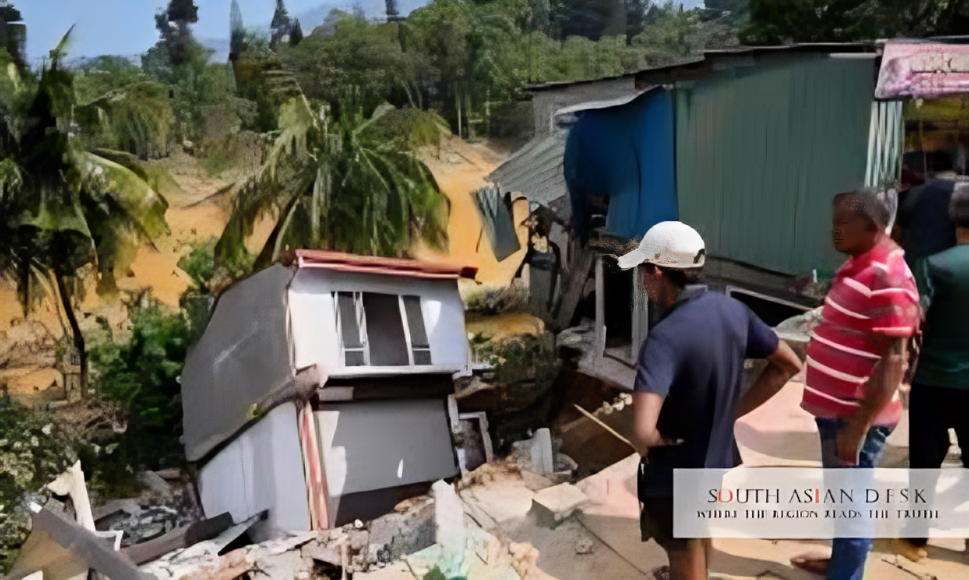
The National Building Research Organisation (NBRO) issued urgent Sri Lanka landslide warnings on December 6, 2025, for districts including Kandy, Badulla, and Nuwara Eliya. Rainfall exceeding 150 millimetres in 24 hours saturated slopes, raising risks of mudslides in landslide-prone zones.
“Since rainfall within the past 24 hours has exceeded 150 millimetres, if the rains continue, evacuate to a safe location to avoid the risk of landslides,” NBRO stated in its official alert. The warnings cover Gampola town and surrounding areas in the central hills, where soil instability persists due to prior saturation from Cyclone Ditwah Sri Lanka.
Disaster Management Centre (DMC) reports confirm active alerts. Military units deployed 5,000 troops to support evacuations and clear debris from blocked roads. In Kandy district alone, 214 people remain missing, with search operations hampered by ongoing downpours.
These Sri Lanka landslide warnings build on earlier advisories from December 4, when DMC logged high-risk zones in the central highlands. Officials urge residents to monitor updates via government channels, avoiding return to homes until cleared.
Cyclone Ditwah Sri Lanka Triggers Unprecedented Destruction
Cyclone Ditwah Sri Lanka made landfall on November 28, 2025, unleashing winds up to 120 km/h and torrential rains that swelled rivers and triggered landslides nationwide. The storm affected all 25 districts, marking the first cyclone to impact the entire island in recorded history.
Government figures place the death toll at 607, with 214 missing and 1,586,329 people from 448,817 families impacted. Over 565 houses lie fully destroyed, and 20,271 suffer partial damage. The World Health Organization (WHO) reports 233,000 displaced into 1,441 shelters, with central and south-central districts bearing the brunt.
President Anura Kumara Dissanayake addressed parliament on the crisis. “This is the most challenging natural disaster in the history of the island,” he said, announcing a request to the International Monetary Fund (IMF) to delay a $347 million tranche from the $2.9 billion bailout for a larger emergency payout.
The IMF responded swiftly. “We extend our deepest sympathies to the people of Sri Lanka,” Mission Chief Evan Papageorgiou stated on December 5. Authorities seek $200 million under the Rapid Financing Instrument to bolster recovery.
Cyclone Ditwah Sri Lanka’s path deviated unusually south, intensifying floods along the Kelani River and burying villages under mud in tea estates. Economic fallout includes $6-7 billion in reconstruction needs, hitting tourism and agriculture hard. Nearly 300 tourists received helicopter rescues, with Deputy Tourism Minister Ruwan Ranasinghe noting, “Tourism revenues are vital to help the nation rebuild.”
Sri Lanka Floods December 2025 Overwhelm Lowland Areas
Sri Lanka floods December 2025, amplified by the northeast monsoon’s onset, submerged Colombo suburbs and eastern coasts. The Kelani River surged, flooding Gampaha and Puttalam districts and cutting off access to remote communities.
ReliefWeb’s flash update as of December 3 details 22 districts under national disaster status. Over 1 million require assistance, with 108,000 in temporary shelters. Infrastructure losses encompass 483 dams, 1,936 canals, and 55,000 hectares of farmland.
In Kurunegala, floods claimed 11 lives at an elderly care home on November 29. Rescue teams from India and Pakistan airlifted survivors, though one military helicopter crashed north of Colombo on November 30, injuring crew but no fatalities reported.
WHO coordinates health responses, deploying rapid teams for disease surveillance amid waterborne risks. “Flooding along the Kelani River and landslides in the central hills have further complicated humanitarian access,” the agency noted on December 2.
These Sri Lanka floods December 2025 reflect broader monsoon anomalies, with back-to-back storms displacing 800,000 in Indonesia alone. Regional totals exceed 1,750 deaths across five nations, prompting cross-border aid.
Central Hills Evacuation Sri Lanka: Orders Enforce Safety
Central hills evacuation Sri Lanka directives remain in force, with NBRO advising against returns to unstable slopes. Over 148,000 evacuated initially, many now in relief camps facing sanitation shortages.
In Nuwara Eliya’s tea plantations, landslides buried 80 homes, killing dozens. “I have lost my house and my crop. What are we going to do?” survivor Prasanna Shantha Kumara told reporters from a Kandy shelter.
Cabinet decisions raised household aid from LKR 10,000 to 25,000 for cleanup. A new compensation scheme offers up to LKR 10 million ($33,000) per family for relocation and rebuilding in safer zones, per the Finance Ministry’s December 5 circular.
Military boats and helicopters continue operations, though access constraints persist in Badulla and Matale. Environment Minister Hanif Faisol Nurofiq launched probes into illegal logging exacerbating risks. “Investigations could escalate to criminal prosecution if evidence shows corporate involvement,” he warned.
Background: A History of Monsoon Vulnerabilities
Sri Lanka’s central hills have long faced landslide threats, with 2017 floods killing over 200. Deforestation from mining and plantations amplified Cyclone Ditwah’s impact, eroding slopes and blocking drainage.
The 2003 deluge displaced hundreds of thousands, but current scale dwarfs predecessors due to climate shifts. UN agencies link intensified monsoons to warmer Bay of Bengal waters, urging resilient infrastructure investments.
What’s Next: Recovery Amid Looming Rains
Further rains forecast through mid-December heighten Sri Lanka landslide warning risks, with DMC preparing for secondary floods. International pledges from Japan and Malaysia include relief consignments, while a Joint Response Plan guides UN efforts.
Finance Minister outlined procurement flexibilities under 2024 guidelines to speed rebuilding. President Dissanayake vows “build back better,” targeting railway repairs and dam reconstructions within months.
As aid flows, communities eye long-term resilience. Yet, with monsoons erratic, experts call for early warning enhancements to avert future tolls.
Officials stress compliance with ongoing Sri Lanka landslide warnings to safeguard lives in the fragile recovery phase.
Published in SouthAsianDesk, December 6th, 2025
Follow SouthAsianDesk on X, Instagram, and Facebook for insights on business and current affairs from across South Asia.