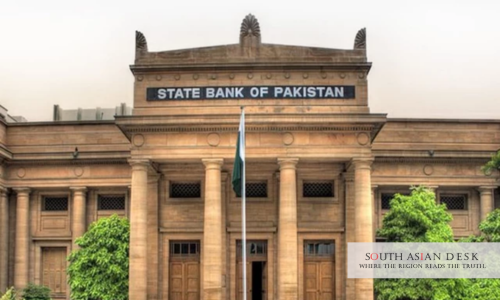
The State Bank of Pakistan foreign exchange reserves rose by $16 million, reaching $16.213 billion as of February 20, 2026. This increase contributes to the country’s total liquid foreign reserves, which now stand at $21.408 billion. Of this, $5.195 billion is held by commercial banks, enhancing the import cover to 2.53 months, as reported by Arif Habib Ltd.
In the currency market, the Pakistani rupee experienced a slight appreciation against the US dollar, closing at 279.50 per dollar on Thursday, a minor increase from 279.51 the previous day, according to the State Bank of Pakistan. This marginal gain comes amid fluctuating market conditions.
Meanwhile, gold prices in Pakistan decreased, influenced by global trends as investors remained cautious ahead of indirect US-Iran nuclear negotiations in Geneva. The All Pakistan Gems and Jewellers Sarafa Association reported a drop in the price of 24-karat gold by Rs700 per tola to Rs540,562, with 10-gram gold declining by Rs600 to Rs463,444.
The international market saw spot gold steady near $5,165 per ounce, while April futures fell by 0.8% to approximately $5,182. Traders are closely watching the third round of indirect talks between Washington and Tehran, mediated by Oman, which could affect geopolitical risk premiums in bullion prices.
Adnan Agar of Interactive Commodities highlighted that geopolitical developments, particularly the Iran-US discussions, remain a focal point for bullion traders. He noted that the market’s direction might be influenced by the outcome of these negotiations, along with upcoming US employment data, which could shape expectations around US monetary policy and the dollar’s trajectory. Additionally, potential increases in US tariff rates could sustain demand for safe-haven assets despite short-term price consolidations.
Published in SouthAsianDesk, February 27th, 2026
Follow SouthAsianDesk on X, Instagram and Facebook for insights on business and current affairs from across South Asia.