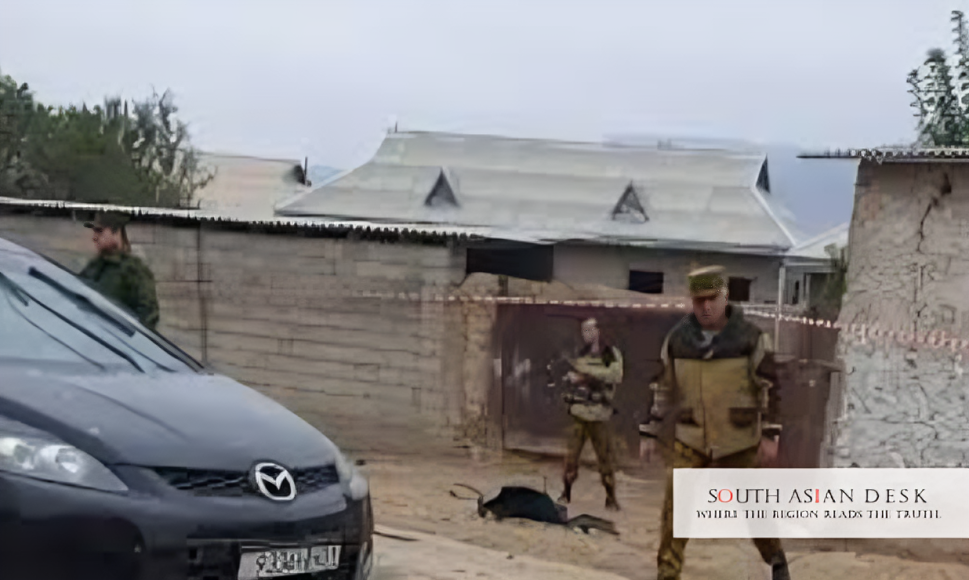
Dushanbe: Five people died in a Tajikistan Afghanistan border clash on 25 December 2025, when armed intruders from Afghanistan attacked a guard post in Shamsiddin Shokhin district. Tajik forces neutralised three infiltrators, but lost two guards in the exchange. The incident highlights ongoing security issues along the 1340km shared border.
This Tajikistan Afghanistan border clash underscores vulnerabilities in South Asia’s volatile frontiers, where drug smuggling and militant activities threaten stability in neighbouring states like Pakistan and Central Asia. Such events strain diplomatic ties and could escalate if unaddressed, affecting trade routes and refugee flows in the region.
Details of the Tajik Afghan Border Firefight
The clash occurred near Kavo village in Khatlon region. Intruders crossed into Tajikistan on 24 December 2025 and were detected the next day. According to the Tajik State Committee for National Security, the group refused surrender demands and initiated fire, intending an attack on a border post.
Tajik forces seized weapons including three M-16 rifles, one Kalashnikov assault rifle, three pistols with silencers, 10 hand grenades, a night-vision scope, explosives, and ammunition. The committee identified the intruders as terrorists from Afghanistan.
Two Tajik border guards, Zirekhbon Navrozbekov and Ismatullo Kurbonov, perished in the firefight. The three intruders were killed during the response. This marks the third such Tajikistan border infiltration in recent weeks, with prior incidents claiming lives of guards and civilians, including Chinese mining workers.
The committee’s statement criticised the Afghan Taliban administration for failing to secure the border, stating it reflects “serious and recurring irresponsibility” in combating terrorist groups. Tajikistan expects an apology and stronger measures from Kabul.
Implications of Five Killed Tajikistan Border Incident
Security analysts note that the Tajikistan Afghanistan border clash fits a pattern of cross-border threats. Drugs from Afghanistan flow through this porous frontier, fuelling organised crime in Central Asia. Russian troops stationed in Tajikistan have conducted joint exercises to bolster defences.
The event prompted Tajikistan to commission four new border posts and a tank range in Harbmaydon for enhanced training. President Emomali Rahmon oversaw the inauguration remotely, directing ministries to improve readiness.
In South Asia, similar border frictions with Afghanistan affect Pakistan, where air strikes and clashes occur frequently. This Tajik Afghan border firefight could prompt regional forums like the Shanghai Cooperation Organisation to discuss collective security.
Background
Relations between Tajikistan and Afghanistan have been tense since the Taliban regained control in 2021. The 1340km border, following the Panj and Amu Darya rivers, remains a hotspot for smuggling and militancy. Tajikistan hosts Afghan refugees and opposes Taliban policies on ethnic minorities like Tajiks in Afghanistan.
Previous Tajikistan border infiltrations include attacks in early December 2025, killing five people and wounding others. One incident targeted Chinese nationals at a mining site, prompting Dushanbe to accuse Kabul of harbouring extremists.
Historical disputes over water resources and ethnicity add layers. Tajikistan, a former Soviet republic, relies on hydropower, while Afghanistan seeks upstream dams. The Taliban deny involvement in cross-border attacks, blaming rogue elements.
Russian influence persists, with bases in Tajikistan under the Collective Security Treaty Organisation. Joint drills in 2025 focused on repelling infiltrations, reflecting fears of spillover from Afghan instability.
Economic ties suffer; trade volumes dropped 20% in 2024 due to insecurity. Tajikistan exports electricity to Afghanistan, but payments lag amid Taliban governance challenges.
What’s Next
Tajikistan vows to defend its borders from terrorists and smugglers by all means. Diplomatic channels may activate, with Dushanbe urging Kabul to fulfil obligations. If tensions rise, international mediation from the UN or Russia could intervene.
Monitoring groups predict more Tajikistan Afghanistan border clashes unless joint patrols resume. South Asian nations watch closely, as instability could disrupt the Chabahar port corridor and energy projects.
The Tajikistan Afghanistan border clash serves as a reminder of the need for dialogue to prevent escalation.
Published in SouthAsianDesk, December 26th, 2025
Follow SouthAsianDesk on X, Instagram and Facebook for insights on business and current affairs from across South Asia.