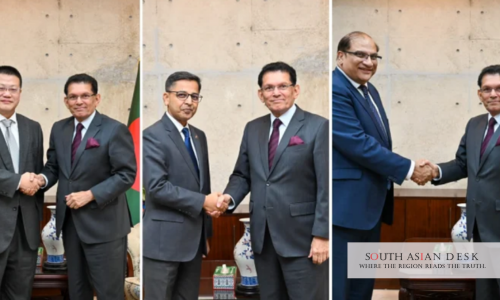
Tajikistan Defence Minister Colonel General Sobirzoda Emomali Abdulrahim called on Pakistan’s Chief of Army Staff Field Marshal Syed Asim Munir at General Headquarters in Rawalpindi on Thursday, November 13, 2025. The COAS Asim Munir Tajik minister meeting focused on regional security challenges and ways to advance Pakistan Tajikistan defence cooperation. Both leaders committed to expanding military ties through joint training and counter-terrorism efforts.
This development holds profound implications for South Asia. As instability simmers along Afghanistan’s borders, Tajikistan Pakistan military ties offer a strategic counterweight. The partnership bolsters connectivity between Central Asia and the Arabian Sea, countering extremism while promoting economic corridors like the China-Pakistan Economic Corridor extended northward. It signals Islamabad’s pivot towards multifaceted alliances, enhancing collective resilience against transnational threats and fostering peace dividends for over 240 million people in the region.
COAS Asim Munir Tajikistan Defence Minister Meeting Highlights
The COAS Asim Munir Tajik minister meeting unfolded amid heightened focus on bilateral priorities. Colonel General Sobirzoda Emomali Abdulrahim, accompanied by a high-level delegation, engaged Field Marshal Syed Asim Munir in candid discussions. Matters of mutual interest topped the agenda, with emphasis on evolving security dynamics.
Pakistan Tajikistan defence cooperation emerged as a cornerstone. The leaders reviewed ongoing initiatives and explored avenues for synergy. Both sides voiced firm resolve to amplify military-to-military collaboration. Specific domains included professional training exchanges and intelligence sharing protocols. This aligns with broader goals of interoperability, ensuring seamless operations in crisis scenarios.
The Tajik minister extended commendations to the Pakistan Army. He highlighted its exemplary professionalism and pivotal contributions to regional equilibrium. “The Pakistan Army’s dedication to peace stands as a model for all,” the minister noted in remarks relayed through official channels. Field Marshal Syed Asim Munir reciprocated with assurances of steadfast support. He stressed the imperative of unified action. “Collective endeavours remain essential for enduring stability and shared prosperity,” the COAS stated, underscoring Pakistan’s unwavering dedication to fortifying defence and security bonds with Tajikistan.
Outcomes from the COAS Asim Munir Tajik minister meeting point to tangible progress. Agreements in principle pave the way for increased personnel exchanges. Plans for specialised workshops on modern warfare tactics also surfaced. These steps reinforce Tajikistan Pakistan military ties, building on a foundation of trust forged over decades.
Discussions on Regional Security and Counter-Terrorism
Central to the COAS Asim Munir Tajik minister meeting were deliberations on regional security. Both nations confront parallel challenges from militant spillovers. The dialogue addressed intelligence fusion to preempt threats. Emphasis fell on harmonising strategies against non-state actors.
Pakistan Tajikistan defence cooperation in counter-terrorism drew special attention. Leaders pledged to intensify joint operations planning. This includes simulations tailored to border terrains. Such measures aim to neutralise cross-border incursions effectively. The commitment extends to capacity building, with Pakistan offering expertise in drone surveillance and cyber defence.
Tajikistan Pakistan military ties extend beyond immediate tactics. Strategic alignment features prominently. Both armies seek to deter aggression through deterrence postures. Discussions touched on multilateral forums like the Shanghai Cooperation Organisation. Here, coordinated stances amplify influence on global platforms.
Field Marshal Syed Asim Munir articulated a vision for proactive engagement. He advocated for regular strategic dialogues to anticipate risks. Colonel General Sobirzoda Emomali Abdulrahim echoed this, calling for accelerated implementation of pacts. Their synergy promises to elevate joint readiness levels.
Background: Evolution of Pakistan Tajikistan Defence Cooperation
Pakistan Tajikistan defence cooperation traces roots to the post-Soviet era. Formal ties solidified in 1992 with diplomatic recognition. Early engagements centred on humanitarian aid amid Tajikistan’s civil strife. By the 2000s, focus shifted to security dialogues, recognising shared vulnerabilities.
A milestone arrived in 2022 during Tajik President Emomali Rahmon’s visit to Islamabad. Leaders elevated relations to strategic partnership status. Multiple memorandums of understanding materialised, spanning trade, energy, and defence. These frameworks facilitated technical exchanges and joint ventures.
The seventh Joint Ministerial Commission in December 2024 marked further strides. Two landmark MoUs targeted infrastructure and connectivity. Defence provisions enabled officer training at premier institutions like the National Defence University.
Recent Joint Exercise Dosti-II
Tajikistan Pakistan military ties gained momentum with Exercise Dosti-II. Conducted from August 4 to 9, 2025, at Fakhrobod Base in Tajikistan, it involved 2 combat teams from Pakistan’s Light Commando Battalion and 4 from Tajik Special Forces. Objectives encompassed urban combat and hostage rescue drills.
The exercise achieved all benchmarks, per official assessments. Chief Guest Colonel Muhammad Muazzam Zafar lauded the outcomes. It honed tactical proficiency and cultural familiarity. Participants exchanged best practices, fostering enduring bonds.
This iteration followed Dosti-I in 2023, which emphasised mountain warfare. Sequential drills underscore escalating commitment. Future editions may incorporate naval elements, broadening scope.
Broader context reveals multifaceted engagement. In November 2025, President Asif Ali Zardari hosted the Tajik minister at Aiwan-e-Sadr. He described Tajikistan as Central Asia’s bridge and Pakistan as its maritime gateway. Zardari reaffirmed readiness for expanded cooperation, including Dosti-III planning.
Historical precedents abound. Agreements from 2018 SCO summits laid groundwork for intelligence pacts. Recent military-technical accords, signed days before the GHQ visit, target equipment standardisation. These instruments, valued at PKR 500 million initially, fund joint R&D.
What’s Next for Tajikistan Pakistan Military Ties
Prospects gleam for amplified Pakistan Tajikistan defence cooperation. A bilateral working group convenes next month to roadmap exercises. Potential sites include Pakistan’s high-altitude ranges for alpine training.
Tajikistan Pakistan military ties may integrate emerging tech. Discussions hinted at AI-driven analytics for threat mapping. Multilateral drills with SCO partners loom large, enhancing regional architectures.
The COAS Asim Munir Tajik minister meeting catalyses momentum. As threats evolve, this alliance fortifies flanks. Stakeholders anticipate swift action on pledges, yielding dividends in stability.
The Tajikistan Defence Minister calls COAS exemplifies enduring amity. It heralds a fortified era of collaboration, safeguarding mutual frontiers.
Published in SouthAsianDesk, November 15th, 2025
Follow SouthAsianDesk on X, Instagram, and Facebook for insights on business and current affairs from across South Asia.