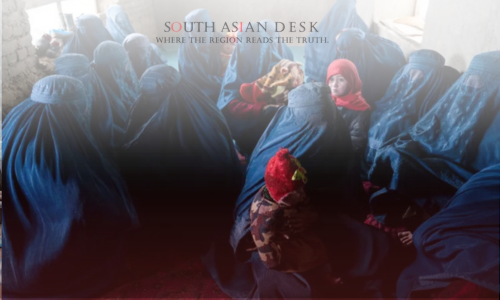
On July 8, 2025, the International Criminal Court (ICC) issued arrest warrants for two senior Taliban leaders, Haibatullah Akhundzada, the supreme leader, and Abdul Hakim Haqqani, the chief justice, accusing them of crimes against humanity for the systematic persecution of women and girls in Afghanistan. The ICC alleges that since the Taliban regained power on August 15, 2021, they have enforced policies that severely restrict women’s rights, including banning girls from education beyond the sixth grade, limiting women’s access to public spaces, and curbing freedoms of movement, expression, and privacy. These actions, the court states, target women and girls based on gender, constituting persecution under the Rome Statute.
The warrants also apply to individuals perceived as non-conforming to the Taliban’s strict gender policies, including members of the LGBTQ community and those supporting women’s rights. The ICC reports these violations, involving systemic measures such as murder, imprisonment, torture, and enforced disappearances, have continued at least until January 20, 2025. Human rights organizations have welcomed the ICC’s decision as a historic step, marking the first time the court has issued warrants specifically for gender-based persecution.
The Taliban have rejected the ICC’s authority, denying the allegations and asserting their commitment to enforcing their interpretation of Islamic law. They argue the ICC overlooks alleged crimes by foreign forces in Afghanistan before 2021, viewing the warrants as an act of hostility. Although the ICC relies on member states to enforce arrests due to lacking its own police force, the warrants signal increasing international pressure on the Taliban’s oppressive policies. Discussions on X show varied perspectives, with some users supporting the warrants as a move toward justice, while others question the ICC’s consistency in addressing global human rights issues.
The United Nations reports that nearly 80% of Afghan women under 30 are excluded from education or work, highlighting the severity of the crisis. Rights activists stress that, while immediate arrests are unlikely, these warrants underscore the need for global action to address the Taliban’s gender-based oppression, often referred to as gender apartheid.
Published in SouthAsianDesk, July 9th, 2025
Follow SouthAsianDesk on X, Instagram and Facebook for insights on business and current affairs from across South Asia.