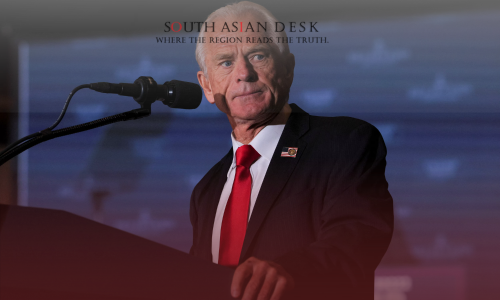
Peter Navarro accuses India of funding Russia’s war via oil imports, escalating US-India tensions. On Thursday, August 28, 2025, White House trade adviser Peter Navarro accused India of acting as an “oil money laundromat for the Kremlin” by importing Russian crude, alleging it funds Russia’s war in Ukraine. Speaking in Washington, DC, Navarro justified the US’s 50% tariffs on Indian goods, effective Wednesday, August 27, 2025, citing trade imbalances and geopolitical concerns.
Navarro’s Allegations Against India
White House trade adviser Peter Navarro claimed India’s increased imports of Russian crude oil—rising from less than 1% before Russia invaded Ukraine in February 2022 to over 30% today—fuel Moscow’s war efforts. In a series of posts according to Navarro on X on Thursday, August 28, 2025, he stated, “India’s Big Oil lobby has turned the largest democracy in the world into a massive refining hub and oil money laundromat for the Kremlin.” Navarro argued that Indian refiners buy discounted Russian oil, process it, and export fuels to Europe, Africa, and Asia, generating profits that indirectly support Russia’s military campaign.
US Tariffs and Trade Tensions
The Trump administration imposed a 50% tariff on Indian goods, comprising a 25% duty for perceived unfair trade practices and an additional 25% tied to India’s Russian oil purchases. Navarro defended the tariffs, stating, “This isn’t just about India’s unfair trade—it’s about cutting off the financial lifeline India has extended to Putin’s war machine.” He highlighted a USD 50 billion trade deficit with India, accusing New Delhi of using US dollars to buy Russian oil, which he claims hurts American workers and businesses.
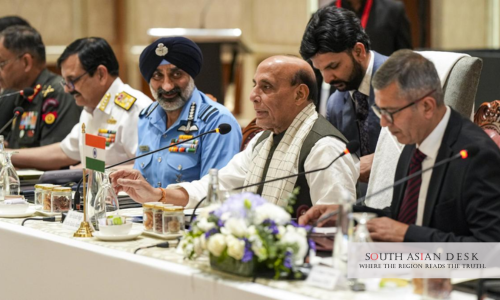
India’s Defence and Regional Context
India has rejected Navarro’s accusations, asserting that its oil purchases are driven by national interest and economic necessity. External Affairs Minister S. Jaishankar, during a visit to Moscow on Wednesday, August 20, 2025, noted that the US had previously encouraged India to buy Russian oil to stabilize global energy markets. India’s Ministry of External Affairs stated on Sunday, August 4, 2025, that Western nations criticizing India continue to trade with Russia, highlighting inconsistencies in their stance.
Broader Geopolitical Implications
Navarro’s remarks exacerbate tensions in India-US ties, already strained by the collapse of trade negotiations in early August 2025. The 50% tariffs, among the highest imposed on any US trade partner, have prompted India to explore countermeasures, including tax cuts to cushion exporters. Former US Ambassador to the UN, Nikki Haley, warned on Wednesday, August 20, 2025, that undermining US-India relations could be a “strategic disaster,” given India’s role in counterbalancing China’s influence in Asia.
Selective Criticism and China’s Role
Critics, including the Democratic House Foreign Affairs Committee, have noted that Navarro’s focus on India overlooks China, the largest buyer of Russian oil. According to the Committee on X on Thursday, August 28, 2025, “Trump’s singling out India with tariffs, while sparing China, sabotages the US-India relationship.” This selective approach raises questions about the consistency of US trade policy.
Background
India’s oil imports from Russia surged after Western sanctions and a G7-imposed USD 60 per barrel price cap in 2022 limited Moscow’s energy revenue. India, sourcing 35–40% of its crude from Russia as of August 2025, defends its purchases as essential for its 1.4 billion citizens. Navarro’s earlier comments in a Financial Times article on Monday, August 18, 2025, described India’s reliance as “opportunistic,” urging New Delhi to align with US strategic interests.
What’s Next
As India-US ties face further strain, White House trade adviser Peter Navarro’s accusations may prompt New Delhi to strengthen economic ties with Russia and China, complicating global efforts to isolate Moscow. Ongoing trade negotiations and India’s response to the tariffs will be critical in shaping bilateral relations.
Published in SouthAsianDesk, August 29th, 2025
Follow SouthAsianDesk on X, Instagram, and Facebook for insights on business and current affairs from across South Asia.