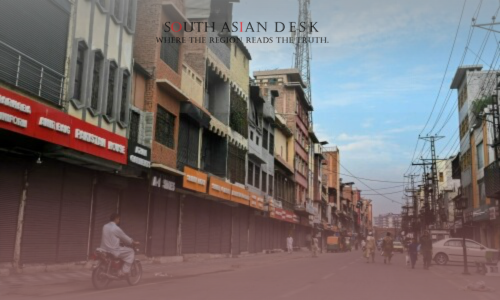
On July 19, 2025, Karachi and Lahore, Pakistan’s key commercial hubs, saw widespread market closures as traders initiated a nationwide strike to protest new taxation policies introduced in the Finance Act 2025-26. The business communities in both cities, led by the Karachi Chamber of Commerce and Industry (KCCI) and the Lahore Chamber of Commerce and Industry (LCCI), voiced strong opposition to what they describe as burdensome tax measures and enhanced powers granted to the Federal Board of Revenue (FBR).
In Karachi, the strike led to a near-total halt of commercial activities, affecting wholesale markets, retail shops, and industrial zones. KCCI President Jawed Bilwani highlighted the unprecedented unity among trade bodies, noting that all seven industrial zones ceased production and no export consignments reached the port. The strike disrupted the flow of goods, with transporters also suspending operations, impacting the supply chain of raw materials and finished products.
Lahore mirrored Karachi’s response, with major markets such as Shah Alam Market, Hall Road, and Anarkali shutting down. LCCI President Mian Abuzar Shad emphasized the economic weight of the two cities, which together account for over 60% of Pakistan’s economy, sending a strong message to the government through the coordinated shutdown. Traders in both cities expressed frustration over policies like Sections 37A and 37B of the Sales Tax Act, which allow arrests without due process, a 20% tax on transactions above Rs200,000, and mandatory digital invoicing systems.
The business community’s demands include the immediate withdrawal of these provisions, which they argue threaten small businesses and could drive economic activity into the informal sector. Despite negotiations with government officials, including the Special Assistant to the Prime Minister on Industries, no written commitments were provided, prompting the continuation of the protest. Posts on X reflected the traders’ resolve, with some indicating plans to extend the strike if their concerns remain unaddressed.
The strike’s impact was significant, with Karachi contributing approximately 70% of federal tax revenues and 54% of national exports. The business community warned that prolonged inaction could lead to further economic disruptions, including extended strikes or rallies. Meanwhile, the Federation of Pakistan Chambers of Commerce and Industry (FPCCI) opted for dialogue over protest, highlighting a divide within the business sector on how to address the taxation policies.
Published in SouthAsianDesk, July 20th, 2025
Follow SouthAsianDesk on X, Instagram and Facebook for insights on business and current affairs from across South Asia.