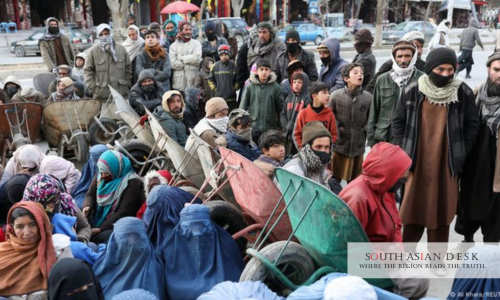
As forced returnees swell the labour market, Afghanistan’s young population grapples with soaring unemployment crisis, raising fears of deeper social instability.
In Kabul, Afghanistan, on Monday, September 15, 2025, youth and returnees highlighted the escalating unemployment crisis in Afghanistan, driven by economic fragility and refugee influxes, as the Ministry of Labour and Social Affairs issues permits amid calls for investment incentives.
Why It Matters
The unemployment crises in Afghanistan reflect broader South Asian challenges where economic isolation and climate vulnerabilities exacerbate joblessness, potentially fuelling migration and unrest across borders.
Escalating Unemployment Crises in Afghanistan Amid Economic Strain
Afghanistan’s unemployment crisis has intensified, with rates doubling between 2020 and 2023, disproportionately affecting youth and women. Nearly one in four young Afghans aged 15-29 remains unemployed, facing low wages and limited hours in available roles. The unemployment rate stood at approximately 13.3 percent by the end of 2024, according to World Bank data, highlighting a saturated labour market unable to absorb new entrants.
The forced return of over 1.5 million Afghans from Iran and Pakistan since early 2025 has worsened the unemployment crisis in Afghanistan, straining resources and job opportunities. Returnees like Mohammad, deported from Iran, have called for domestic job creation, stating: “Thank God we are satisfied with the presence of security in the country, but there should also be job opportunities for us here, and girls should be allowed to go to school.”
Economic analyst Abdul Zahoor Mudabber emphasised the need for policy reforms: “There is a need for investment in the country. The government must adopt some incentive policies for investment, consider tax exemptions, think about offering subsidies, and manage tariffs, so that not only domestic but also foreign investors are encouraged to invest.” Without such measures, the unemployment crisis in Afghanistan risks evolving into broader social and economic turmoil.
Impacts of the Unemployment Crisis in Afghanistan on Youth and Society
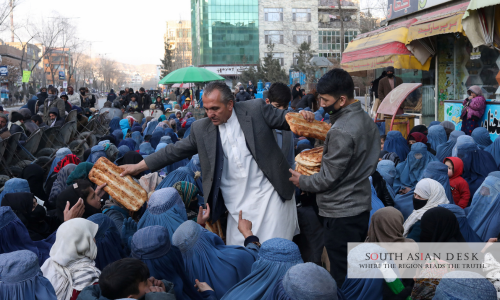
Young residents in Kabul, such as Amrullah, illustrate the personal toll of the unemployment crisis in Afghanistan: “Wherever I go to look for work, there is no job or income, and no one has hired me yet. But I’m still searching.” Similarly, Shoaib noted: “Due to unemployment, many young people have become addicted and turned to theft. It’s because they are jobless.”
Women face acute challenges in the unemployment crisis in Afghanistan, with rates increasing sevenfold for young females since 2020, reaching nearly 25 percent. Restrictions on education and mobility, including bans on secondary schooling for girls, have left only 3 percent of teenage girls attending classes, crippling future workforce participation.
Poverty afflicts around 48 percent of the population, with unemployment and underemployment doubling household debt and forcing negative coping strategies like child labour. Food insecurity affects 14.8 million people, while 7.8 million children and women require nutrition aid amid rising malnutrition. The UN warns that without intervention, these factors could deepen the humanitarian crisis, with 22.9 million people needing assistance in 2025.
Government Responses to Unemployment Crises, Afghanistan
The Ministry of Labour and Social Affairs has issued over 400,000 work permits in the past four years to mitigate the unemployment crisis in Afghanistan. Spokesperson Samiullah Ebrahimi stated: “The aim is to address the unemployment issue in the country and provide work opportunities for jobless citizens. For this purpose, job opportunities have been facilitated for the national workforce in medium and large sectors.”
Initiatives include overseas employment agreements, such as sending 700 workers to Qatar in July 2025, with plans for more to reduce domestic joblessness. Deputy Prime Minister Abdul Kabir affirmed efforts to lower unemployment rates during the launch of legal worker deployment abroad.
Background
Afghanistan’s economy contracted by nearly one-third since August 2021, due to political changes, reduced international aid, and banking restrictions. GDP growth reached 2.5 percent in 2024 but is projected to slow to 2.2 percent in 2025, insufficient against 2.4 percent annual population growth. Climate shocks, including potential droughts from La Niña conditions, further threaten agricultural jobs.
What’s Next
By 2030, 1.7 million more young job seekers will enter the market, demanding urgent skills training and investment to avert worsening unemployment crises in Afghanistan. As returnee numbers rise, with Iran planning to deport 2 million by March 2025, sustained aid and policy reforms will be critical to stabilise the labour landscape.
Published in SouthAsianDesk, September 15th, 2025
Follow SouthAsianDesk on X, Instagram, and Facebook for insights on business and current affairs from across South Asia.