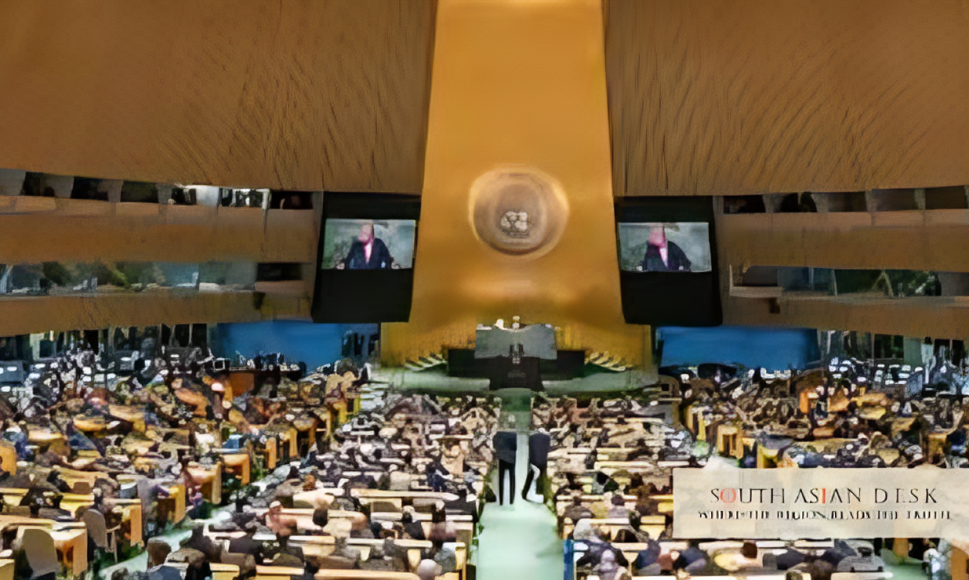
The United Nations General Assembly adopted a Pakistan-sponsored resolution on Thursday, reaffirming the right to self-determination for peoples under colonial, foreign or alien occupation. The UNGA Pakistan resolution passed by consensus in New York during the 80th session, highlighting struggles in Kashmir and Palestine.
This development underscores the ongoing relevance of self-determination UN principles in South Asia, where disputes like Kashmir affect regional stability and peace prospects. It signals continued international focus on human rights violations in occupied territories, potentially influencing diplomatic efforts in the region.
Self-Determination UN Framework Strengthened
The resolution, titled Universal Realisation of the Right of the Peoples to Self-Determination, declares firm opposition to foreign military intervention, aggression and occupation. It calls on states to cease such actions that prevent peoples from exercising their right to self-determination. Adopted without a vote, the UNGA Pakistan resolution reflects broad global support for these ideals.
Pakistan’s Deputy Permanent Representative to the UN, Ambassador Usman Jadoon, introduced the text. He stated that recent developments in the Middle East show lasting peace cannot be achieved through denying the Palestinian people’s right to self-determination. On Kashmir, he noted the UN Security Council has recognised the legitimate right of the people of Jammu and Kashmir to self-determination through several resolutions.
The consensual adoption marks a diplomatic achievement for Pakistan. It comes amid the 65th anniversary of UNGA resolution 1514 on granting independence to colonial countries and peoples. The UNGA Pakistan resolution extends this to situations of alien occupation and foreign domination.
Kashmir Self-Determination Highlighted
The UNGA Pakistan resolution reinforces attention to the cause of people in Indian Illegally Occupied Jammu and Kashmir. Pakistan views the denial of Kashmir self-determination as a root cause of instability in South Asia. Ambassador Jadoon emphasised that a just resolution of the Jammu and Kashmir dispute remains central to durable peace in the region.
The text offers hope to Kashmiris in their struggle for freedom and dignity, in line with UN Security Council resolutions. Pakistan’s Permanent Mission stated that the resolution manifests broad international support for peoples facing colonialism and foreign occupation. For Kashmir, it upholds their aspirations per international law.
Human rights concerns in the territory include reports of violations, though specific recent data requires verification. The UNGA Pakistan resolution urges the international community to address such issues through consistent implementation of UN decisions.
Palestine UN Resolution Connections
The UNGA Pakistan resolution also draws parallels to the Palestinian situation. It reinforces international attention to their legitimate cause under occupation. Ambassador Jadoon linked the denial of self-determination UN rights to ongoing conflicts in the Middle East.
This aligns with separate UN actions, such as a recent General Assembly text reaffirming the Palestinian right to self-determination, including an independent state. Adopted by a recorded vote of 166 in favour, 1 against and 4 abstentions, that resolution stressed the urgency of ending occupation. The Pakistan-backed effort complements these by framing self-determination as universal and non-selective.
Pakistan’s stance emphasises that self-determination cannot be politically conditional. The UNGA Pakistan resolution calls for eradicating colonialism in all forms, applying to both Kashmir self-determination and Palestine UN resolution contexts.
Background
The right to self-determination has been a cornerstone of UN principles since the Charter’s adoption in 1945. Annual resolutions like this one trace back to decolonisation efforts post-World War II. Pakistan has sponsored similar texts for decades, securing consensus each time.
In 2025, the UNGA Pakistan resolution gained co-sponsorship from multiple countries across regions. Its adoption without US insistence on a vote highlights effective Pakistani diplomacy. Previous years saw similar focus on occupied territories, with consistent mentions of Kashmir and Palestine.
The 80th UNGA session, running from September 2025, has addressed multiple human rights issues. This resolution falls under the Third Committee on social, humanitarian and cultural matters, before full Assembly approval.
What’s Next
Future steps may include monitoring implementation through the UN Human Rights Council. Pakistan plans to raise Kashmir self-determination at upcoming forums. Diplomatic engagements could follow, potentially involving talks on UN Security Council resolutions.
The UNGA Pakistan resolution may influence discussions on decolonisation in 2026. Observers watch for impacts on peace processes in South Asia and the Middle East.
In conclusion, the UNGA Pakistan resolution stands as a reaffirmation of global commitment to self-determination UN ideals, offering renewed hope for resolutions in Kashmir and Palestine.
Published in SouthAsianDesk, December 19th, 2025
Follow SouthAsianDesk on X, Instagram, and Facebook for insights on business and current affairs from across South Asia.