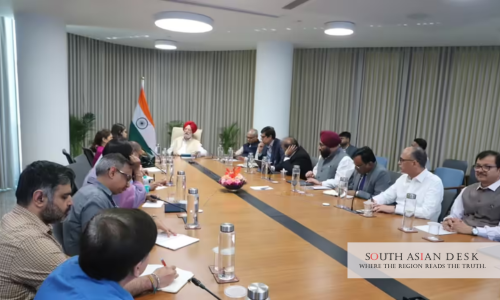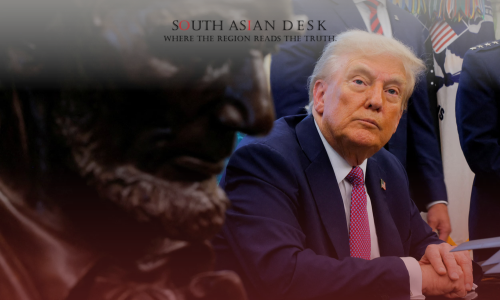
US President Donald Trump signs order granting tariff exemptions to countries with trade deals, effective Monday, September 8, 2025.
United States Tariff Exemptions: A New Trade Strategy
On Friday, September 5, 2025, US President Donald Trump signed an executive order in Washington, DC, offering United States tariff exemptions to countries with reciprocal trade agreements, effective from 12:01 AM EDT on Monday, September 8, 2025. The move aims to reduce trade deficits and align US tariffs with existing pacts, impacting industrial and pharmaceutical imports.
Why It Matters in South Asia
The US tariff exemptions could significantly affect South Asian economies, particularly Pakistan and India, which have trade agreements with the US. These exemptions may ease economic pressures from high US tariffs, fostering stronger trade ties and supporting regional exporters facing global market challenges.
Details of the US Tariff Exemptions
The executive order identifies over 45 categories for zero import tariffs, targeting goods that cannot be sufficiently produced in the US, such as nickel, graphite, gold, and pharmaceutical compounds. According to a White House official, the exemptions also cover agricultural products, aircraft parts, and non-patented pharmaceutical items. The order allows the US Trade Representative, Commerce Department, and customs to waive tariffs on covered imports without further executive action, streamlining trade processes for “aligned partners” like Japan and the European Union.
Impact of US Tariffs on Global Trade
Trump’s strategy, built over his first seven months in office, has focused on imposing high US tariffs to reorder global trade and extract concessions from partners. The exemptions, tied to reciprocal trade deals, are conditional on the “scope and economic value” of a partner’s commitments to the US, as stated in the order. For instance, Pakistan, which negotiated a trade deal in July 2025, reduced reciprocal tariffs from 29% to 19%. However, countries like Switzerland, facing 39% tariffs without a trade deal, may struggle.
Specific Exemptions and Changes
The order specifies zero tariffs for items like natural graphite, neodymium magnets, and light-emitting diodes (LEDs), crucial for industries such as electric vehicle batteries and stainless steel manufacturing. It also includes pharmaceutical compounds like lidocaine and reagents for medical diagnostics. Conversely, previous exemptions for certain plastics and polysilicon, a solar panel component, have been eliminated. “This order balances economic security with strategic trade partnerships,” said a US Trade Representative spokesperson.
Background
The executive order builds on Executive Order 14257 from April 2, 2025, which declared a national emergency over US trade deficits, imposing reciprocal tariffs globally. The new directive revises Annex II of the earlier order, adding bullion, critical minerals, and pharmaceuticals while removing items like aluminium hydroxide. This aligns with existing framework deals, such as those with Japan, which recently secured lower tariffs on auto imports. India, facing trade tensions over Russian oil purchases, may also be impacted, with its exporters grappling with 50% US tariffs.
What’s Next
The United States tariff exemptions signal a shift towards incentivising trade agreements while maintaining pressure on non-aligned nations. As South Asian countries like Pakistan navigate these changes, the exemptions could bolster regional trade, provided reciprocal commitments are met, reshaping economic ties with the US.
Published in SouthAsianDesk, September 7th, 2025
Follow SouthAsianDesk on X, Instagram, and Facebook for insights on business and current affairs from across South Asia.