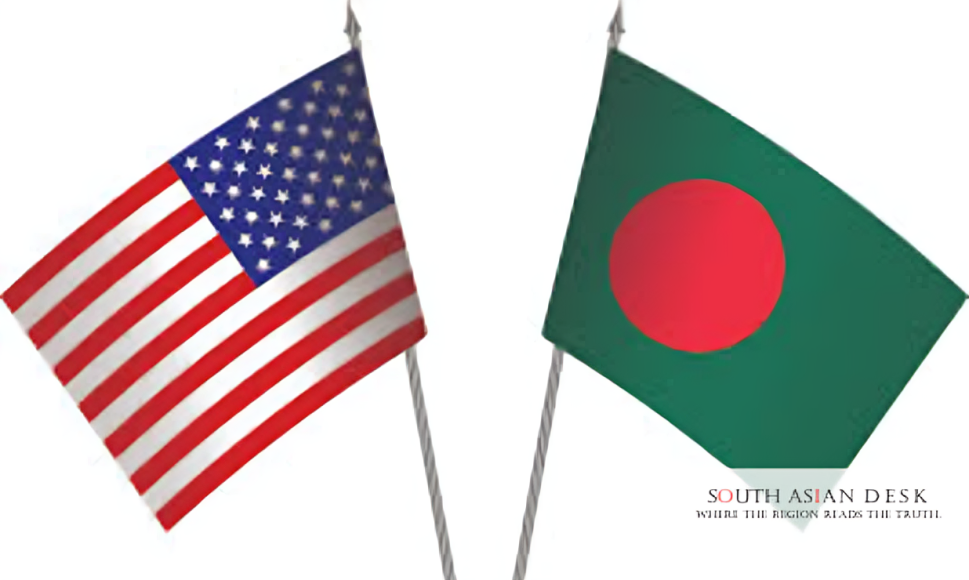
Bangladesh secures reduced tariffs and garment exemptions in a new reciprocal trade agreement with the US, boosting exports amid economic challenges. Washington and Dhaka signed the US Bangladesh trade deal on Monday, February 9, 2026. The agreement reduces US tariffs on Bangladeshi goods to 19 percent, with zero tariffs for certain garments using US materials. Officials from both sides finalised the pact after nine months of talks. This US Bangladesh trade deal matters for South Asia as it levels the playing field for Bangladesh against neighbours like India, whose US tariff stands at 18 percent. It supports Bangladesh’s garment sector, vital for exports and jobs, while opening doors for US products in the region.
Details of the Agreement
The US Bangladesh trade deal includes Bangladesh US tariff reduction from an initial 37 percent in April 2025 to 20 percent in August 2025, now further cut to 19 percent. This applies to originating goods from Bangladesh.
Under the deal, US Bangladesh garment exemptions allow zero tariffs for textiles and apparel made with US-produced cotton and man-made fibres. Muhammad Yunus, chief adviser of Bangladesh’s interim government, stated: “Washington had committed to establishing a mechanism for certain textile and apparel goods from Bangladesh using US-produced cotton and man-made fibre to receive zero reciprocal tariff in the US market.”
In return, Bangladesh grants preferential market access to US industrial and agricultural goods. These include chemicals, medical devices, machinery, motor vehicles and parts, soya products, dairy goods, beef, poultry, tree nuts, and fruit.
Bangladesh will ease non-tariff barriers by accepting US vehicle safety and emissions standards, recognising US Food and Drug Administration certifications, and removing import restrictions on remanufactured goods.
The agreement also notes recent commercial deals. These involve aircraft procurement, USD 3.5 billion in US agricultural product purchases, and an estimated USD 15 billion in US energy products over 15 years.
Bangladesh pledges to uphold internationally recognised labour rights and strengthen environmental protections.
Economic Impact on Bangladesh
Bangladesh’s ready-made garments sector drives more than 80 percent of export earnings. It employs about four million workers and contributes around 10 percent to gross domestic product.
The US Bangladesh trade deal provides relief to this sector, especially after fears of losing market share to India under higher tariffs. At 19 percent, Bangladesh competes closely with India’s 18 percent rate.
South Asia US trade implications extend to regional dynamics. The deal enhances Bangladesh’s export competitiveness, potentially influencing trade flows in apparel and textiles across South Asia.
Negotiations for the US Bangladesh trade deal began in April 2025. It builds on the US-Bangladesh Trade and Investment Cooperation Forum Agreement signed in 2013.
Background
Bangladesh has faced political transitions since August 2024, when former Prime Minister Sheikh Hasina fled to India. An interim government led by Muhammad Yunus has governed since then.
The US imposed reciprocal tariffs in April 2025 under Executive Order 14257 to address trade imbalances. Bangladesh’s initial rate was 37 percent, reduced to 20 percent in August 2025.
This US Bangladesh trade deal marks the first such agreement in South Asia under the current US administration. It aligns with US efforts to secure reciprocal trade and bolster economic security.
South Asia US trade implications include potential shifts in supply chains. Bangladesh’s commitments to labour and environmental standards may set precedents for other regional nations.
The deal was signed by US Trade Representative Jamieson Greer and Bangladesh’s Adviser for Commerce, Textiles and Jute, and Civil Aviation and Tourism, Sheikh Bashir Uddin. It becomes operational 60 days after both sides exchange notifications certifying legal procedures, or on an agreed date.
What’s Next
Bangladesh heads to polls on Thursday, February 12, 2026, to elect new leadership. The outcome could influence implementation of the US Bangladesh trade deal.
Both parties can request modifications, with amendments possible if they do not undermine benefits. If non-compliance occurs, the US may reimpose higher tariffs after consultations.
South Asia US trade implications may prompt similar deals with other nations, reshaping regional economics.
The US Bangladesh trade deal fosters deeper bilateral ties, with forward-looking commitments on national security, export controls, and investment transparency.
Published in SouthAsianDesk, February 10th, 2026
Follow SouthAsianDesk on X, Instagram and Facebook for insights on business and current affairs from across South Asia.