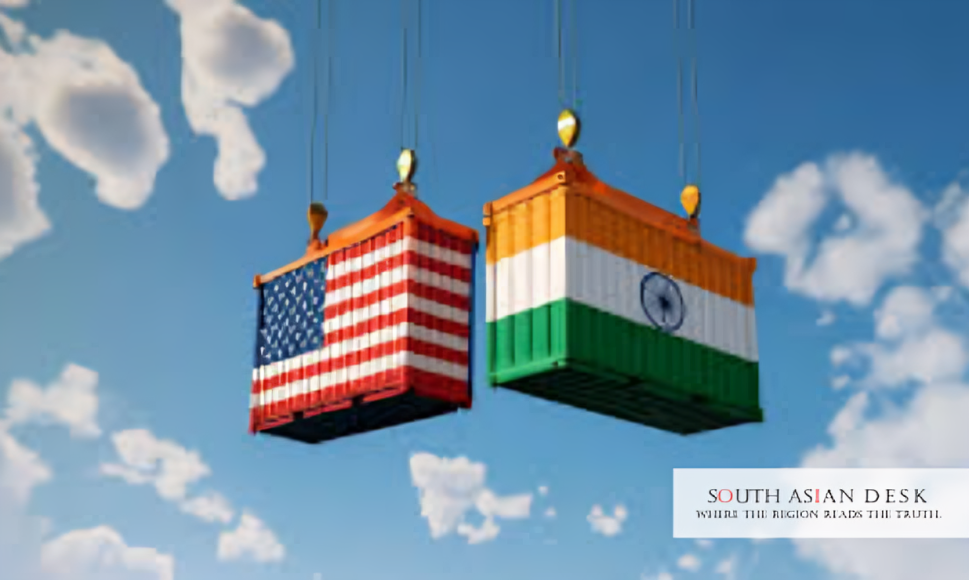
US and India have unveiled a framework for an interim US-India trade deal, slashing US tariffs on Indian goods from 50% to 18%. The pact, announced after talks between President Trump and PM Modi, sees India halt Russian oil buys in exchange.
Washington and New Delhi released the framework on Friday, February 6, 2026. It sets the stage for a formal signing in March. The move addresses trade imbalances and energy ties amid global tensions.
Interim Trade Framework Details
The joint statement outlines the interim trade framework as a step towards a broader bilateral trade agreement. It reaffirms commitments launched in February 2025.
“The United States and India will promptly implement this framework and work towards finalizing the Interim Agreement with a view to concluding a mutually beneficial BTA consistent with the roadmap agreed in the Terms of Reference,” the statement reads.
This interim trade framework focuses on reciprocal benefits. It includes provisions for market access and supply chain resilience.
India US Tariff Reduction Impacts
Under the deal, the US applies an 18% tariff on Indian imports, down from 50%. This India US tariff reduction stems from Executive Order 14257, issued April 2, 2025.
Trump signed an additional order on February 6 rescinding a 25% punitive duty tied to India’s Russian oil purchases.
India will lower tariffs on US goods post-March signing. Trade Minister Piyush Goyal stated the pact opens a USD 30 trillion market for Indian exporters.
Bilateral trade hit USD 142 billion in 2018, with growth since. The India US tariff reduction could boost this by easing barriers.
India Stops Russian Oil Buys
A key concession sees India stop Russian oil buys. Trump announced this after a February 2 call with Modi.
“It was an Honor to speak with Prime Minister Modi, of India, this morning… He agreed to stop buying Russian Oil, and to buy much more from the United States and, potentially, Venezuela,” Trump posted.
India shifts to US and Venezuelan supplies. This aligns with US efforts to curb Russian energy revenue amid Ukraine conflict.
The move reshapes South Asian energy dynamics. Pakistan, reliant on Russian ties, may face indirect effects on regional trade.
Background
US-India trade tensions escalated in 2025 over tariffs and oil. Trump imposed penalties for India’s Russian purchases.
Negotiations began February 13, 2025, aiming for a bilateral agreement. The interim trade framework resolves immediate issues.
Modi termed it reflective of “growing depth, trust and dynamism” in ties. The US-India trade deal builds on shared interests in innovation and security.
Economic Implications for South Asia
The US-India trade deal holds significance for South Asia. India’s economy, projected to grow 7% in 2026, gains from lower barriers.
Neighbours like Pakistan and Bangladesh monitor impacts. Reduced Russian oil reliance could stabilise regional energy prices.
The pact supports resilient supply chains, vital amid global disruptions. It may spur investments in Indian manufacturing.
Data from 2025 shows US-India trade at over USD 200 billion annually. The interim trade framework targets further expansion.
Quotes from officials underscore benefits. Goyal highlighted zero-duty items for exporters, farmers and MSMEs.
The India US tariff reduction applies to sectors like agriculture and tech. It avoids concessions on India’s self-reliant crops.
Geopolitical Shifts
India’s decision to stop Russian oil buys alters alliances. Russia supplied 40% of India’s crude in 2025.
Switching to US sources strengthens strategic partnership. Venezuela’s role adds diversification.
This US-India trade deal counters China’s regional influence. It promotes balanced trade in Indo-Pacific.
What’s Next
Formal signing occurs in March 2026. Both sides will negotiate details under the interim trade framework.
The broader bilateral agreement follows. It includes more commitments on trade and energy.
Monitoring implementation is key. The US-India trade deal sets a precedent for reciprocal pacts.
In conclusion, this US-India trade deal marks a pivotal step in economic ties. It promises growth through lower tariffs and shifted energy buys.
Published in SouthAsianDesk, February 7th, 2026
Follow SouthAsianDesk on X, Instagram and Facebook for insights on business and current affairs from across South Asia.