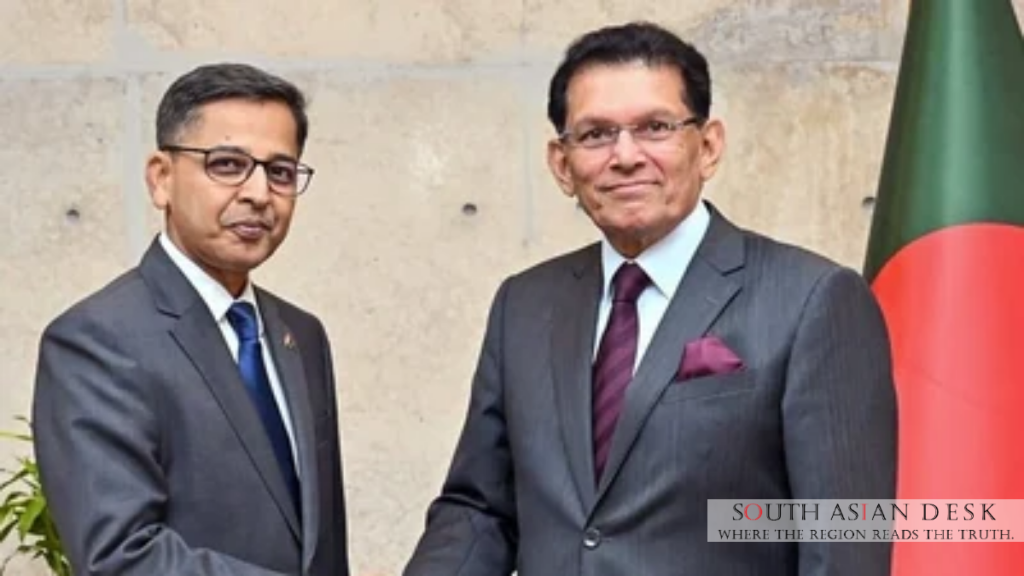
A US delegation led by Critical Minerals Forum President Robert Louis Strayer II met Pakistan’s Finance Minister Muhammad Aurangzeb in Islamabad on October 31, 2025, to discuss cooperation in the US Pakistan rare earth minerals meeting. The talks focused on countering China’s grip on global supply chains through secure investments and technology transfers. Accompanied by US Chargé d’Affaires Natalie Baker, the visitors aimed to foster sustainable mining partnerships. This initiative addresses vulnerabilities in rare earth elements essential for technology and defence.
Strategic Shift for South Asia’s Resource Landscape
The US Pakistan rare earth minerals meeting holds profound implications for South Asia. Pakistan’s vast untapped reserves of critical minerals, including rare earths, could propel the region towards export-led growth and reduce dependence on traditional aid. By aligning with US efforts, Islamabad positions itself as a counterweight to China’s 80 per cent control over global rare earth processing. This partnership promises job creation, technological upgrades, and fiscal stability, potentially reshaping South Asia’s geopolitical and economic dynamics. For neighbouring countries like India and Afghanistan, it signals opportunities for regional supply chain integration, mitigating risks from supply disruptions that have historically spiked prices by up to 300 per cent.
Aurangzeb Strayer Critical Minerals Talks Unveil Collaboration Pathways
Finance Minister Muhammad Aurangzeb welcomed the delegation, emphasising Pakistan’s reform momentum. He outlined fiscal discipline and structural changes, including power sector restructuring and tax base expansion. “Our priority is fundamental fiscal hygiene, building the discipline where capital flows in, remains invested, and is secured through sound policies,” Aurangzeb stated in the official readout.
Strayer, representing the US government-funded Critical Minerals Forum, highlighted threats from China’s dominance. The forum targets rare and niche metals like copper and antimony. “China’s dominance of critical mineral supply chains has become a well-known threat to US national security, economic competitiveness, and long-term strategic objectives,” Strayer noted earlier in a forum publication.
The Aurangzeb Strayer critical minerals talks covered supply-chain security and responsible investments. Pakistan’s science, engineering, and mathematics talent emerged as a key asset. The US side pledged support for technology transfer and intellectual property protection to boost investor confidence. Baker reinforced this, stressing regulatory frameworks for US commercial engagement.
Aurangzeb positioned Pakistan at a “constructive intersection of global relationships, renewed momentum in Pakistan-US ties, time-tested relations with China, and forward-looking strategic cooperation with the Kingdom of Saudi Arabia.” He described the minerals sector as a “transformational opportunity” to escape consumption-driven cycles.
Data from the US Geological Survey underscores the stakes: China processes 87 per cent of the world’s rare earth oxides, vital for electric vehicles, wind turbines, and fighter jets. Disruptions, like 2023 export curbs on graphite, raised costs by 20 per cent globally. Pakistan holds estimated reserves worth USD 6 trillion, per government assessments, including lithium and cobalt in Balochistan.
Pakistan US Minerals Partnership October Builds on Recent Reforms
The Pakistan US minerals partnership October builds directly on August’s US-Pakistan trade agreement. That pact reduced tariffs to 19 per cent on Pakistani exports, targeting textiles and emerging sectors like minerals. It followed Aurangzeb’s Washington visit, where he engaged the Development Finance Corporation and International Finance Corporation.
In the partnership’s framework, both sides reaffirmed commitments. Strayer’s team focused on de-risking investments amid high production cost uncertainties. Aurangzeb responded: “We encourage you to return with a detailed framework for collaboration. Pakistan will evaluate it with a view to facilitating responsible investment and ensuring mutual benefit.”
Official data from Pakistan’s Ministry of Finance shows 24 state-owned enterprises referred for privatisation, aiming to free resources for mining. The Special Investment Facilitation Council prioritises critical minerals, attracting USD 25 billion in pledges since 2023.
The Aurangzeb Strayer critical minerals talks align with global trends. The US Inflation Reduction Act allocates USD 369 billion for clean energy, demanding diverse mineral sources. Pakistan’s reforms, including a dedicated Tax Policy Unit, address investor concerns over regulatory opacity.
Background: Critical Minerals in Geopolitical Context
Critical minerals underpin modern economies. Rare earth elements enable permanent magnets in defence systems and batteries for renewables. Global demand could triple by 2040, per International Energy Agency projections.
China’s subsidies and vertical integration create brittleness. In 2024, it restricted antimony exports, impacting US chip production. The US responds via forums like Strayer’s, seeking allies in emerging markets.
Pakistan’s landscape includes the Reko Diq project, a USD 7.7 billion copper-gold venture with Barrick Gold. Recent explorations reveal rare earth deposits in Gilgit-Baltistan. Yet, challenges persist: outdated laws and security issues deter inflows, with mining contributing just 2.5 per cent to GDP.
The US Pakistan rare earth minerals meeting fits this narrative. It echoes April’s US delegation visit, which advanced minerals cooperation. Broader South Asian ties, like the US-India defence pact, amplify regional stakes.
What’s Next: Framework for the US Pakistan Rare Earth Minerals Meeting
Islamabad awaits the US team’s detailed proposals. Aurangzeb signalled openness to structured deals, potentially involving joint ventures. The Pakistan US minerals partnership October could yield memoranda by Q1 2026, focusing on exploration and processing.
Both nations eye multilateral forums like the Minerals Security Partnership. Success hinges on Pakistan’s regulatory overhaul, expected by year-end. This forward momentum promises to solidify the US Pakistan rare earth minerals meeting as a cornerstone of bilateral ties.
In conclusion, the US Pakistan rare earth minerals meeting marks a pivotal step towards diversified supply chains, empowering Pakistan’s economy and challenging entrenched global imbalances.
Published in SouthAsianDesk, November 1st, 2025
Follow SouthAsianDesk on X, Instagram, and Facebook for insights on business and current affairs from across South Asia.