A former US envoy’s call for Islamabad to pursue Pakistan-Taliban engagement, while the Afghan Taliban highlights escalating cross-border security challenges.
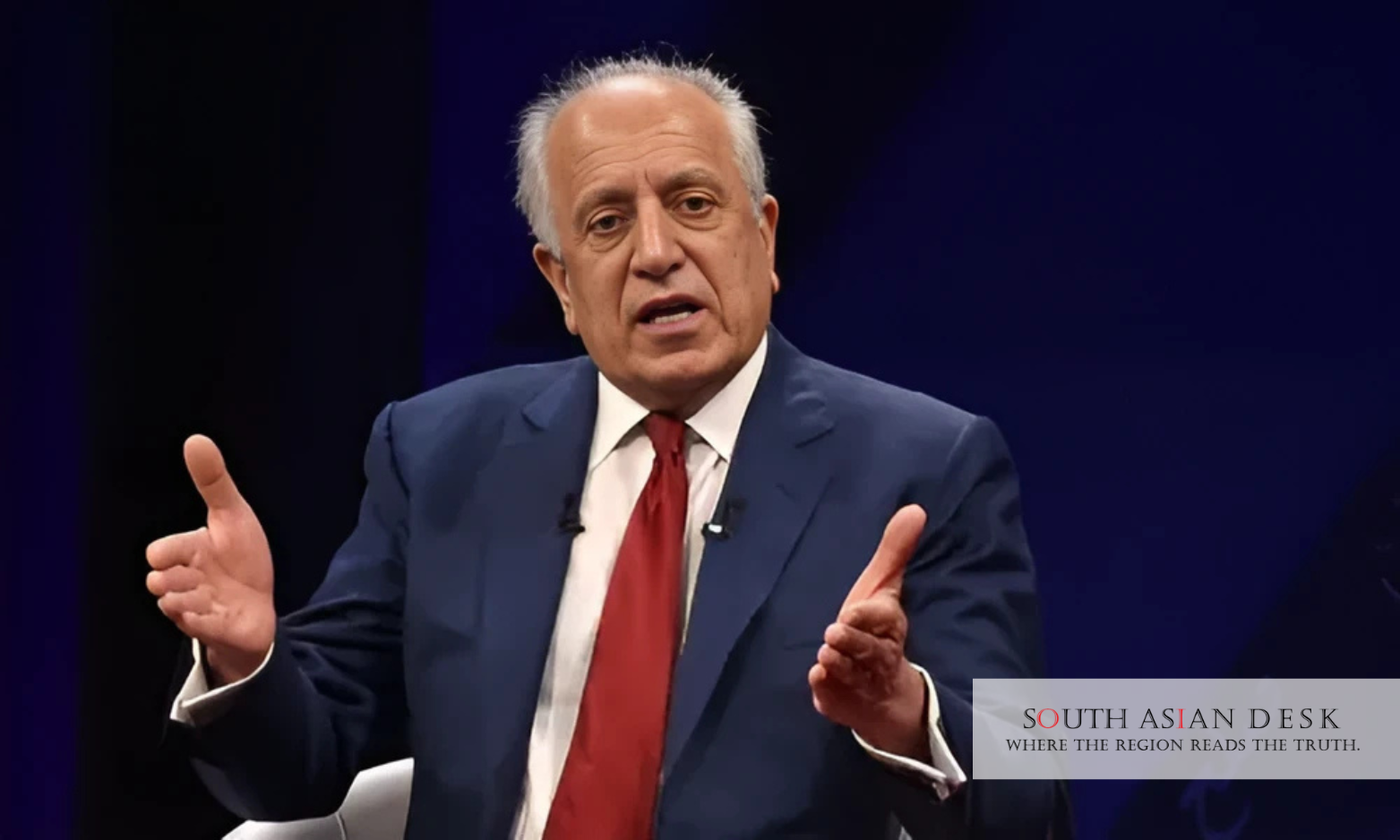
Islamabad, Tuesday, September 16, 2025 – Zalmay Khalilzad, former US special representative for Afghanistan, urged Pakistan on Monday to engage the Afghan Taliban in political negotiations to address militancy, echoing Islamabad’s pre-2021 advice to Washington and Kabul, amid rising violence from the Tehreek-i-Taliban Pakistan (TTP) that has claimed numerous lives.
Why It Matters in South Asia
The push for US Pakistan Taliban engagement underscores the fragility of regional stability, where cross-border militancy threatens economic corridors, refugee flows, and counter-terrorism efforts across Afghanistan, Pakistan, and beyond. Failure to bridge divides could exacerbate humanitarian crises and derail connectivity initiatives like the China-Pakistan Economic Corridor, impacting millions in an already volatile neighbourhood.
US Official Calls Pakistan-Taliban Engagement
Zalmay Khalilzad, a prominent Afghan-American diplomat who brokered the 2020 US-Taliban agreement, made the appeal via a post on X (formerly Twitter) on Monday, September 16, 2025, at approximately 11:00 AM GMT. In his statement, he emphasised the need for a shift from military reliance to dialogue, noting that “the mounting deaths of Pakistani troops and civilians show that military reliance cannot end the crisis.” He added, “The time has come to replace battlefield tactics with a political dialogue.”
Khalilzad’s intervention comes days after Pakistani Prime Minister Shehbaz Sharif delivered a stark ultimatum to Kabul during a visit to Bannu on Saturday, September 14, 2025. Accompanied by army chief Field Marshal Asim Munir, Sharif declared, “I want to give a clear message to Afghanistan to choose between Pakistan and TTP,” following the martyrdom of 19 soldiers in recent attacks in Khyber Pakhtunkhwa. This rhetoric reflects deepening frustrations over the Afghan Taliban’s perceived sheltering of TTP fighters, who have intensified operations along the Durand Line.
The former envoy’s remarks directly reference Pakistan’s historical stance on US Pakistan Taliban engagement. “In the past, Islamabad consistently advised Washington and Kabul to negotiate with the Afghan Taliban, but now must follow its own advice,” Khalilzad stated. He further called on the Afghan Taliban to “contribute positively by assisting Pakistan in reaching a settlement rather than allowing tensions to spiral.” This layered approach aims to disentangle the intertwined threats posed by the Afghan Taliban and TTP, groups often conflated in regional security discourse despite their distinct agendas.
Context of Pakistan-Afghan Tensions
Relations between Islamabad and Kabul have deteriorated sharply in recent months, fuelled by mutual accusations of harbouring militants. Pakistan has conducted cross-border strikes into Afghanistan, targeting TTP hideouts, while the Afghan Taliban have condemned these as violations of sovereignty. The US official’s call for Pakistan to engage Taliban leadership aligns with broader international pleas for de-escalation, though it risks being viewed through the lens of Khalilzad’s controversial legacy in Doha negotiations.
Incarcerated former Prime Minister Imran Khan echoed similar sentiments from Adiala Jail, advocating dialogue over operations. On Sunday, September 15, 2025, Khan stated via a party statement, “This approach can never establish peace. Lasting peace only comes through dialogue.” He warned that military actions in Khyber Pakhtunkhwa would “only fuel further terrorism” and divert resources from governance. Khan’s position, shared by figures like Mahmood Khan Achakzai of the Tehreek-i-Tahaffuz Ayeen-i-Pakistan, highlights domestic divides on counter-militancy strategies.
Data underscores the urgency of renewed US Pakistan Taliban engagement. Violence in Khyber Pakhtunkhwa has surged, meanwhile, cross-border movements have spiked; the International Organization for Migration (IOM) recorded approximately 65,412 Afghan returns via Torkham and Ghulam Khan borders during August 24–30, 2025, contributing to over 1.5 million returns from Pakistan and Iran this year alone. These flows strain resources on both sides, amplifying calls for cooperative border management.
Rising Militancy and Humanitarian Strain
The TTP, designated a terrorist outfit by Pakistan and the UN, has exploited the post-2021 Afghan landscape to regroup. Analysts note that without US-facilitated US Pakistan Taliban engagement, the group could expand operations, drawing in Islamic State-Khorasan affiliates. Recent incidents, including ambushes near Bannu, prompted Sharif’s visit, where he vowed a “full-force response” at 2:00 PM local time on September 14.
Khalilzad’s recent trip to Kabul alongside US hostage envoy Adam Boehler, where they met Taliban officials, adds context to his timely intervention. Discussions reportedly touched on detainee releases and regional security, though details remain sparse.
Background
US Pakistan Taliban engagement has evolved since the 2001 invasion, with Islamabad playing a pivotal role in hosting Taliban talks. The 2020 Doha accord, negotiated by Khalilzad, facilitated US withdrawal but left unresolved issues like TTP sanctuaries. Post-2021, Washington has maintained a hands-off approach to Taliban governance while urging allies like Pakistan to prioritise counter-terrorism. This latest call revives echoes of 2013–2018 shuttle diplomacy, when US envoys pressed for inclusive Afghan dialogues.
Tensions peaked in 2024 with Pakistan’s deportation drives, prompting Afghan protests and border closures. The current impasse risks broader spillover, affecting trade valued at USD 1.5 billion annually across Torkham.
What’s Next for Regional Dialogue
As Islamabad weighs military escalation against diplomatic overtures, Khalilzad’s advocacy could catalyse trilateral talks involving Kabul, Washington, and regional players like China. Sustained US Pakistan Taliban engagement remains essential to avert a protracted conflict that could destabilise South Asia further.
In conclusion, the former envoy’s plea signals a potential pivot towards politics over force, with US Pakistan Taliban engagement offering a pathway to mitigate the TTP threat and foster enduring peace along the volatile frontier.
Published in SouthAsianDesk, September 17th, 2025
Follow SouthAsianDesk on X, Instagram, and Facebook for insights on business and current affairs from across South Asia.