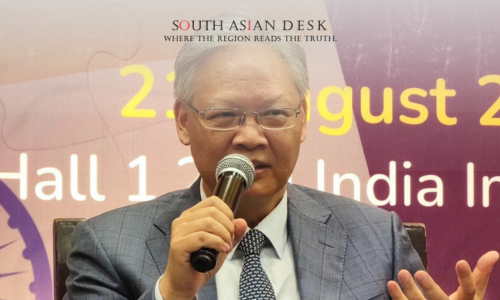
China’s envoy condemns US tariffs on India, pledging support for multilateral trade Chinese Ambassador Xu Feihong, speaking in New Delhi on Thursday, August 21, 2025, denounced the United States’ imposition of 50% tariffs on Indian goods, calling the US a “bully” and pledging Beijing’s support for India to uphold the global trading system. The tariffs, effective from Tuesday, August 27, 2025, target India’s imports of Russian oil.
Why US Tariffs Matter in South Asia
The US tariffs on India, one of South Asia’s largest economies, threaten to disrupt regional trade dynamics and strain India’s export sectors, such as textiles and jewellery, which employ millions. Beijing’s vocal opposition signals a potential realignment in India-China relations, impacting South Asia’s geopolitical and economic landscape amid global trade tensions.
Beijing’s Stance on US Tariffs
During an event in New Delhi, Ambassador Xu Feihong criticised the US for leveraging tariffs as a “bargaining chip” to demand “exorbitant prices” from other nations. “The United States has imposed tariffs of up to 50% on India and even threatened more. China firmly opposes it,” Xu stated, as reported by the news agency ANI. He argued that such actions disrupt the global economic order and urged countries to resist “economic bullying” to protect the World Trade Organisation (WTO)-centric multilateral trading system.
Economic Impact on India
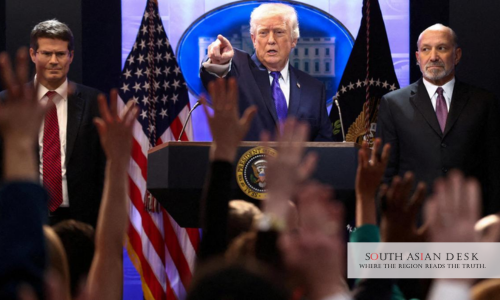
The tariffs, announced by US President Donald Trump on Wednesday, August 6, 2025, include an additional 25% duty on top of an existing 25% levy, citing India’s continued purchase of Russian oil. According to the BBC, these tariffs affect approximately 55% of India’s USD 86.5 billion annual exports to the US, threatening sectors like textiles, gems, and seafood. The Indian government, through Commerce Minister Piyush Goyal, stated on Monday, August 4, 2025, that it is assessing the impact and will take steps to safeguard national interests.
Warming India-China Relations
Xu’s remarks come amid improving ties between New Delhi and Beijing. During Chinese Foreign Minister Wang Yi’s visit to India on Monday, August 18, 2025, both nations agreed on measures to stabilise relations, including resuming direct flights and addressing border disputes. Xu emphasised that India and China are “partners, not rivals,” and called for enhanced cooperation to counter global trade disruptions. He invited Indian businesses to invest in China, stressing mutual economic benefits.
Background
The US tariffs stem from India’s increased imports of Russian oil since the Ukraine conflict began in 2022, which Delhi defends as necessary to secure affordable energy for its population. The US, aiming to curb Russia’s oil revenues, imposed a 25% tariff on Indian goods in July 2025, followed by an additional 25% on August 6, 2025, as per the White House’s executive order. This move has strained US-India trade relations, previously seen as strengthening, and disrupted negotiations for a bilateral trade agreement. Meanwhile, China, a significant buyer of Russian oil, has faced no similar penalties, prompting speculation about selective enforcement.
What’s Next
Prime Minister Narendra Modi’s visit to China for the Shanghai Cooperation Organisation (SCO) Summit in Tianjin, scheduled for Monday, August 25, 2025, is expected to further strengthen India-China ties. Discussions on trade and border issues will likely influence India’s response to the US tariffs. As the tariffs take effect, India faces a critical window to negotiate with the US or diversify its export markets to mitigate economic fallout, with Beijing’s support potentially shaping its strategy against US tariffs.
Published in SouthAsianDesk, June 28th, 2025
Follow SouthAsianDesk on X, Instagram and Facebook for insights on business and current affairs from across South Asia.