Dhaka, Sunday, January 4, 2026 – At least 296 Bangladeshis died in Bangladesh border killings over the last decade, from 2016 to 2025. India’s Border Security Force caused 213 of these through gunfire. The figures come from a human rights report that also notes over 300 injuries and multiple abductions.
These Bangladesh border killings underscore a persistent human rights issue in South Asia. They strain relations between Dhaka and New Delhi. Calls for accountability are growing as incidents affecting border communities and bilateral ties intensify.
BSF Border Deaths: Yearly Breakdown
The Ain o Salish Kendra report details BSF border deaths as the leading cause. In 2025 alone, 34 Bangladeshis died. Of these, 24 were from gunshot wounds, and 10 were from physical torture. This marks the highest in five years.
Previous years show a pattern. 30 BSF border deaths occurred in 2024. 31 in 2023. 23 in 2022. 18 in 2021. Earlier data includes 48 in 2020, 43 in 2019, 14 in 2018, 24 in 2017, and 31 in 2016.
Gunfire accounts for most BSF border deaths. Torture and chases by BSF personnel contribute to others. The report states violations stem mainly from the Indian side.
Border Abductions Statistics and Injuries
Border abductions statistics reveal additional concerns. In 2025, BSF abducted 14 Bangladeshis. Only four returned. Prior years vary: 3 in 2021, 22 in 2020, 34 in 2019, 15 in 2018, 46 in 2017, 24 in 2016.
Injuries exceeded 300 over the decade. 38 in 2025. 25 in 2024. 31 in 2023. 15 in 2022. 9 in 2021. 26 in 2020. 48 in 2019. 15 in 2018. 39 in 2016.
These border abduction statistics highlight vulnerability. Many incidents involve civilians near the 4096-kilometre shared border. Rights groups urge probes into each case.
Bangladesh-India Border Tensions: Diplomatic Efforts
Bangladesh-India border tensions persist despite talks. In August 2025, the 56th BGB-BSF conference in Dhaka addressed the issue. The BSF agreed to reduce killings to zero through precautionary measures.
BGB Director General Major General Mohammad Ashrafuzzaman Siddiqui expressed concern over the shootings of unarmed Bangladeshis. He called for non-lethal measures.
India’s BSF Director General Daljit Singh Chaudhary pledged extra steps to avoid fatalities. The joint statement committed both sides to curb border violence.
Earlier official data support the scale. In 2019, Bangladesh Home Minister Asaduzzaman Khan told parliament that the BSF killed 294 Bangladeshis from 2009 to 2018. He listed yearly figures: 66 in 2009, 55 in 2010, 31 in 2011, 38 in 2012, 29 in 2013, 32 in 2014, 46 in 2015, 31 in 2016, 30 in 2017, 15 in 2018.
This statement aligns with broader tensions along the Bangladesh-India border. Incidents include push-ins of over 2436 people into Bangladesh since May 2025.
Experts note political shifts affect the border. The fall of Sheikh Hasina’s government in August 2025 worsened strains. Rights activist Nasir Uddin Elan said killings rose post-change due to India’s stance.
Retired Major General ANM Muniruzzaman emphasized non-lethal options for addressing smuggling suspicions. He advocated high-level consultations beyond protests.
Background of Bangladesh Border Killings
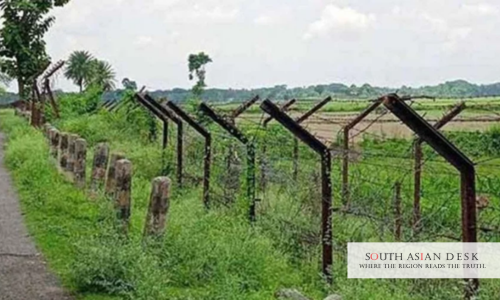
The India-Bangladesh border spans 4096 kilometres across five Indian states. Disputes trace to the partition in 1947. Enclaves were resolved in 2015, but violence continues.
Cattle smuggling allegations often precede BSF border deaths. However, reports indicate that many victims are farmers or locals. Human rights bodies label the border a high-risk zone globally.
From 2000 to 2020, over 1236 Bangladeshis died in similar incidents. The pattern fuels Bangladesh-India border tensions. Diplomatic notes are exchanged regularly, but enforcement often lags.
The BSF maintains patrols to prevent illegal crossings. Bangladesh pushes for joint mechanisms. Conferences occur biannually, yet implementation varies.
What’s Next
Stakeholders call for international oversight. Dhaka may raise the issue in the upcoming bilateral meetings.
Rights groups demand independent inquiries. If unaddressed, Bangladesh border killings could escalate regional instability. The data urges swift action to halt Bangladesh border killings and foster safer borders.
Published in SouthAsianDesk, January 4th, 2026
Follow SouthAsianDesk on X, Instagram and Facebook for insights on business and current affairs from across South Asia.