Communal tension in Nepal erupted on Sunday, January 4, 2026, when protests over a TikTok video with alleged anti-Hindu content turned violent in Birgunj town near the India border. Police lobbed tear gas shells to disperse crowds in Parsa district, injuring seven officers. The unrest stemmed from mosque vandalism in Dhanusha district the previous day, leading to three detentions.
This incident highlights fragile social harmony in Nepal’s Madhesh Province, where religious disputes can spill across the porous India-Nepal border and affect bilateral ties. With millions crossing daily for trade and family, such events risk broader regional instability in South Asia.
Nepal India Border Protests Turn Violent
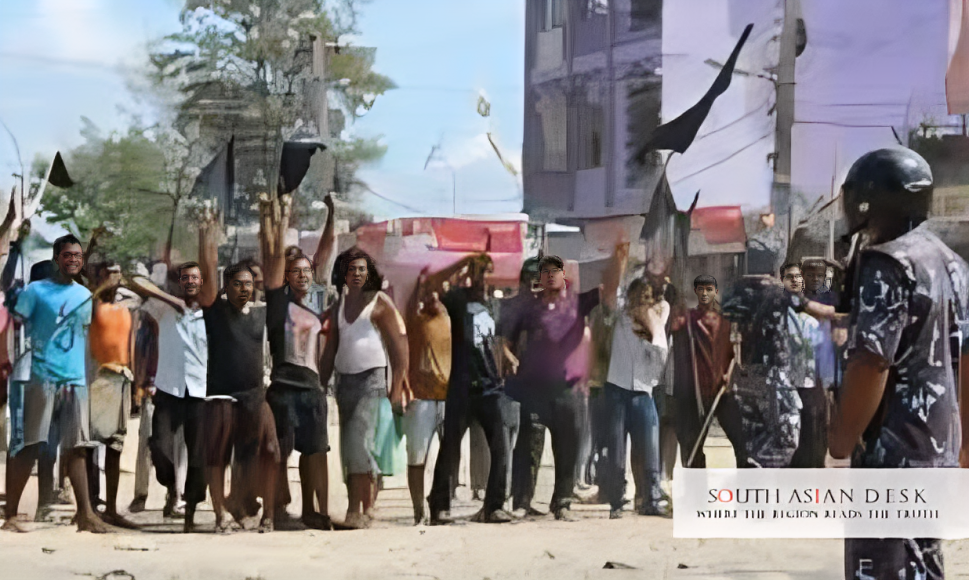
Protests began in Birgunj, Parsa district, bordering Raxaul in India. Demonstrators from the Muslim community rallied against the vandalism of a mosque in Dhanusha district. They burned tyres and chanted slogans at Chhapkaiya Idgah Chowk. The crowd pelted stones at police, vandalising a local station.
Police responded with minimum force. They fired five rounds of tear gas to control the situation and extinguish fires. The clash lasted briefly. By 12:30 PM, order returned. Seven police personnel sustained minor injuries from stones.
Deputy Superintendent of Police Raju Karki, spokesperson for Parsa district police, confirmed the details. He stated that officers focused on de-escalation. No protesters reported injuries.
Nepal Police Tear Gas Deployment Amid Clashes
Nepal police tear gas use marked the peak of the confrontation. Authorities lobbed about half a dozen shells. This action prevented further escalation in the Nepal India border protests. Police detained no one at the scene in Birgunj.
In Dhanusha, investigations continued. The mosque in Sakhuwa Maran area of Kamala Municipality suffered damage on Saturday. Vandals targeted it after two Muslim youths posted the TikTok video.
Deputy Superintendent of Police Ganesh Bam, spokesperson for Dhanusha police, reported three detentions. The individuals faced charges for posting the video and involvement in the Nepal mosque vandalism. Police seized devices for evidence.
Nepal Mosque Vandalism Sparks Outrage
The Nepal mosque vandalism ignited the chain of events. A group attacked the structure in response to the social media post. The video contained remarks deemed offensive to Hindu sentiments. It spread rapidly on TikTok, fueling communal tension in Nepal.
Local leaders in Dhanusha intervened initially. They handed the youths to police, citing risks to religious harmony. Discussions aimed to resolve the matter peacefully. However, news reached Birgunj, sparking the Nepal India border protests.
Communal tension in Nepal often links to social media in border areas. Platforms like TikTok, Facebook, and Instagram amplify disputes. Officials noted similar past incidents in Madhesh Province.
Background
Madhesh Province borders India across Bihar and Uttar Pradesh. It hosts diverse communities, including Hindus and Muslims. Historical grievances over resources and representation heighten sensitivities. The open border facilitates movement but also rumor spread.
Previous communal tension in Nepal near borders involved land disputes or festivals. In 2020, similar clashes occurred in Kapilvastu district. These events strain Nepal-India relations, as cross-border families get affected.
The current communal tension in Nepal follows a pattern. Social media triggers rapid mobilisation. In this case, the TikTok video reached thousands within hours. Authorities struggle to monitor content across platforms.
Government responses emphasise unity. Nepal’s constitution protects religious freedom. Laws prohibit actions harming social harmony. Penalties include fines and imprisonment.
What’s Next
Officials monitor social media to prevent further communal tension in Nepal. Legal actions proceed against detainees. Community dialogues may follow to rebuild trust.
Chief District Officer Bhola Dahal of Parsa issued a public appeal. He urged restraint and warned against activities disrupting harmony. Dahal stated: “Individuals involved in fomenting social, religious, or cultural animosity among each other, affecting national unity, or spreading false rumors that harm the social reputation of communities are being closely monitored on social media accounts such as Facebook, TikTok, and Instagram.”
Legal action targets those creating disharmony or damaging sites. High security alert remains in Madhesh. Nepal India border protests could recur if unaddressed. Forward steps include awareness campaigns on media literacy.
The incident underscores needs for better cross-border cooperation. Nepal and India share mechanisms like joint working groups on security. These could address spillover from communal tension in Nepal.
Communal tension in Nepal demands vigilant response. As investigations conclude, focus shifts to preventing recurrence near the India border.
Published in SouthAsianDesk, January 5th, 2026
Follow SouthAsianDesk on X, Instagram and Facebook for insights on business and current affairs from across South Asia.