India’s External Affairs Minister S Jaishankar voiced concern over US strikes in Venezuela that captured President Nicolas Maduro. He urged dialogue to ensure people’s safety amid the crisis.
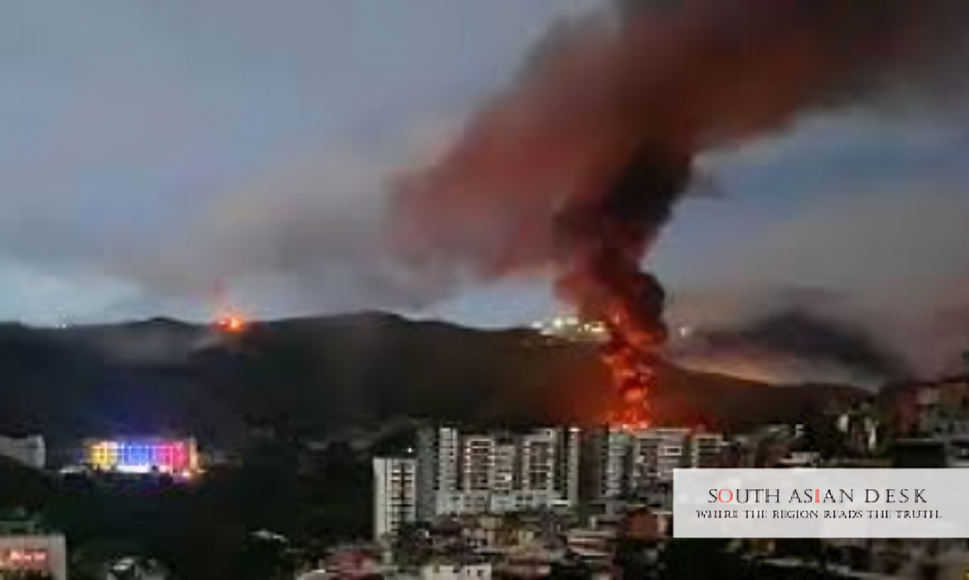
US forces launched military strikes in Venezuela on Saturday, 3 January 2026. The operation captured Venezuelan President Nicolas Maduro and his wife Cilia Flores in Caracas. They were flown out of the country in a joint effort by US intelligence and law enforcement. This development has heightened tensions in the region.
The event holds significance for South Asia. India maintains strong diplomatic and economic ties with Venezuela. Bilateral relations include energy cooperation and trade. Disruptions could affect oil supplies, as Venezuela has been a key exporter to India in the past.
Jaishankar Venezuela Response Highlights India Concern
External Affairs Minister S Jaishankar addressed the US strikes in Venezuela during a press interaction in Luxembourg on Tuesday, 6 January 2026. He expressed India’s concern over the unfolding situation. “We are concerned about the developments,” Jaishankar stated. He urged all parties to negotiate for the well-being and safety of Venezuela’s people.
Jaishankar emphasised India’s longstanding positive relations with Venezuela. “We would want Venezuela as a country with whom, over many years, we have had very good relations,” he said. “So we would like the people to come out well, whatever the direction of events.” This reflects India concern Venezuela amid the political upheaval.
The Ministry of External Affairs issued an official statement on the matter. “Recent developments in Venezuela are a matter of deep concern,” the MEA noted. “We are closely monitoring the evolving situation. We call upon all concerned to address issues peacefully through dialogue, ensuring peace and stability in the region.” The statement also mentioned that the Indian Embassy in Caracas remains in contact with the Indian community to provide assistance.
Maduro Capture Details And US Justification
The Maduro capture occurred during the US strikes in Venezuela. President Donald Trump announced the operation’s success in a press conference. “We have captured Venezuelan leader Nicolas Maduro,” Trump declared. He described it as a large-scale strike against Venezuela. Maduro faces drug-related charges in New York, according to US officials.
Trump stated that the US would temporarily manage Venezuela during the transition. “We’re going to run the country until such time as we can do a safe, proper and judicious transition,” he said. He added that the focus includes restarting oil production. “Get the oil flowing again,” Trump remarked. This indicates US intentions to stabilise the nation post-Maduro capture.
Venezuelan authorities condemned the action. Vice-President Delcy Rodriguez stated the government was prepared to defend the nation. An official Venezuelan response rejected the US strikes in Venezuela as a violation. “The Bolivarian Republic of Venezuela rejects, condemns, and repudiates the aggression,” the statement read. Reports indicate civilian casualties and infrastructure damage from the strikes, though exact figures require verification.
Background On India-Venezuela Ties
India and Venezuela share a history of cooperation. The fifth India-Venezuela Foreign Office Consultations took place in New Delhi on 26 November 2025. Co-chaired by Secretary (East) P Kumaran and Vice-Minister Tatiana Josefina Pugh Moreno, the meeting reviewed bilateral relations. Discussions covered energy, health, and economic partnerships.
In September 2025, Secretary (East) P Kumaran met Venezuelan Vice-Minister Raul Hernandez. Talks focused on digital public infrastructure and artificial intelligence. Areas included payments, citizen services, agriculture, health, and education. These engagements underscore the depth of ties.
Jaishankar met Venezuelan Foreign Minister Yvan Gil in September 2024 on UNGA sidelines. They discussed energy, health, economic cooperation, and multilateral reforms. Earlier, in July 2025, Jaishankar greeted Venezuela on its National Day, highlighting ongoing partnership efforts.
India has issued a travel advisory for Venezuela. The MEA advised Indians to exercise extreme caution and restrict movements. “All Indians who are in Venezuela for any reason are advised to exercise extreme caution,” the advisory stated. It recommended avoiding non-essential travel due to the instability following US strikes in Venezuela.
The Indian community in Venezuela numbers around 50. The Embassy provides support amid the crisis. This aligns with India concern Venezuela for its citizens abroad.
Venezuela’s oil reserves have been crucial for India. In past years, India imported crude oil worth USD 7.7 billion from Venezuela. Disruptions from the Maduro capture could impact global energy markets, affecting South Asian economies. India seeks stable relations to ensure supply chains.
International reactions vary. Several nations condemned the US strikes in Venezuela as a breach of international law. Others supported the action against Maduro’s regime. The UN Security Council discussed the matter, with calls for restraint.
What’s Next For Venezuela And Regional Stability
The future remains uncertain after the Maduro capture. US officials indicate a transitional period under American oversight. Potential elections could follow, but timelines are unclear. Venezuela’s opposition may gain prominence, leading to political shifts.
India continues to monitor developments. The MEA’s call for dialogue suggests advocacy for peaceful resolution. Jaishankar Venezuela comments indicate India’s push for stability. This could involve multilateral forums.
South Asian nations watch closely. Energy security ties into the crisis. India may engage with partners to mitigate impacts from US strikes in Venezuela.
The US strikes in Venezuela mark a pivotal moment. Parties must prioritise dialogue to safeguard lives and restore order.
Published in SouthAsianDesk, January 7th, 2026
Follow SouthAsianDesk on X, Instagram and Facebook for insights on business and current affairs from across South Asia.