

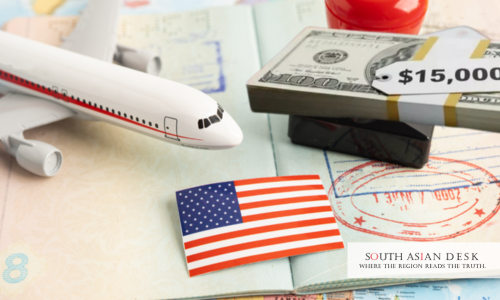
The United States has added Bangladesh to its visa bond list, requiring travelers to deposit up to $15,000 for B1/B2 visas starting January 21, 2026. This Trump administration policy targets overstays among high-risk nations.
The United States State Department on Tuesday expanded its visa bond pilot programme, adding Bangladesh and 24 other countries to a list now totalling 38. Bangladeshi citizens applying for B1/B2 visas must post bonds of $5,000, $10,000, or $15,000, as determined during the interview. The measure aims to deter visa overstays by imposing financial penalties.
This development affects thousands of Bangladeshis who travel to the US for business or tourism each year. In South Asia, where remittances and family ties drive migration, the US visa bond requirement for Bangladesh could strain economies that rely heavily on overseas workers. Nepal and Bhutan also face similar mandates, which could potentially reshape regional travel patterns and increase costs for families.
Bangladesh Visa Deposit: How the Process Works
Applicants found eligible for B1/B2 visas must submit Form I-352 and pay the bond via Pay.gov, the US Treasury’s platform. The bond applies to all Bangladeshi passport holders, regardless of the location where their application is submitted. Consular officers direct payments only after conducting interviews; third-party sites are not permitted to do so.
The US visa bond Bangladesh programme limits visas to a single entry with a maximum stay of 30 days. Travellers must use one of the designated airports: Boston Logan, John F. Kennedy, or Washington Dulles. Failure to comply risks bond forfeiture.
Refunds occur automatically if travellers depart on time, do not travel before visa expiry, or are denied entry. Breaches, such as overstays or status adjustments, trigger reviews by the U.S. Citizenship and Immigration Services.
B1 B2 Visa Bond Bangladesh: Impact on Travellers
For Bangladeshis, the B1/B2 visa bond in Bangladesh adds a hefty financial barrier. Bonds reach $15,000 per person, non-refundable in the event of an overstay. This could hit lower-income applicants the hardest, as families might need to deposit $60,000 for a group of four.
Data from the Department of Homeland Security’s Entry/Exit Overstay Report justifies the policy. It flags countries with high B1/B2 overstay rates. Bangladesh’s inclusion reflects historical patterns, though exact figures for 2025 remain undisclosed.
Travel agents in Dhaka report an increase in concerns. One agency noted a 20% drop in inquiries since the announcement. Students and professionals fear delays in visa processing.
The Trump visa policy for Bangladesh extends earlier restrictions. Since January 2025, the administration has ramped up immigration controls, including deportations and social media screenings.
Trump Visa Policy Bangladesh: Broader Context
The Trump visa policy for Bangladesh fits a pattern of stringent measures. The pilot launched in August 2025 with initial countries like Malawi and Zambia. Expansions in October 2025 and January 2026 now cover a significant portion of Africa, Latin America, and South Asia.
Officials state the bonds enhance security and compliance. Human rights groups criticise them for limiting due process. No direct response has been received from Bangladesh’s Foreign Ministry yet, but diplomats in Washington are monitoring the developments.
Economically, Bangladesh sends over 50,000 visitors to the US annually. Remittances from the diaspora exceed $20 billion yearly. The US visa bond for Bangladesh could reduce visits, affecting trade ties worth $9 billion in 2025.
Background
The visa bond concept originates from Section 221(g)(3) of the Immigration and Nationality Act. A Temporary Final Rule published on August 5, 2025, established the 12-month pilot. It targets B1/B2 categories to address overstays without broader visa denials.
Previous Trump administrations saw similar proposals, which were paused under Biden. Revival in 2025 aligns with election pledges on immigration. Bangladesh’s addition follows data showing that the overstay rate for B visas exceeds 2%.
What’s Next
Bangladesh may seek diplomatic exemptions or clarifications before 21 January. Travelers should check the US embassy’s website for updates. Long-term, the programme is scheduled to end in August 2026, unless extended.
The US visa bond policy in Bangladesh underscores the shifting immigration landscape, urging South Asian nations to negotiate fairer terms.
Published in SouthAsianDesk, January 7th, 2026
Follow SouthAsianDesk on X, Instagram and Facebook for insights on business and current affairs from across South Asia.
