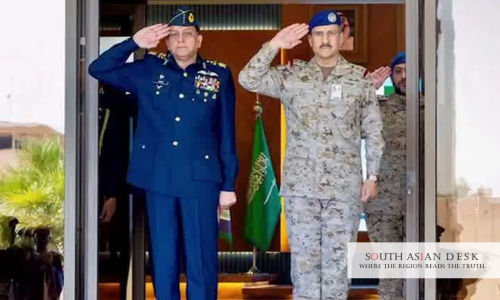
Riyadh: Pakistan Saudi defense cooperation took a significant step forward as Air Chief Marshal Zaheer Ahmed Baber Sidhu met with top Saudi military officials in Riyadh. The meetings held on Wednesday focused on enhancing bilateral ties. Saudi Arabia has expressed a strong interest in joint training and operational collaboration with Pakistan amid discussions on regional security.
This development bolsters strategic partnerships in the Middle East and South Asia. It could lead to greater stability through shared military expertise, potentially affecting neighboring countries such as India and Iran.
Pakistan Air Chief’s Saudi Visit Highlights
The Pakistan Air Chief’s visit to Saudi visit involved key engagements with Lieutenant General Turki bin Bandar bin Abdulaziz, Commander of the Royal Saudi Air Force, and General Fayyadh bin Hamed Al-Ruwaili, Chief of the General Staff. Discussions covered Pakistan-Saudi defense cooperation, including future avenues for collaboration.
Air Chief Marshal Sidhu highlighted the historic fraternal ties between the two nations. He reiterated Pakistan’s commitment to strengthening military cooperation through bilateral and multilateral exercises. The air chief emphasized the Pakistan Air Force’s transformation into a multi-domain force, integrating capabilities in space, cyber, electronic warfare, and artificial intelligence.
Saudi officials praised the professionalism, operational excellence, and combat readiness of the Pakistan Air Force. They appreciated Pakistan’s role in promoting regional peace and stability. The meetings reaffirmed the Pakistan-KSA Defence Agreement as a symbol of mutual trust and brotherly relations.
Both sides agreed to enhance engagement through joint training and operational collaboration, and Pakistan, as well as the exchange of professional expertise. The Saudi leadership has shown a particular interest in multi-domain operations, aligning with modern warfare trends.
The Pakistan Air Chief’s visit to Saudi Arabia underscores the depth of the strategic partnership in the defence and aviation sectors. It builds on decades of close ties where Pakistan has provided training and advisory support to Saudi forces.
JF-17 Saudi Deal In Focus
Amid the Pakistan-Saudi defense cooperation talks, reports emerged of a potential JF-17 Saudi deal. Sources close to the military indicated that discussions are underway to convert approximately USD 2 billion in Saudi loans into a supply of JF-17 Thunder fighter jets.
The JF-17, a light combat aircraft jointly developed by Pakistan and China, represents a cost-effective option for Saudi Arabia. One source suggested the total JF-17 Saudi deal could reach USD 4 billion, including additional equipment beyond the loan conversion.
The jets have been combat-tested in Pakistan’s operations, adding to their appeal. Pakistan aims to expand arms exports with the JF-17 featuring in deals with other nations.
These talks follow the signing of a mutual defence pact in September 2025. The agreement commits both countries to treat aggression against one as an attack on both, deepening their alliance.
Pakistan’s defence minister has stated that successful outcomes in the weapons industry could reduce reliance on international financial aid. The JF-17 Saudi deal, if finalized, would mark a significant milestone in Pakistan-Saudi defense cooperation.
Saudi Pakistan Joint Training Prospects
Saudi Pakistan joint training emerged as a key area of interest during the meetings. Saudi officials expressed eagerness to collaborate on exercises focusing on multi-domain operations.
Such initiatives could include air force drills simulation training and knowledge sharing. The Pakistan Air Force has participated in multinational exercises hosted by Saudi Arabia in the past.
Enhanced Saudi Pakistan joint training would improve interoperability between the forces. It aligns with both nations’ efforts to modernize their militaries amid evolving regional threats.
The discussions also touched on technical cooperation in aviation. This could pave the way for joint development projects or technology transfers.
Pakistan Saudi defense cooperation in training reflects shared security concerns. Both countries face challenges from instability in the Middle East and South Asia.
Background
Pakistan and Saudi Arabia share deep-rooted ties dating back to Pakistan’s independence. Saudi Arabia has provided substantial financial aid to Pakistan during economic crises.
In return Pakistan has contributed military personnel for training and advisory roles in the Kingdom. Thousands of Pakistani troops have served in Saudi Arabia over the years.
The 2025 mutual defence pact formalized this relationship. It was signed amid regional tensions including conflicts in the Gulf.
Pakistan’s air force has modernized rapidly incorporating advanced technologies. The JF-17 program exemplifies Pakistan’s growing defence industry capabilities.
Saudi Arabia invests heavily in its military as part of Vision 2030. It seeks diversified partnerships beyond traditional allies like the United States.
South Asia benefits from such collaborations. Stable Gulf relations support economic ties including remittances from Pakistani workers in Saudi Arabia.
Data shows bilateral trade reached USD 4.5 billion in 2025. Defence cooperation could further boost this figure.
Recent events like Israel’s strikes in Doha in 2025 heightened the need for strong alliances. Pakistan Saudi defense cooperation helps counter such instabilities.
The Pakistan Air Chief Saudi visit comes weeks after similar engagements with other Gulf states. It signals Pakistan’s active defence diplomacy.
What’s Next
Future meetings may formalize agreements on Saudi Pakistan joint training and the JF-17 Saudi deal. Implementation could begin in 2026 with initial exercises.
Both nations plan to expand multilateral engagements involving other partners. This could include joint operations under Islamic Military Counter Terrorism Coalition.
Monitoring regional developments will shape the trajectory. Successful collaboration could lead to broader technology sharing.
The JF-17 Saudi deal negotiations continue with potential announcements in coming months. It depends on finalizing financial and technical details.
Stakeholders expect sustained momentum in Pakistan Saudi defense cooperation. Regular high-level visits will maintain progress.
Enhanced ties promise mutual benefits in security and economy. They reinforce the brotherly bond between the two Muslim nations.
As preparations advance Pakistan Saudi defense cooperation remains pivotal for regional peace.
Published in SouthAsianDesk, January 8th, 2026
Follow SouthAsianDesk on X, Instagram and Facebook for insights on business and current affairs from across South Asia.