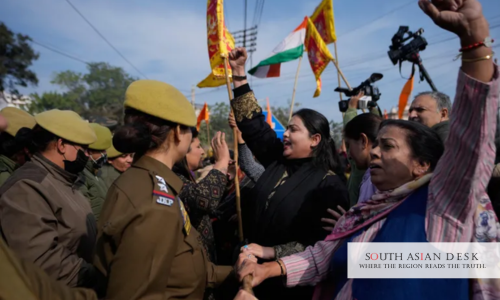
India has shut down a medical college in Indian-administered Kashmir after right-wing Hindu protests over Muslims admissions Kashmir medical college. The National Medical Commission revoked recognition for Shri Mata Vaishno Devi Institute of Medical Excellence on January 6, 2026, citing infrastructure deficiencies. This affects 50 students admitted via NEET merit.
The decision follows weeks of demonstrations by Hindu groups who objected to 42 Muslim students securing most seats in the inaugural MBBS batch. The college, run by the Shri Mata Vaishno Devi Shrine Board and partly government-funded, faced demands to prioritise Hindu students due to its ties to the Hindu shrine.
This incident underscores communal tensions in education in Jammu and Kashmir, a region marked by religious divides. It highlights challenges in merit-based admissions amid identity politics, potentially worsening doctor shortages in South Asia where India struggles with healthcare workforce gaps.
Hindu Protests Medical Admissions Trigger Revocation
Protests began in November 2025 after the admission list revealed 42 Muslims, mostly from Kashmir, seven Hindus, and one Sikh among the 50 NEET qualifiers. Hindu organisations, including the Shri Mata Vaishno Devi Sangarsh Samiti—an umbrella of around 60 right-wing groups—demonstrated outside the college gates in Reasi. They argued the institution, funded partly by donations to the Mata Vaishno Devi shrine, should benefit Hindu devotees primarily.
Demonstrators raised slogans and petitioned the lieutenant governor for Hindu reservations or admission revocation. BJP legislators supported the cause, escalating demands to college closure. On January 7, 2026, the Samiti celebrated the NMC decision by distributing sweets and dancing.
BJP spokesperson Altaf Thakur stated: “The college recognition was withdrawn because NMC found several shortcomings. There’s no question of the issue being about Hindus and Muslims.”
Students described a harmonious campus environment before the controversy. Saniya Jan, an 18-year-old Muslim student from Baramulla, said: “I appeared for a competitive exam, which is one of the hardest in India, and was able to get a seat at a medical college. Now everything seems to have crashed. All this happened because of our identity. They turned our merit into religion.”
Her father, Gazanfar Ahmad, added: “The college was good. The faculty was supportive. It looked like no one cared about religion inside the campus.”
Other students noted superior facilities, including four cadavers per batch for anatomy training—better than some government colleges.
NMC Revokes College Recognition Over Deficiencies
The National Medical Commission conducted a surprise inspection on January 2, 2026. The Medical Assessment and Rating Board (MARB) cited non-compliance with minimum standards, including inadequate teaching faculty, low bed occupancy, insufficient patient flow in outpatient departments, poor libraries, and operating theatre deficiencies.
The NMC withdrew the Letter of Permission granted in September 2025 for 50 MBBS seats. The action took immediate effect, halting the batch mid-session.
Political analyst Zafar Choudhary questioned the timing: “Logic dictates that their infrastructure would have only improved since the classes started. So we don’t know how these deficiencies arose all of a sudden.”
Students and faculty described the inspection as rushed and predetermined, rejecting claims of serious lapses. A senior faculty member said facilities were satisfactory during the visit.
The college, part of Shri Mata Vaishno Devi University established in 1999, aimed to address regional healthcare needs with modern equipment.
Background: Merit vs Communal Demands in Education
Admissions follow the National Eligibility cum Entrance Test (NEET), conducted by the National Testing Agency. Over two million students compete annually for around 120,000 MBBS seats nationwide. The process is religion-neutral, with counselling determining placements based on scores and preferences.
The Shri Mata Vaishno Devi Institute is not a minority institution, so admissions adhered to standard guidelines. Muslims admissions Kashmir college dominated due to higher NEET performance from Kashmiri applicants.
Similar controversies arise in the region, where Jammu (Hindu-majority) and Kashmir Valley (Muslim-majority) host institutions facing scrutiny. Nasir Khuehami of the Jammu and Kashmir Students’ Association noted: “The narrative that because the college is run by one particular community, only students from that community alone will study there, is dangerous.” He highlighted that Muslim-run institutions across India admit Hindus without exclusion.
Tanvir Sadiq, a National Conference legislator, pointed out government aid exceeding $13 million since 2017, making all Kashmiris stakeholders.
Jammu and Kashmir Chief Minister Omar Abdullah condemned the protests: “People generally fight for having a medical college in their midst. But here, the fight was put up to have the medical college shut. You have played with the future of the medical students of Kashmir.”
Abdullah directed adjustments for affected students in other government colleges via supernumerary seats to prevent academic loss.
What’s Next for Kashmir Medical College
The revocation applies to the 2025-26 batch. Future recognition depends on compliance and fresh inspections. Students await transfers to nearby institutions. India shuts Kashmir medical college amid ongoing debates on merit, funding, and communal harmony in education.
Published in SouthAsianDesk, January 15th, 2026
Follow SouthAsianDesk on X, Instagram and Facebook for insights on business and current affairs from across South Asia.