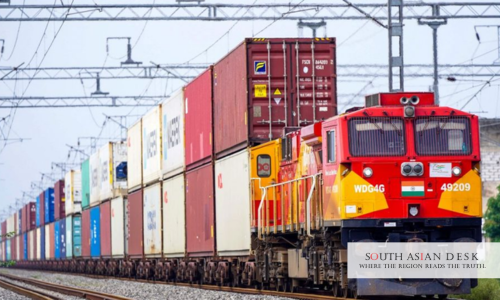
Indian Railways freight record reached new heights on January 5, 2026, with 892 interchange trains managed between the Dedicated Freight Corridor network and five zonal railways of Indian Railways. The Ministry of Railways announced this on January 14, 2026. The achievement highlights improved planning, traffic management, and coordination.
This Dedicated Freight Corridor milestone demonstrates the growing capacity of the DFC network. It eases congestion on conventional rail lines, leading to more punctual passenger services and reduced delays for commuters. It also supports industrial growth by enabling faster delivery of goods and lower logistics costs across South Asia.
Dedicated Freight Corridor Milestone Sets New Benchmark
The record 892 interchange trains occurred on Sunday, January 5, 2026. An interchange train crosses from the DFC network to the mixed-use Indian Railways network or vice versa. This metric reflects seamless integration and high-density operations.
The previous record stood at 865 trains on January 4, 2026. Other recent high-volume days include 846 trains on March 30, 2025; 830 on September 14, 2025; 820 on March 31, 2025; 812 on January 3, 2026; and 808 on May 25, 2025. These figures show a consistent upward trend in operational efficiency.
The Ministry of Railways credited the success to strengthened planning frameworks, robust traffic management, effective speed regulation, safe headways, and close coordination among stations. Modern tools such as real-time monitoring, automated signalling, digital control rooms, and strict safety protocols supported the performance.
High-power locomotives hauled long, heavy trains at higher average speeds. Strong teamwork among loco pilots, assistant loco pilots, and train managers ensured disciplined and safe operations. Improved feeder routes and yard management reduced detention times, allowing quicker entry and exit of trains.
DFCCIL Train Interchanges Drive Efficiency Gains
DFCCIL operates the Eastern Dedicated Freight Corridor (from Ludhiana to Dankuni/Sonnagar) and the Western Dedicated Freight Corridor (from Dadri to Jawaharlal Nehru Port). These specialised corridors carry heavy freight at higher speeds using advanced infrastructure.
The record interchanges ease pressure on conventional tracks, benefiting passenger services. Faster freight movement supports key commodities like coal, cement, containers, and agricultural products. This contributes to a more reliable supply chain and economic benefits for industries and consumers.
India rail freight increase aligns with national efforts to reduce logistics costs, which have fallen as a percentage of GDP due to such developments. The DFC network promotes modal shift from road to rail, cutting emissions and highway congestion.
Background: Growth of Dedicated Freight Corridors
The Dedicated Freight Corridor project aims to separate freight from passenger traffic on saturated routes. DFCCIL, established in 2006 under the Ministry of Railways, oversees construction and operations.
Significant sections became operational after 2017. By 2025, over 95 percent of the planned network was functional. The corridors feature automatic block signalling, longer trains (up to 1.5 km), and speeds of 100 km/h.
Investments have reached substantial levels, with ongoing expansions. The project seeks to increase rail’s share in freight to 45 percent by 2030. In recent years, Indian Railways freight loading has shown steady growth, crossing major milestones.
In South Asia, efficient rail freight in India supports regional trade dynamics. It sets benchmarks for infrastructure in neighbouring countries, though cross-border connectivity faces geopolitical constraints.
India Rail Freight Increase and Broader Impacts
The milestone reflects transformation in India’s logistics ecosystem. Faster, safer, and predictable movement of goods reduces costs and enhances competitiveness for exporters.
Environmental gains include lower CO2 emissions per tonne-kilometre compared to road transport. Businesses benefit from reduced transit times, such as container movements from northern India to ports.
Challenges involve maintaining high volumes through regular upkeep and technology upgrades. DFCCIL addresses these with ongoing inspections and innovations.
What’s Next after Indian Railways Freight Record
DFCCIL continues to focus on completing remaining sections and planning new corridors. Targets include higher daily interchanges and integration with multimodal terminals under Gati Shakti.
Indian Railways freight record signals sustained progress in rail-based logistics, strengthening supply chains and economic ties in South Asia.
Published in SouthAsianDesk, January 15th, 2026
Follow SouthAsianDesk on X, Instagram and Facebook for insights on business and current affairs from across South Asia.