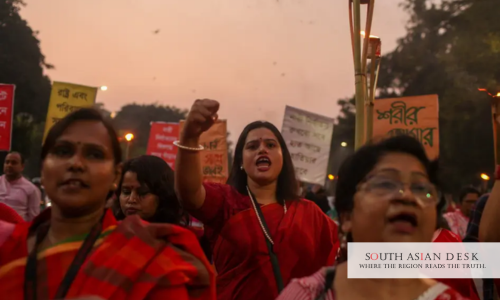
Bangladesh faces escalating Bangladesh women violence as attacks on women, girls, and minorities increase ahead of the February 12, 2026 general elections. Human Rights Watch reports heightened gender-based violence and targeted assaults on religious minorities following the August 2024 Monsoon Revolution.
Bangladesh women violence has surged with documented increases in gender-based violence Bangladesh between January and June 2025 compared to the previous year. Police data confirm this rise. Hardline religious groups have intensified rhetoric and protests against women’s rights initiatives. Hindu attacks Bangladesh include at least 51 incidents with 10 killings. Ethnic minorities in the Chittagong Hill Tracts continue to endure ongoing abuse from security forces.
This trend exposes gaps in protection under the interim government led by Muhammad Yunus. It threatens progress on gender equality and minority rights in South Asia, where communal tensions and political shifts often impact vulnerable groups. Women and minorities face exclusion from political processes, undermining democratic gains from the 2024 student-led uprising.
Gender Based Violence Bangladesh Increases Sharply
Police records show gender-based violence Bangladesh rose significantly in the first half of 2025. The increase is linked to greater activity by religious groups that seek to restrict women’s movement and societal roles.
Fauzia Moslem, president of the Bangladesh Mahila Parishad, attributes the surge to inflammatory rhetoric aimed at limiting women’s free participation. In May 2025, hardline groups protested the interim government’s efforts to advance gender equality, demanding an end to perceived anti-Islamic activities.
Women face verbal, physical, and digital abuse. Fear of violence restricts their access to public spaces. Political exclusion remains widespread, with 30 of 51 political parties fielding no women candidates. Jamaat-e-Islami nominated 276 candidates without including any women.
Hindu Attacks Bangladesh and Minorities Under Threat
Hindu attacks Bangladesh have escalated with at least 51 reported incidents, including 10 killings. A notable case occurred in December 2025 when Dipu Chandra Das, a 27-year-old Hindu garment worker, was beaten to death by a mob over alleged blasphemy allegations in Mymensingh.
Bangladesh minorities attacks extend to ethnic communities in the Chittagong Hill Tracts, where security forces continue abuses even after the revolution. These violations highlight failures to uphold constitutional protections for religious and ethnic minorities.
The interim government has faced criticism for inadequate responses to these incidents. No specific protective measures or arrests in major cases are detailed in available reports.
Background: Post-Monsoon Revolution Challenges
The August 2024 Monsoon Revolution ousted the Sheikh Hasina government through student-led protests. The interim administration promised reforms, accountability, and rights protection ahead of elections.
Despite pledges to amend laws for women’s rights and free speech, violence persists. Bangladesh has ratified CEDAW and ICCPR obligations, which require prevention of discrimination and protection of rights.
Historically, Bangladesh has had two female prime ministers and women played an active role in the 2024 protests. Current trends reverse these advances through exclusion and violence.
The Women’s Affairs Reform Commission recommends increased parliamentary representation for women and equal property rights. Adherence to the UN Women, Peace, and Security agenda remains essential.
What’s Next in Bangladesh Women Violence
The interim government must address rising Bangladesh women violence through stronger enforcement and minority safeguards. The elections on February 12, 2026 offer a chance to reaffirm commitments.
All parties should prioritise gender equality and protections. Failure to act risks further erosion of rights.
Bangladesh women violence demands urgent intervention to secure safety and inclusion ahead of polls.
Published in SouthAsianDesk, January 15th, 2026
Follow SouthAsianDesk on X, Instagram and Facebook for insights on business and current affairs from across South Asia.