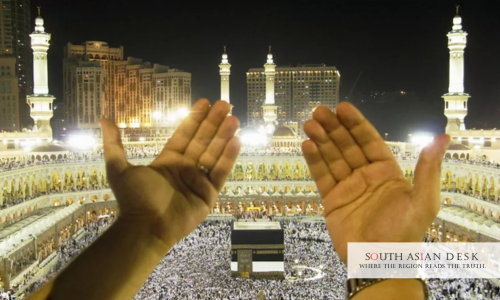
Islamabad, 19 January 2026: Pakistan has approved the Hajj policy 2026, allocating a total quota of 179,210 pilgrims. The policy, aligned with Saudi guidelines, divides slots between government and private schemes. Applications open soon via designated channels.
The Hajj policy 2026 holds significance for South Asia’s Muslim communities, where millions aspire to perform the pilgrimage annually. In Pakistan, it facilitates access amid economic pressures and ensures compliance with international standards, impacting regional religious harmony and travel logistics.
Hajj Policy 2026: Key Features
The Hajj policy 2026 outlines two main schemes. The government scheme accommodates up to 120,000 pilgrims on a first-come, first-served basis. It offers a long package lasting 38 to 42 days and a short package of 20 to 25 days. Tentative costs range from PKR 1,150,000 to PKR 1,250,000 per pilgrim, subject to final contracts for accommodation, transport, and meals.
Private scheme caps at 60,000 slots, managed by Dependent Hajj Companies (DHCs). Each DHC must handle at least 2,000 pilgrims. The Pakistan Hajj quota includes a hardship reserve of 1,000 seats for broken families, female pilgrims needing mehram, and disabled persons requiring attendants. Another 1,500 slots go to armed forces personnel, deducted from the private quota.
Minister for Religious Affairs and Interfaith Harmony Sardar Muhammad Yousaf stated: “The government has formulated and approved an effective Hajj Policy 2026 in accordance with guidelines issued by Saudi Arabia.”
Pakistan Hajj Quota Allocation and Eligibility
The Pakistan Hajj quota for 2026 remains at 179,210, unchanged from previous years. Eligibility requires a valid Pakistani passport until 26 November 2026. Children under 12 years are not permitted, per Saudi directives. Applicants must meet health standards, with terminally ill individuals barred. Women can apply without a mehram if they submit an affidavit confirming parental or spousal consent, group travel with reliable females, and no risk to dignity.
The policy prohibits those on the Exit Control List or barred by courts. Pilgrims must adhere to Saudi laws, with violations like drug trafficking leading to severe penalties and future bans.
A Hujjaj Muhafiz Scheme requires PKR 1,000 contribution per pilgrim for compensation: PKR 2 million for death, variable for injuries, and PKR 250,000 for evacuation.
Hajj Application 2026 Process
The Hajj application 2026 process uses the Nusuk Massar platform for registration. Government scheme applicants submit forms with dues in two instalments through designated banks. Private scheme bookings occur via approved DHCs, with payments deposited into escrow accounts for transparency.
Payment schedule for private scheme: First instalment (about 25% for core services) by 15 August 2025, second (40%) by 15 November 2025, third (about 35%) by 31 December 2025. Defaults lead to forfeiture and reallocation.
Overseas Pakistanis apply under the regular scheme, as no sponsorship option exists for 2026. Substitution allowed for government applicants unable to proceed due to death or illness, limited to family members with approval.
The ministry provides real-time visibility through the Pak Hajj App and a revamped Management Information System. Pilgrims download training materials and track applications digitally.
Road to Makkah 2026 Expansion
The Road to Makkah 2026 initiative facilitates pre-clearance for about 38,000 pilgrims departing from Islamabad. The service, which streamlines immigration at Pakistani airports, is available in Islamabad and Karachi. Efforts continue to extend it to Lahore.
This aligns with the Hajj policy 2026 goal of efficient logistics. Pilgrims undergo checks before flights, reducing delays in Saudi Arabia.
Background on Hajj Arrangements in Pakistan
Pakistan’s Hajj operations date back decades, managed by the Ministry of Religious Affairs and Interfaith Harmony. The policy incorporates lessons from past years, including stakeholder feedback and Saudi consultations. It mandates use of Saudi providers for accommodation, transport, and tawafa services.
Accommodations follow Saudi housing permits, with shared rooms in government packages. Transport contracts with Naqabah Siyarat ensure movement between holy sites. Health measures include mandatory vaccinations and on-site medical teams: one doctor and two paramedics per 1,000 pilgrims.
The policy emphasises digitisation, with the Pakistan Information Technology Board handling data and payments to prevent duplicates and ensure transparency.
In South Asia, similar policies in India and Bangladesh highlight shared challenges like quota limits and cost fluctuations due to currency exchange. Pakistan’s approach prioritises first-time pilgrims and welfare support.
Training and Welfare Under Hajj Policy 2026
Training is mandatory under the Hajj policy 2026. Sessions occur at district and tehsil levels, covering rituals, administrative procedures, app usage, medical guidelines, and Saudi laws. Repeater assistants aid in sessions.
Welfare staff includes muavineen selected transparently, with ratios of one per 100 pilgrims. An Emergency Management System features response teams for issues in Saudi Arabia.
Complaints go through a disposal committee, with appeals to an appellate authority. Performance of schemes undergoes third-party evaluation.
What’s Next
Applications for Hajj 2026 likely commence post-Safar 1447H, around late July 2025. The ministry will announce final costs after contracting. Pilgrims should monitor the official website and app for updates.
The Hajj policy 2026 implementation depends on timely payments and Saudi approvals, with flights scheduled by early 2026.
This Hajj policy 2026 reinforces Pakistan’s commitment to facilitating a smooth pilgrimage for its citizens.
Published in SouthAsianDesk, January 19th, 2026
Follow SouthAsianDesk on X, Instagram and Facebook for insights on business and current affairs from across South Asia.