Tensions in Assam’s Kokrajhar district ease after deadly clashes between Bodo and Adivasi communities, with authorities deploying forces to restore order.
Kokrajhar violence erupted in western Assam on Monday night, claiming two lives and prompting swift government action. The clashes, triggered by a road accident in Karigaon, involved mobs from Bodo and Adivasi groups who torched vehicles, houses and shops. Officials arrested 20 suspects, suspended mobile internet and deployed the Army to control the situation by Wednesday.
The incident highlights ongoing ethnic frictions in the Bodoland Territorial Region, where such conflicts risk destabilising local communities and broader regional stability in South Asia’s Northeast.
Assam Clashes Unfold in Karigaon
The Kokrajhar violence began late on Monday, 19 January 2026, when villagers in Karigaon attempted to stop an SUV suspected of cattle theft. The driver lost control after refusing to halt, leading to an assault on the occupants by a mob. Five people sustained injuries, and the vehicle was set ablaze.
One victim, a Bodo youth, died at Kokrajhar Medical College and Hospital on Tuesday night, 20 January 2026. An Adivasi youth from the Santhal community succumbed earlier that day. Tensions escalated as groups from both sides blocked a national highway, attacked a police outpost and torched several structures, including houses, shops, an office building and a camp of an Adivasi group in peace mode.
Police responded by arresting 20 individuals linked to the Assam clashes. Prohibitory orders under Section 163 of the Bharatiya Nagarik Suraksha Sanhita were imposed district-wide from Tuesday to prevent further gatherings.
Bodo-Adivasi Conflict Intensifies
The Bodo-Adivasi conflict in this incident stems from suspicions and immediate retaliation. Villagers had been patrolling due to recent cattle theft reports, mistaking the SUV occupants, who were inspecting a road project for thieves.
Inspector General of Police Akhilesh Kumar Singh stated the situation was almost normal by Wednesday, 21 January 2026. He urged residents to trust the administration and avoid rumours, with strict action promised against those spreading misinformation.
Assam Police issued a statement confirming the Karigaon area was under control and identified anti-national elements attempting to incite panic. They committed to maintaining peace for all citizens.
Army Deployment in Kokrajhar
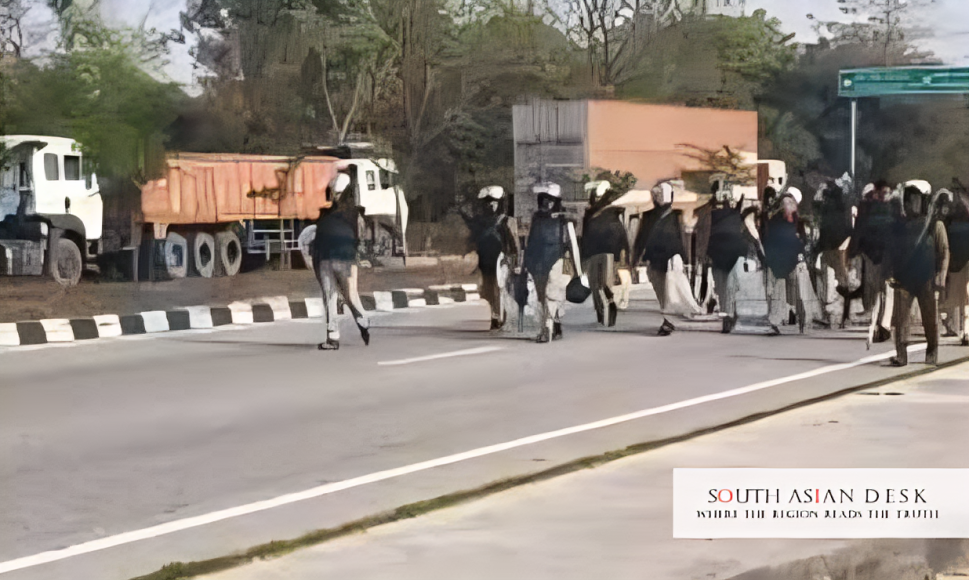
Army deployment in Kokrajhar included four columns alongside Central Reserve Police Force’s Rapid Action Force and state police. Flag marches occurred on Tuesday and Wednesday to deter further Kokrajhar violence.
The state government suspended mobile internet in Kokrajhar and Chirang districts temporarily, citing risks of inflammatory messages. A notification from the Home Department detailed the unrest originating from the Monday night accident, where a vehicle hit two Adivasi persons.
Chief Minister Himanta Biswa Sarma announced the measures, including Army deployment in Kokrajhar, to normalise the situation. He appealed for cooperation from community leaders to restore calm swiftly.
Five relief camps housed displaced residents from both communities. Officials provided security and worked to address insecurities, aiming for safe returns home.
No fresh incidents were reported on Wednesday.
Background
The Bodo-Adivasi conflict has deep roots in Assam’s Kokrajhar district, part of the Bodoland Territorial Region. Ethnic tensions between indigenous Bodo tribes and Adivasi settlers, including Santhals, date back decades.
In 1996, clashes in Kokrajhar displaced thousands and killed around 150 people amid disputes over land and resources. Similar violence recurred in 1998.
The region saw major unrest in 2014, when Bodo militants killed 62 Adivasis in Kokrajhar and Sonitpur districts, allegedly over voting patterns. Earlier episodes in 2007, 2008 and 2012 involved attacks between Bodo and non-Bodo groups, often leading to displacement.
These conflicts arise from competing claims to autonomy, land rights and political representation in the Bodoland area, established after accords in 2003 and 2020. The 2012 riots between Bodos and Bengali Muslims in Kokrajhar killed 108 and displaced over 400,000, underscoring the area’s volatility.
While peace processes have reduced insurgency, local triggers like the recent road accident can reignite the Bodo-Adivasi conflict, affecting livelihoods and security.
What’s Next
Authorities plan to lift restrictions once stability is confirmed, focusing on reconciliation between communities. The Kokrajhar violence underscores the need for dialogue to prevent future Assam clashes, with ongoing probes into arrests and rumour sources.
Published in SouthAsianDesk, January 22nd, 2026
Follow SouthAsianDesk on X, Instagram and Facebook for insights on business and current affairs from across South Asia.