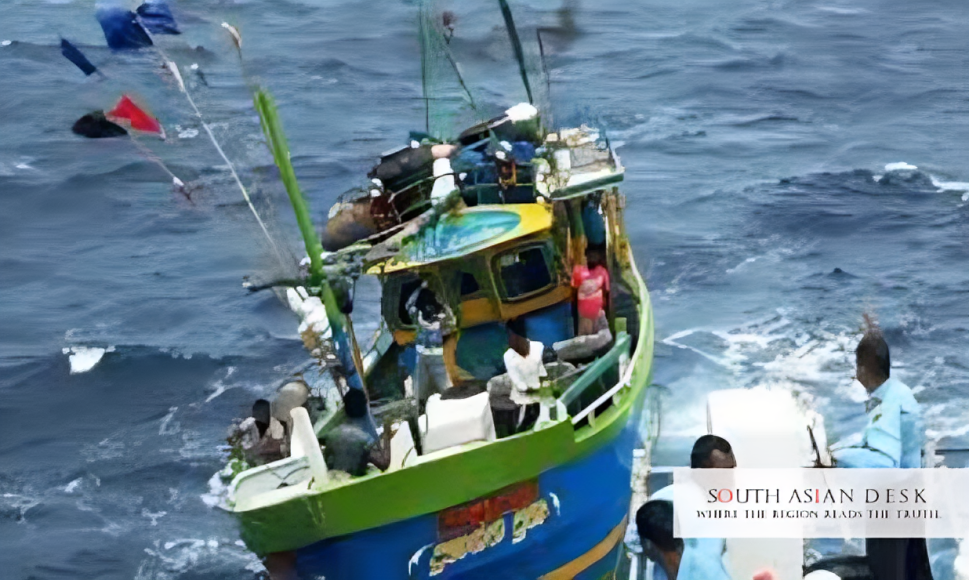
Seven Indian fishermen arrested from Tamil Nadu face detention after a maritime patrol off Jaffna.
Colombo: The Sri Lanka Navy arrested seven Indian fishermen on 20 January 2026 for alleged poaching in Sri Lankan waters. The incident occurred off Kovilan in the northern Jaffna peninsula. Two trawlers were seized during the operation. The detainees, hailing from Mayiladuthurai district, will undergo legal proceedings in Jaffna.
This arrest highlights ongoing frictions in the Palk Strait, where fishing boundaries often lead to cross-border incidents. Such events strain relations between India and Sri Lanka, affecting livelihoods on both sides.
Sri Lanka Navy Arrests Indian Fishermen
The Sri Lanka Navy conducted a routine patrol on the night of 20 January 2026. Naval vessels spotted Indian trawlers in restricted waters. Despite warnings, the boats continued fishing, prompting the seizure.
The Navy stated that the operation targeted illegal activities. The arrested fishermen include K Devaraj, 40; P Sridhar, 23; N Kalaivanan, 36; R Saranraj, 38; V Rajesh, 40; R Sakthiseelan, 26; and T Savin, 24. They had departed from Kodiyakarai in Nagapattinam district earlier that day.
Authorities took the group to Kankesanthurai Harbour. From there, they were handed to the Fisheries Inspector at Myliddy for investigation. The trawlers remain in Navy custody.
In 2025, the Sri Lanka Navy apprehended 346 Indian fishermen and seized 44 trawlers for similar violations. These figures underscore the scale of the issue.
Fishermen from Tamil Nadu often cite inadvertent crossings due to unclear boundaries. The Palk Strait, separating Tamil Nadu from Sri Lanka, serves as a vital fishing ground. However, bottom trawling by Indian vessels damages Sri Lankan marine resources, according to Colombo officials.
India Sri Lanka Fishing Dispute
The India Sri Lanka fishing dispute dates back decades. The 1974 maritime agreement defined boundaries, but enforcement remains challenging. Indian fishermen, mainly from Tamil Nadu, rely on the strait for their catch.
Sri Lankan authorities accuse them of poaching, leading to frequent arrests. In response, India has raised concerns over the treatment of detainees. Diplomatic talks have occurred, including joint working groups.
Yet, incidents persist. In 2024, over 200 Indian fishermen faced arrest. Releases often follow bilateral negotiations.
Tamil Nadu Chief Minister MK Stalin addressed the latest case. On 21 January 2026, he wrote to India’s External Affairs Minister S Jaishankar. The letter urged immediate diplomatic intervention for the fishermen’s release.
Stalin highlighted the humanitarian aspect. He noted that such arrests disrupt families and communities dependent on fishing.
The External Affairs Ministry has not issued a public response as of 23 January 2026. Past patterns suggest consular access will be sought.
Palk Strait Poaching Concerns
Palk Strait poaching involves environmental and economic stakes. Sri Lankan fishermen report depleted stocks due to Indian trawling methods.
Colombo has called for a ban on bottom trawling. India has subsidised deep-sea fishing alternatives for its fleet.
Joint patrols have been proposed, but implementation lags. The issue featured in recent high-level meetings between Prime Ministers.
Data from Sri Lanka’s Fisheries Ministry shows annual losses in millions of LKR from poaching. Indian officials counter that arrests sometimes occur in international waters.
Background
The Palk Strait spans about 137 kilometres at its widest. It connects the Bay of Bengal to the Gulf of Mannar. Rich in prawns and other species, it attracts thousands of fishermen.
Historical ties between Tamil communities add complexity. Post-2009 civil war, Sri Lanka increased naval presence in northern waters.
India provides aid for Sri Lankan Tamil fishermen, including boats and gear. However, boundary disputes fuel tensions.
In 2023, a bilateral agreement aimed to reduce incidents. It included hotlines for navies and faster repatriation.
Despite this, 2025 saw a rise in arrests. The latest Indian fishermen arrested by Sri Lanka add to the tally.
What’s Next
Diplomatic channels may activate soon. India could request early release through its High Commission in Colombo.
Tamil Nadu leaders have demanded a permanent solution. This includes demarcating fishing zones or shared resources.
The arrested fishermen might appear in court within days. Bail or fines are common outcomes.
Monitoring groups expect talks at the next India-Sri Lanka fisheries dialogue.
In conclusion, the case of these Indian fishermen arrested by Sri Lanka underscores the need for resolved maritime boundaries.
Published in SouthAsianDesk, January 23rd, 2026
Follow SouthAsianDesk on X, Instagram and Facebook for insights on business and current affairs from across South Asia.