

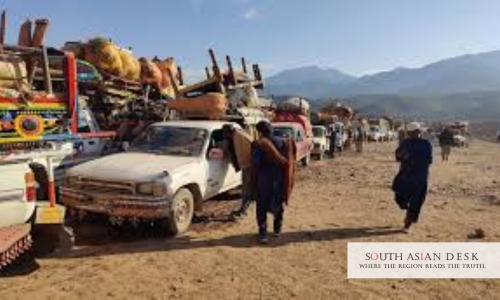
Pakistani forces mandate urgent relocation of thousands from Tirah Valley amid planned anti-Taliban offensive, sparking displacement fears across border regions.
The Pakistan military has ordered thousands of families to leave Khyber District’s Tirah Valley as part of the Tirah operation, aimed at dislodging Taliban fighters. The evacuation deadline is 25 January 2026, with operations set to target militant strongholds near the Afghanistan border. Officials cite control by Pakistani Taliban groups as the trigger for this security sweep.
This Tirah operation underscores persistent militant threats in Pakistan’s northwest, where cross-border insurgencies strain relations with Afghanistan and heighten regional instability in South Asia.
Evacuation Orders and Immediate Impact
Authorities have set a firm deadline for the Tirah evacuation, urging residents to vacate by 25 January 2026. Up to 20,000 families could be affected, marking one of the largest displacements in recent years. The Pakistan military Tirah directive follows agreements with local elders and administration, with relocations starting from 10 January. Residents report chaos and anger as they flee homes, echoing past operations that failed to deliver lasting peace.
The Tirah Valley, home to about 150,000 people, lies in a strategic area prone to militant incursions. The Tirah operation focuses on areas where Tirah Valley Taliban elements have established control, including mosques and civilian properties. Security forces aim to clear armed groups accused of extortion and violence, with evacuations designed to protect civilians during the sweep.
Local voices express reservations. Internally displaced persons note that militants began fleeing the valley in late December as evacuation preparations intensified. One resident told media outlets that previous military actions displaced families without eradicating threats. The Pakistan military Tirah effort now risks repeating this cycle, with humanitarian concerns mounting over access to shelter and aid.
Background on Tirah Valley Conflicts
Tirah Valley has a long history of military interventions. The region remained largely untouched by central authority until 2003, when Pakistan’s army entered for the first time since independence in 1947. This marked the start of repeated operations against insurgent groups.
A key precedent was Operation Khyber, launched in 2014 and spanning four phases until 2017. It targeted Tehrik-i-Taliban Pakistan (TTP) hideouts in Khyber Agency, including Tirah. In 2015, forces battled for control of strategic valleys, displacing thousands. Earlier, US drone strikes in 2010 killed Taliban fighters in the area.
Recent escalations include a 2025 blast that killed 20 in a suspected TTP bomb factory. In September 2025, aerial attacks targeted TTP facilities as part of broader efforts in Khyber Pakhtunkhwa. By November 2025, TTP agreed to leave parts of Bar Qambarkhel after talks, but presence persisted. Last month, five TTP militants were killed in an intelligence-based operation.
The Tirah Valley Taliban resurgence ties to political divisions allowing militants to regain ground. Analysts point to cross-border safe havens in Afghanistan as a factor.
Regional Security Implications
The Tirah operation carries broader ramifications for South Asia. Pakistan’s border regions with Afghanistan remain flashpoints, where militant activities fuel tensions between Islamabad and Kabul. Operations like this aim to curb cross-border terrorism, but they often lead to accusations of harbouring insurgents.
In 2013, a similar sweep displaced nearly 11,000 families, with returns taking over a year. Current efforts emphasise coordination with humanitarian partners to mitigate impacts. However, ongoing conflict affects healthcare and infrastructure, as seen in clinics providing vital services amid instability.
Influence operations add complexity, with narratives amplifying divisions in the region. The Tirah evacuation highlights the need for balanced security measures that address root causes like extortion and intimidation by groups labelled as Khwarij.
South Asia’s stability hinges on such actions, as unchecked militancy could spill over, affecting neighbouring countries.
What’s Next in Tirah Operation
As the 25 January deadline approaches, the Pakistan military Tirah push will likely intensify. Residents hope for swift resolution, but past patterns suggest prolonged displacement. The Tirah operation’s success depends on eliminating Tirah Valley Taliban threats while enabling safe returns. Monitoring cross-border dynamics will be key to preventing resurgence.
Published in SouthAsianDesk, January 24th, 2026
Follow SouthAsianDesk on X, Instagram and Facebook for insights on business and current affairs from across South Asia.
