Bangladesh condemns India for allowing ousted leader’s exile address, warning of strained ties ahead of elections.
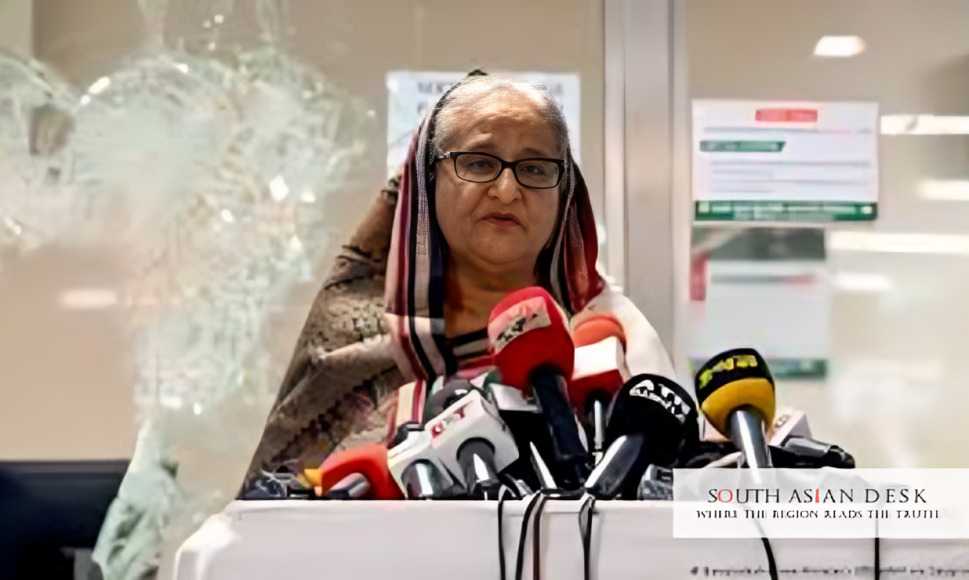
Sheikh Hasina delivered her first public address from exile in India on 23 January 2026, accusing Bangladesh’s interim leader Muhammad Yunus of fascism and urging disruption of upcoming polls. Dhaka responded sharply on 25 January 2026, slamming the event as hate speech and an affront to sovereignty.
The Sheikh Hasina speech has escalated tensions between Bangladesh and India, two key South Asian neighbours. With Bangladesh preparing for its first general election since Hasina’s ouster on 12 February 2026, the incident risks derailing diplomatic relations and regional stability amid ongoing extradition disputes.
Bangladesh Slams India Hasina Event
Bangladesh’s Ministry of Foreign Affairs issued a strong statement on 25 January 2026, expressing surprise and shock that India permitted the Sheikh Hasina speech at a public event in New Delhi. The ministry described Hasina as a fugitive convicted by the International Crimes Tribunal for crimes against humanity, linked to the 2024 uprising that claimed over 1400 lives.
In the statement, Dhaka accused India of failing to extradite Hasina despite repeated requests under bilateral agreements. “This clearly endangers Bangladesh’s democratic transition and peace and security,” the ministry said. It further noted that allowing the event constituted a “clear affront to the people and the Government of Bangladesh” and violated norms of inter-state relations, including sovereignty and non-interference.
The Sheikh Hasina speech, delivered virtually to the Foreign Correspondents’ Club in New Delhi, drew over 100000 viewers online. Bangladesh claimed it included calls for the removal of the interim government and incitements to terror aimed at derailing the elections. “It sets a dangerous precedent vis-a-vis the future of Bangladesh-India relations and may seriously impair the ability of the future elected polity in Bangladesh to engage, shape and nurture mutually beneficial bilateral relations,” the statement added.
India has not issued an official response to the Bangladesh slams India Hasina criticism. The Ministry of External Affairs in New Delhi remained silent as of 26 January 2026, continuing to ignore extradition demands. This lack of comment has fuelled speculation about India’s stance on Hasina, who has resided in exile there since August 2024.
Hasina First Public Address Details
The Hasina first public address marked her initial appearance since fleeing Bangladesh amid the 2024 student-led uprising that ended her 15-year rule. Sentenced to death in absentia in November 2024 for incitement and inaction during the unrest, Hasina used the platform to launch sharp attacks on the current administration.
In the Sheikh Hasina exile statement, she labelled Yunus a “murderous fascist” and declared that Bangladesh would “never experience free and fair elections” under his leadership. She alleged the country had entered “an age of terror” and urged citizens to rise against the interim government, invoking the spirit of resistance. “Bangladesh will never experience free and fair elections until the shadow that Yunus casts is lifted from the people of Bangladesh,” Hasina stated.
The address also accused the interim government of violence and oppression, with Hasina claiming Bangladesh was “bleeding” under Yunus’s rule. She called on her Awami League loyalists to act, prompting Dhaka to warn of holding the party accountable for any violence. The Awami League’s registration was suspended in May 2025, barring it from the February polls, where a coalition of the Bangladesh Nationalist Party and Jamaat-e-Islami is favoured to win.
Viewers tuned in via online broadcasts, with the event hosted at a packed venue in New Delhi.
Sheikh Hasina Exile Statement Impact
The Sheikh Hasina exile statement has amplified domestic divisions in Bangladesh. The interim government, led by Yunus since Hasina’s departure, has focused on reforms and election preparations. However, Hasina’s words have resonated with her supporters, potentially inciting unrest in a nation still recovering from the 2024 upheaval.
Analysts note the Sheikh Hasina speech underscores ongoing human rights concerns from her tenure, including allegations of attacks, imprisonments, and killings of opposition figures. The 2024 uprising, which forced her exit, resulted in widespread protests and over 1400 fatalities, according to official estimates.
In South Asia, the fallout from the Hasina first public address highlights shifting alliances. India, a traditional ally during Hasina’s rule, now faces criticism from Dhaka’s new leadership. Ties have soured since 2024, with disputes over extradition and border issues. The Bangladesh slams India Hasina row could affect trade, worth USD 10 billion annually, and cooperation on water sharing and security.
Background
Sheikh Hasina assumed power in 2009, leading Bangladesh through economic growth but facing accusations of authoritarianism. The 2024 student-led protests, sparked by job quotas, escalated into a broader movement against her government, forcing her flight to India on 5 August 2024. Yunus, a Nobel laureate, took over as interim chief adviser to steer the country towards elections.
Hasina’s conviction in November 2024 stemmed from her role in the uprising’s violence. India granted her asylum, citing humanitarian grounds, but ignored extradition requests. The Sheikh Hasina speech represents her attempt to reclaim political relevance from exile, amid bans on her party.
What’s Next
As Bangladesh approaches the 12 February 2026 election, security measures have intensified to prevent disruptions linked to the Sheikh Hasina speech. Dhaka may pursue further diplomatic actions against India, including appeals to international bodies. The incident could influence voter sentiment, with opposition parties capitalising on anti-India narratives.
The Sheikh Hasina speech may prompt regional dialogues, but without resolution on extradition, tensions persist.
Published in SouthAsianDesk, January 26th, 2026
Follow SouthAsianDesk on X, Instagram and Facebook for insights on business and current affairs from across South Asia.