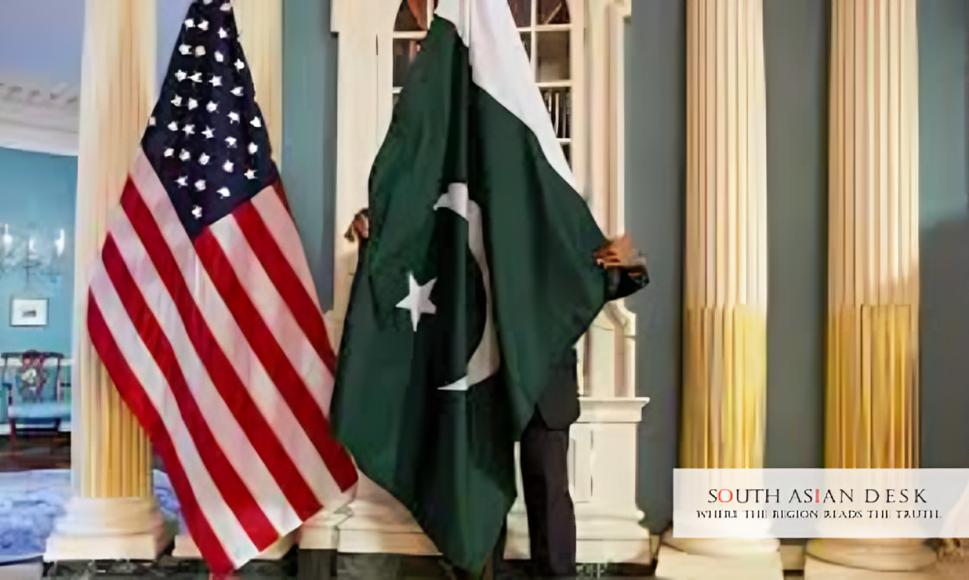
Pakistani lawmakers met US counterparts in Washington to address visa restrictions, urging removal from a list affecting immigrant applications.
A Pakistani delegation urged US lawmakers to lift visa curbs on Pakistan during meetings in Washington this week. Led by Senators Saleem Mandviwalla and Rana Mahmoodul Hassan, the group highlighted the impact of US visa restrictions Pakistan on bilateral ties. The discussions, held at the Rayburn House Office Building, focused on the US immigrant visa pause Pakistan, which affects nationals from selected countries including Pakistan.
The push comes amid ongoing diplomatic efforts to strengthen Pakistan-US relations. The delegation, including trade and business experts, emphasised the need for constructive engagement beyond politics. They argued that Pakistan’s inclusion in the list hinders economic cooperation and overlooks the country’s contributions to counterterrorism and regional stability.
Pakistani Delegation US Visa Talks
The meetings involved key US representatives, including Republican Ron Estes and Democrats Al Green, Tom Suozzi, Josh Gottheimer, and Laura Gillen. Organised by the Pakistan Policy Institute USA, the sessions aimed to build parliamentary-level ties.
Senator Mandviwalla stated that Pakistan US visa curbs represent a serious barrier. He expressed confidence that the issue would be resolved soon, noting that US lawmakers understood Pakistan’s position. The delegation clarified that recent lobbying by supporters of former Prime Minister Imran Khan was not linked to their non-political visit.
US Representative Estes praised the delegates for bridging legislative bodies and acknowledged Pakistan’s support for peace initiatives, such as early backing of President Donald Trump’s Gaza Peace Board. Democrat Al Green agreed to form a Pakistan Strategic Bipartisan Caucus to promote deeper cooperation and sustained dialogue.
The talks also covered broader issues like economic partnerships and the role of Pakistan’s diaspora in the US. The delegation pointed out that Pakistani Americans rank among the top 10 most prosperous groups and rarely rely on social welfare benefits. Advice from the US ambassador in Islamabad reinforced this, suggesting direct clarification to Congress members.
Background on US Visa Restrictions Pakistan
The US immigrant visa pause Pakistan stems from policies implemented by the Department of State. Effective 21 January 2026, the pause halts issuances for immigrant visa applicants from Pakistan and other selected nations. This follows a presidential proclamation in December 2025 restricting entry to protect US security.
Earlier measures, including a suspension in June 2025 for 19 countries, expanded to address national security and public safety threats. The policy targets nationalities deemed at higher risk of using public benefits, though it does not apply to nonimmigrant visas like tourist ones.
Pakistan’s government has consistently raised concerns over these restrictions, arguing they undermine longstanding alliances. Diplomatic channels have been active, with prior engagements focusing on counterterrorism collaboration post-Afghanistan withdrawal.
Data from the US Embassy in Islamabad shows that immigrant visa processing for Pakistani citizens occurs solely there. In fiscal year 2025, Pakistan saw over 10,000 immigrant visas issued before the pause, highlighting the volume impacted. The curbs affect family reunifications, skilled worker migrations, and other categories, straining Pakistan’s economy which benefits from remittances exceeding USD 30 billion annually.
Experts note that US visa restrictions Pakistan could slow bilateral trade, currently valued at USD 6.5 billion. Pakistan’s textile exports to the US, a key sector, rely on smooth business travel, though the pause primarily hits immigrant paths.
Impact on South Asia
In the South Asian context, Pakistan US visa curbs reflect broader US policy shifts towards the region. Neighbouring countries like Afghanistan face similar pauses, complicating regional mobility. For Pakistan, with a population of 240 million and strong US ties, the restrictions exacerbate challenges in education and professional exchanges.
The diaspora, numbering over 600,000 in the US, contributes significantly to both economies. Remittances support Pakistan’s foreign reserves, while Pakistani professionals fill roles in tech and healthcare. Lifting the curbs could enhance these flows, benefiting South Asian stability amid geopolitical tensions.
The delegation’s visit underscores a push for parity in relations. Senator Hassan described the purpose as constructive engagement, not politics. This aligns with Pakistan’s strategic choice to partner with the US, as Mandviwalla noted.
What’s Next for Pakistan US Visa Curbs
Forward-looking, the formation of the bipartisan caucus signals potential progress on US visa restrictions Pakistan. The delegation anticipates follow-up meetings to monitor the removal process. Pakistani officials plan to engage further with the State Department.
If resolved, the lift could resume normal immigrant visa issuances, easing backlogs at the US Embassy in Islamabad. Analysts predict this might occur within months, depending on US security reviews.
Meanwhile, Pakistan continues advocating through diplomatic channels. The issue remains a priority in bilateral dialogues, with hopes for a positive outcome on Pakistan US visa curbs.
Published in SouthAsianDesk, January 26th, 2026
Follow SouthAsianDesk on X, Instagram and Facebook for insights on business and current affairs from across South Asia.