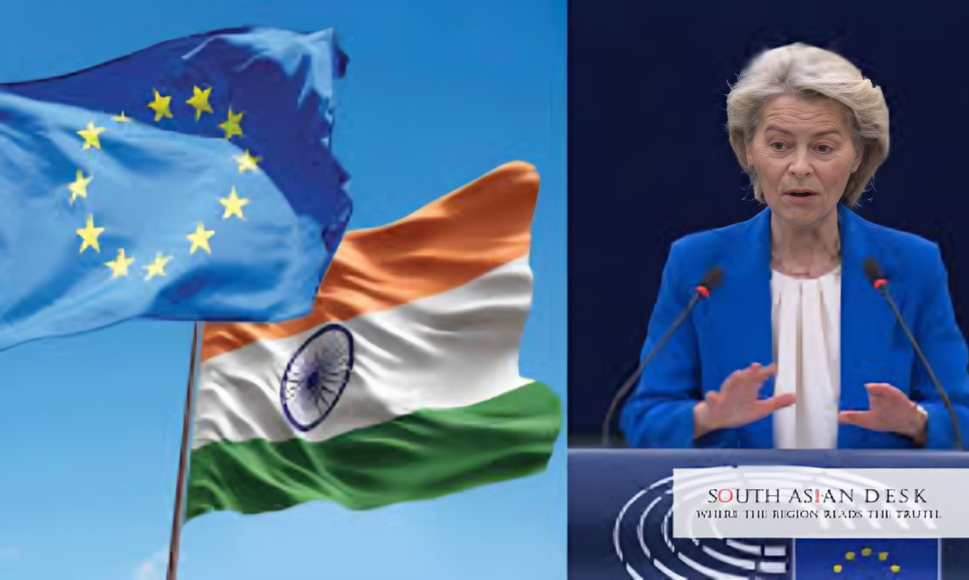
India and the European Union have concluded negotiations on a landmark trade agreement, paving the way for free trade in goods across a market of 2 billion consumers. The deal, announced on 26 January 2026, comes as India seeks economic alternatives following strained ties with the United States.
New Delhi, 27 January 2026 – India and the European Union wrapped up talks on the India EU trade deal on 26 January 2026, marking a significant step towards enhanced economic ties. The agreement targets free trade in goods between the 27-nation EU bloc and India, covering a combined market that represents 25 percent of global GDP. Officials from both sides highlighted the deal’s potential to boost bilateral trade, which reached $136.5 billion in the fiscal year ending March 2025.
The India EU trade deal addresses long-standing negotiations that restarted in 2022 after a nine-year pause. It excludes sensitive sectors such as agriculture and dairy to safeguard India’s farmers. Key terms include India’s reduction of import duties on EU cars from up to 110 percent to 40 percent, while the EU eases restrictions on Indian steel exports.
Details of India EU FTA
The India EU FTA focuses on balanced market access. India Trade Secretary Rajesh Agrawal described it as “a balanced, forward-looking deal for better economic integration with the EU. The deal will propel trade and investment between both sides.” An Indian government official noted that legal vetting would take five to six months, with full implementation expected within a year.
Negotiations accelerated last year when Prime Minister Narendra Modi and European Commission President Ursula von der Leyen agreed to fast-track discussions. The India EU trade deal forms part of broader efforts by both parties to diversify trade partnerships. The EU recently signed pacts with Mercosur on 17 January 2026, as well as with Indonesia, Mexico, and Switzerland in 2025. India concluded agreements with Britain, New Zealand, and Oman during the same period.
The landmark India EU agreement avoids contentious farm products, ensuring protections for India’s subsistence agriculture sector. Data from official sources indicate that the deal could enhance investment flows, particularly in manufacturing and services.
Impact of India US Strained Ties
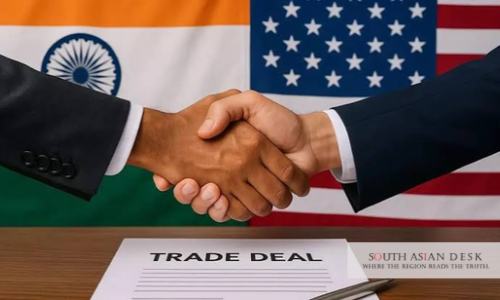
The timing of the India EU trade deal aligns with India US strained ties. Last year, an anticipated India-US trade agreement collapsed due to communication breakdowns between the governments. US President Donald Trump’s imposition of 50 percent tariffs on Indian goods further escalated tensions. These developments prompted India to pursue alternatives like the India EU FTA to hedge against US policies.
In South Asia, the landmark India EU agreement holds broader implications. Countries in the region, including Pakistan and Bangladesh, may benefit indirectly through increased regional trade stability. India’s pivot towards Europe could encourage similar diversification for South Asian economies reliant on US markets. Experts suggest the deal strengthens India’s position in global supply chains, potentially creating jobs and fostering technology transfers across the subcontinent.
The India US strained ties have also influenced EU strategies. Trump’s tariff threats on European countries have pushed the bloc towards new alliances. The India EU trade deal exemplifies this shift, offering mutual benefits in areas like renewable energy and digital trade.
Background on Negotiations
Talks for the India EU trade deal began nearly two decades ago but faced hurdles over tariffs and intellectual property. The relaunch in 2022 followed improved diplomatic relations. Key rounds addressed cars and steel, with India pushing for concessions on its exports.
The landmark India EU agreement builds on existing frameworks, such as the EU-India Strategic Partnership established in 2004. Bilateral trade has grown steadily, from $80 billion in 2015 to $136.5 billion in 2025. The India EU FTA aims to double this figure within five years, according to preliminary estimates from trade ministries.
South Asian context adds relevance. India’s economy, the third-largest in Asia, influences regional dynamics. The deal could mitigate impacts from global disruptions, such as supply chain issues post-COVID. For Pakistan, closer India-EU ties might open avenues for trilateral cooperation in textiles and pharmaceuticals, though geopolitical factors remain.
Economic Benefits for South Asia
The India EU trade deal promises substantial gains. Reduced tariffs on EU imports could lower costs for Indian consumers and industries. In return, easier access to EU markets benefits Indian exporters in sectors like textiles, pharmaceuticals, and IT services.
For South Asia, the landmark India EU agreement serves as a model for integration. It highlights the value of FTAs in countering protectionism. Data from the World Bank shows that similar deals have increased trade by 20 percent on average.
The India EU FTA includes provisions for sustainable development, aligning with South Asian priorities on climate change. Both sides commit to environmental standards, potentially aiding regional efforts against pollution and resource scarcity.
Challenges persist. Implementation requires regulatory harmonisation, which could take time. Small businesses in India may need support to compete with EU firms. Government initiatives, such as skill development programmes, will be crucial.
What’s Next
Formal signing of the India EU trade deal awaits legal scrutiny. A leaders’ summit in New Delhi on 27 January 2026 may finalise details. Post-implementation, monitoring committees will oversee compliance.
The deal’s success depends on addressing non-tariff barriers. Future expansions could include services and investment protections. Amid ongoing India US strained ties, India plans to explore more partnerships in Asia and Africa.
In conclusion, the India EU trade deal positions both economies for growth, offering a stable alternative in uncertain global trade landscapes.
Published in SouthAsianDesk, January 27th, 2026
Follow SouthAsianDesk on X, Instagram and Facebook for insights on business and current affairs from across South Asia.