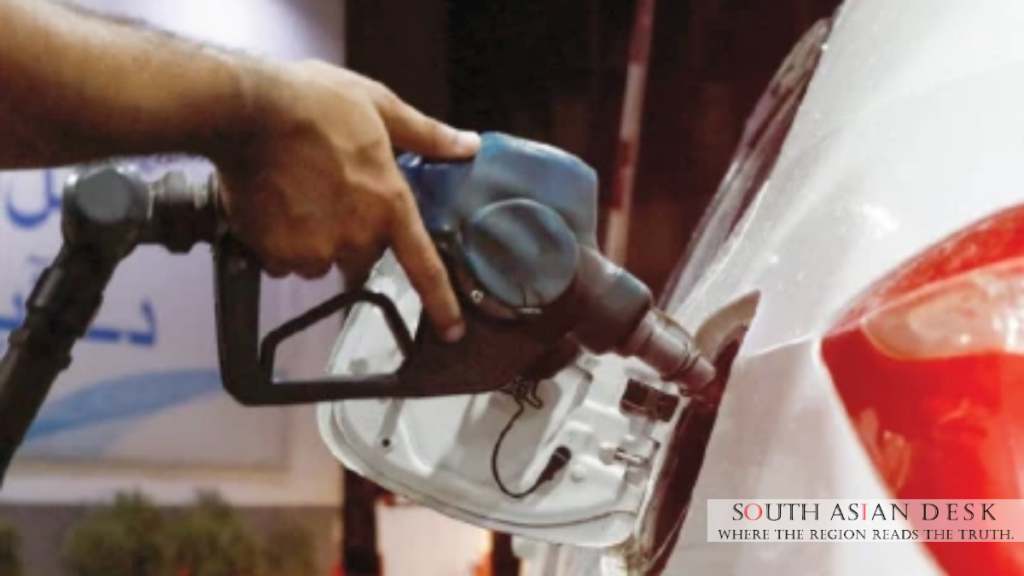
The United States has informed India it can resume Venezuelan oil purchases to offset declining Russian imports, sources say. This follows Washington’s capture of Venezuelan leader Nicolas Maduro on 3 January 2026, enabling US control over Caracas oil sales. Indian refiners aim to slash Russian crude by hundreds of thousands of barrels daily.
India’s shift away from Russian oil highlights South Asia’s vulnerability to global energy disruptions and trade pressures. As the region’s largest importer, New Delhi’s diversification could stabilise supplies amid US tariffs, benefiting economies reliant on affordable fuel.
US Pitches Venezuelan Crude to Replace Russian Supplies
The Trump administration has approached India with an offer to buy Venezuelan crude, positioning it as an alternative as India Russian oil imports slow. Three sources familiar with discussions confirmed the pitch, noting Washington’s intent to curb Moscow’s revenues funding the Ukraine conflict.
India pledged to reduce Russian purchases after US tariffs on Russian oil escalated. President Donald Trump imposed 25% duties on Venezuelan oil buyers, including India, in March 2025. Tariffs on Indian goods reached 50% by August 2025, incorporating penalties for Russian crude deals.
Data indicates India’s Russian imports dropped to a two-year low in December 2025, with OPEC’s share rising to an 11-month high. January 2026 saw 1.2 million barrels per day (bpd) from Russia, projected to fall to 1 million bpd in February and 800,000 bpd in March. Long-term forecasts suggest stabilisation at 500,000 to 600,000 bpd.
Indian Oil Minister Hardeep Singh Puri stated last week that India is diversifying crude sources amid falling Russian volumes. Refiners have boosted intakes from the Middle East, Africa, and South America.
Impact of US Tariffs on Russian Oil
US tariffs Russian oil have forced Indian companies to adapt. State-run Indian Oil Corp (IOC) and Bharat Petroleum Corp (BPCL) have slowed Russian purchases, officials said at the India Energy Week conference. Hindustan Petroleum (HPCL), Mangalore Refinery and Petrochemicals (MRPL), and HPCL-Mittal Energy Ltd ceased buying Russian crude entirely.
Private refiner Reliance Industries plans to import up to 150,000 bpd of Russian oil from February, a company source indicated. However, overall India Russian oil imports are set to decline sharply.
A senior Trump administration official told NDTV that the US is ready to facilitate Venezuelan oil sales to India. US Energy Secretary Christopher Wright explained in a Fox Business interview that Venezuelan crude would be marketed by the US government, with revenues benefiting the Venezuelan people rather than corruption.
Indian Oil Corp Chairman Arvinder Singh Sahney told S&P Global that IOC is open to Venezuelan supplies if competitively priced and cleared under regulations. IOC’s refineries can process heavy, high-sulphur Venezuelan grades, aligning with diversification goals.
Background: India’s Oil Dependency and Geopolitical Shifts
India emerged as a top buyer of discounted Russian oil post-2022 Ukraine invasion, when Western sanctions depressed prices. Russian crude comprised over 40% of India’s imports at peak, aiding refiners with low costs.
However, US pressure mounted. Trump’s March 2025 tariffs targeted Venezuelan oil to isolate Maduro’s regime. The 3 January 2026 capture of Maduro by US forces marked a turning point. Washington now directs Venezuela’s government and plans indefinite control of its oil sector, including state firm PDVSA.
Venezuela holds the world’s largest proven reserves, but production has plummeted due to sanctions and mismanagement. US oversight aims to revive output, with initial sales of 30 million to 50 million barrels earmarked for global markets.
For South Asia, this development underscores energy security challenges. Pakistan and Bangladesh, also importers, watch India’s moves closely. Reduced Russian reliance could ease regional inflation pressures from volatile oil prices, though new supply chains require investment.
India’s foreign ministry declined comment on the Venezuelan pitch. Sources say negotiations involve direct PDVSA sales or intermediaries like Vitol and Trafigura.
Economic Implications for South Asia
The pivot to Venezuelan oil India could reshape trade dynamics. India’s annual crude needs exceed 5 million bpd, with Russia supplying a third recently. Cutting that by half frees capacity for alternatives, potentially lowering costs if Venezuelan grades prove economical.
US tariffs Russian oil have already impacted bilateral ties. A potential US-India trade deal looms, with oil diversification as a bargaining chip. Trump’s administration views reduced Russian imports as key to sealing agreements.
In Pakistan, similar US pressures exist, though smaller import volumes limit exposure. Regional analysts note that stable Venezuelan supplies under US control might indirectly benefit South Asian markets via global price moderation.
Data from Kpler and Vortexa shows India’s OPEC imports climbing. December 2025 figures: Russian share at 25%, down from 35% earlier. Middle Eastern suppliers like Saudi Arabia and Iraq filled the gap.
What’s Next: Potential Deals and Challenges
Talks on Venezuelan oil India may accelerate at upcoming energy forums. Reliance and IOC lead evaluations, with first cargoes possible by April if approvals clear.
Challenges include logistics for heavy Venezuelan crude, which requires specific refinery setups. Sanctions clarity is vital; US Treasury eased some Venezuelan restrictions in January 2026, but oversight remains.
India aims for 500,000 bpd non-Russian diversification by mid-2026. Success hinges on competitive pricing amid global volatility.
The US pitch signals broader realignment, with Venezuelan oil India at the forefront of efforts to isolate Russia’s energy dominance.
Published in SouthAsianDesk, January 31st, 2026
Follow SouthAsianDesk on X, Instagram and Facebook for insights on business and current affairs from across South Asia.