The International Monetary Fund (IMF) has recognized a significant improvement in Pakistan’s economic progress, attributing this to policy efforts under its Extended Fund Facility (EFF). These efforts have notably stabilized the economy, controlled inflation, and rebuilt confidence as the country prepares for a new round of review talks later this month.
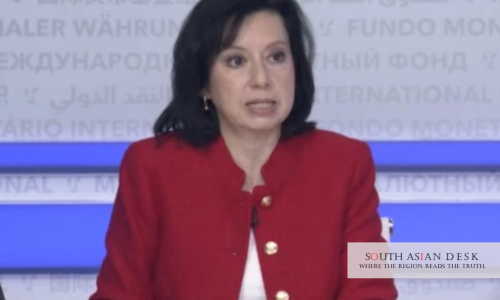
During a press briefing in Washington, International Monetary Fund Communications Director Julie Kozack announced that an IMF team will visit Pakistan on February 25 to conduct discussions on the third review under the EFF and the second review under the Resilience and Sustainability Facility (RSF).
Kozack praised Pakistan’s fiscal performance in the 2025 financial year as ‘strong,’ highlighting a primary fiscal surplus of 1.3% of GDP, which meets the program’s targets. She also noted that headline inflation has been relatively contained, and for the first time in 14 years, Pakistan recorded a current account surplus in the 2025 financial year, indicating improved external sector stability.
The IMF emphasized that these outcomes reflect the impact of reforms within the EFF framework. The upcoming review will assess Pakistan’s progress on reform benchmarks and determine the next steps regarding disbursements. A mission, led by Mission Chief Iva Petrova, will arrive in Karachi on February 25 for discussions with the State Bank of Pakistan before moving to Islamabad. Formal talks with federal and provincial authorities are scheduled to begin on March 2 and conclude around March 11.
Upon successful completion of the review, Pakistan could receive approximately $1 billion under the EFF and an additional $200 million under the RSF by the end of April. Kozack also mentioned the Governance and Corruption Diagnostic Report on Pakistan, which proposes structural reforms such as simplifying tax policy, enhancing asset declaration transparency, and improving public procurement processes.
The IMF has prioritized increasing transparency in the tax system and strengthening government procurement oversight. Simplifying tax policy is a key reform priority. The review will also evaluate the implementation of the Governance and Corruption Diagnostic recommendations and the National Fiscal Pact. Despite some revenue shortfalls, authorities believe these will narrow following a favorable super tax ruling by the Federal Constitutional Court.
The Extended Fund Facility is a long-term IMF lending arrangement aimed at addressing deep-rooted economic weaknesses and medium-term balance-of-payments challenges. The Fund asserts that Pakistan’s policy measures under the program have contributed to stabilization and renewed confidence among international financial institutions.
Published in SouthAsianDesk, February 21st, 2026
Follow SouthAsianDesk on X, Instagram and Facebook for insights on business and current affairs from across South Asia.