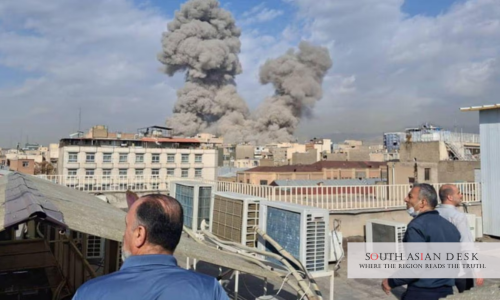
Iran Conflict Escalates: A recent joint strike by the United States and Israel on Iran, followed by Iranian retaliation, poses a significant threat to the movement of goods through the Strait of Hormuz. This development is likely to cause a surge in international crude oil prices and a depreciation of the Indian rupee against the dollar, according to experts.
The conflict, if prolonged, could severely impact global energy supplies, particularly affecting India, the world’s third-largest oil consumer after the US and China. Under US pressure, India has already reduced its purchase of Russian crude oil, which complicates the situation further.
Supplies from the Gulf region are expected to be disrupted, leading to a significant increase in insurance premiums. This puts India in a precarious position due to a potential surge in oil prices from a supply crunch. With Russian oil output already declining due to US sanctions, the conflict might also disrupt the 3 million barrels per day of Iranian crude supplied to various countries, including China.
Energy expert SC Sharma highlighted that if the conflict escalates and is prolonged, India’s crude oil import costs might rise significantly. He noted that the harsh winter demand has already led the US to withdraw oil from its strategic reserves, further impacting supply and pricing pressure on India.
India’s average crude oil purchase price has already increased by over 10% to $70.86 a barrel due to geopolitical upheavals, up from $64.2 a barrel a month ago. If tensions continue, prices may rise further.
Iran has consistently threatened to weaponize the Strait of Hormuz, although full closures have never materialized. Tehran relies on the waterway to ship crude to China, its strategic ally. However, as recently as January 2026, Iran renewed closure threats and briefly shut part of the strait during drills. This pattern of escalation and restraint faces its ultimate test now.
Ajay Sahai, director general and CEO of the Federation of Indian Export Organisations, mentioned that it is too early to comment on the conflict’s impact on trade. However, a prolonged conflict might lead to increased freight charges, insurance costs, and a rise in dollar demand, further depreciating the rupee against the dollar.
Exporters are concerned that an escalation in the Gulf region might choke shipping routes, forcing supplies to take longer routes through the Cape of Good Hope, leading to increased transportation costs.
Prashant Vasisht, senior vice president and co-group head for corporate ratings at ICRA Ltd, stated that the conflict in the Middle East and reported attacks on several oil producers would exacerbate the volatility in crude oil prices.
The Strait of Hormuz is a critical energy choke point, with about 20% of global petroleum liquids and liquefied natural gas passing through it. A conflict in the region would impede energy shipping, adversely impacting global crude oil and LNG supplies and raising energy prices globally.
In fiscal 2025, approximately 50% of India’s crude oil and 54% of LNG imports were routed through the Strait of Hormuz. Indian refiners could source crude oil from alternate locations such as the US, Africa, and South America, but elevated energy prices could lead to a soaring import bill.
Additionally, elevated crude oil prices would moderate the marketing margins and profitability of oil marketing companies.
Published in SouthAsianDesk, March 1st, 2026
Follow SouthAsianDesk on X, Instagram and Facebook for insights on business and current affairs from across South Asia.