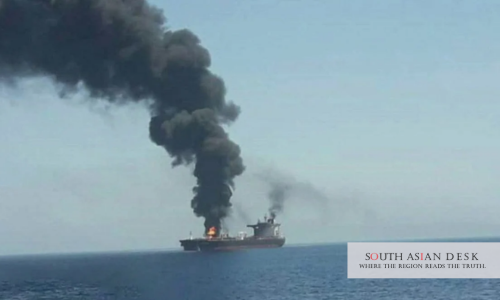
An oil tanker flying the Palau flag was struck on March 1st, 2026, near the Musandam peninsula off the coast of Oman, resulting in injuries to four of the 20-member crew, which included 15 Indian nationals. The incident occurred as tensions escalated in the region following a joint US-Israeli attack on Iran that resulted in the death of Ayatollah Ali Khamenei, Iran’s supreme leader.
Oman’s Maritime Security Centre reported the attack took place approximately 5 nautical miles north of Khasab Port, a strategic location in the Strait of Hormuz. Although the exact nature of the attack remains unspecified, it follows a series of drone strikes in other parts of Oman, including the commercial port of Duqm.
The crew was successfully evacuated, but the incident highlights the increasing volatility in the region. The tanker, operated by Red Sea Ship Management LLC and owned by Sea Force Inc., had been previously sanctioned by the US Treasury for allegedly transporting Iranian petroleum products as part of a ‘shadow fleet.’
Iranian state television reported that another oil tanker was sinking after being struck while attempting to navigate the Strait of Hormuz, a crucial waterway for global oil and gas shipments. Iran’s Revolutionary Guards had earlier declared the strait unsafe following the US-Israeli attacks, further complicating maritime security in the Gulf.
As the geopolitical landscape shifts, the impact of these events could lead to increased military presence and further disruptions in the region’s vital shipping lanes. The international community watches closely, anticipating potential diplomatic interventions or escalations.
Published in SouthAsianDesk, March 2nd, 2026
Follow SouthAsianDesk on X, Instagram and Facebook for insights on business and current affairs from across South Asia.