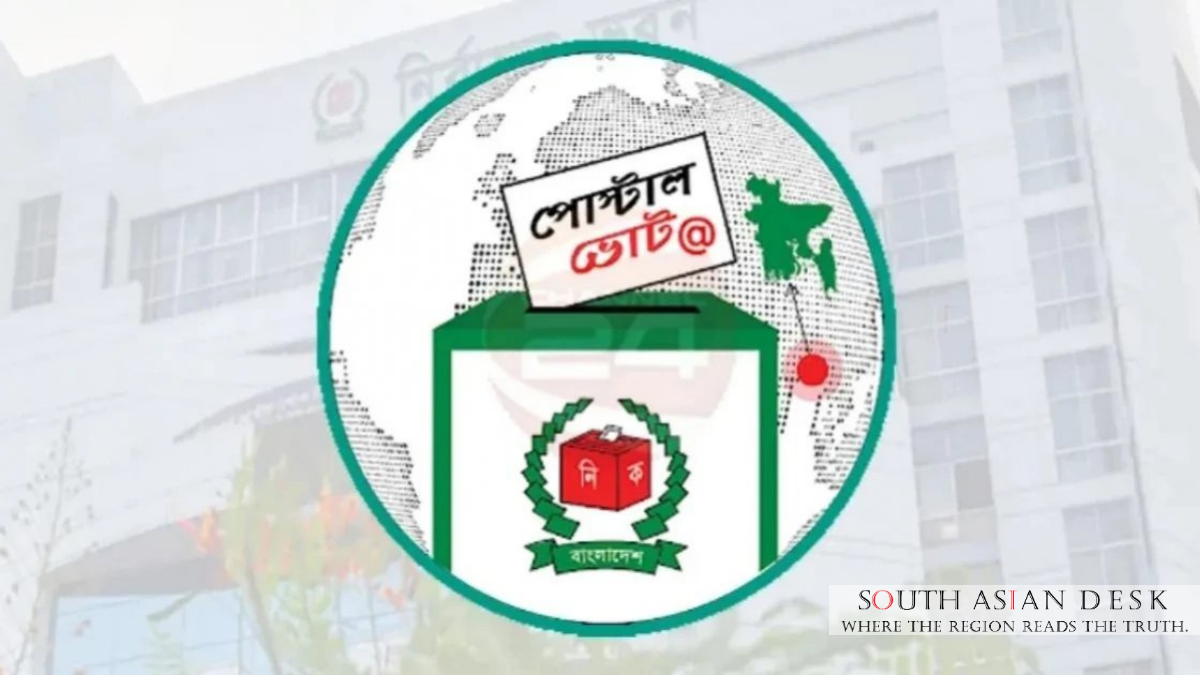
Bangladesh elections: In the recent 13th National Parliament election in Bangladesh, the postal ballot system, supported by IT, played a pivotal role in shaping the electoral outcome. According to the Election Commission (EC), the system predominantly favored the Bangladesh Nationalist Party (BNP) and Bangladesh Jamaat-e-Islami, with Jamaat securing the largest share of postal votes as a single party, despite BNP winning 209 seats to form the government.
The EC reported a total of 1,520,093 registered postal voters across 300 constituencies, with a turnout of 69.99%. Out of these, 57,898 votes were deemed invalid. Combined, BNP and Jamaat received 810,258 postal votes, accounting for 76.16% of valid ballots cast. Jamaat alone received 45.88% of postal votes, while BNP garnered 30.28%.
In two critical constituencies, Sirajganj-4 and Madaripur-1, postal ballots were decisive. In Sirajganj-4, despite BNP candidate M Akbar Ali’s lead in center counts, Jamaat’s Md Rafiqul Islam Khan emerged victorious after postal votes were counted, winning by 594 votes. Similarly, in Madaripur-1, Said Uddin Ahmad Hanzala overturned Nadira Akter’s lead with postal ballots, securing victory by 385 votes.
The EC’s analysis also highlighted regional patterns, with Jamaat and the 11-party alliance leading postal counts in several southern districts, including Comilla and Chandpur. In Comilla, all 11 constituencies were won by the 11-party alliance. Notably, Rangpur-2 recorded the highest postal turnout at 87.08%, while some constituencies like Panchagarh-2 saw no postal turnout.
Prominent leaders experienced mixed results with postal votes. BNP Chairman Tarique Rahman lost the postal count in Dhaka-17 but won overall. In contrast, Shafiqur Rahman of Jamaat won both counts in Dhaka-15. The EC’s data underscores the concentrated impact of postal ballots among a few parties, influencing outcomes in select constituencies.
Published in SouthAsianDesk, March 8, 2026
Follow SouthAsianDesk on X, Instagram and Facebook for insights on business and current affairs from across South Asia.