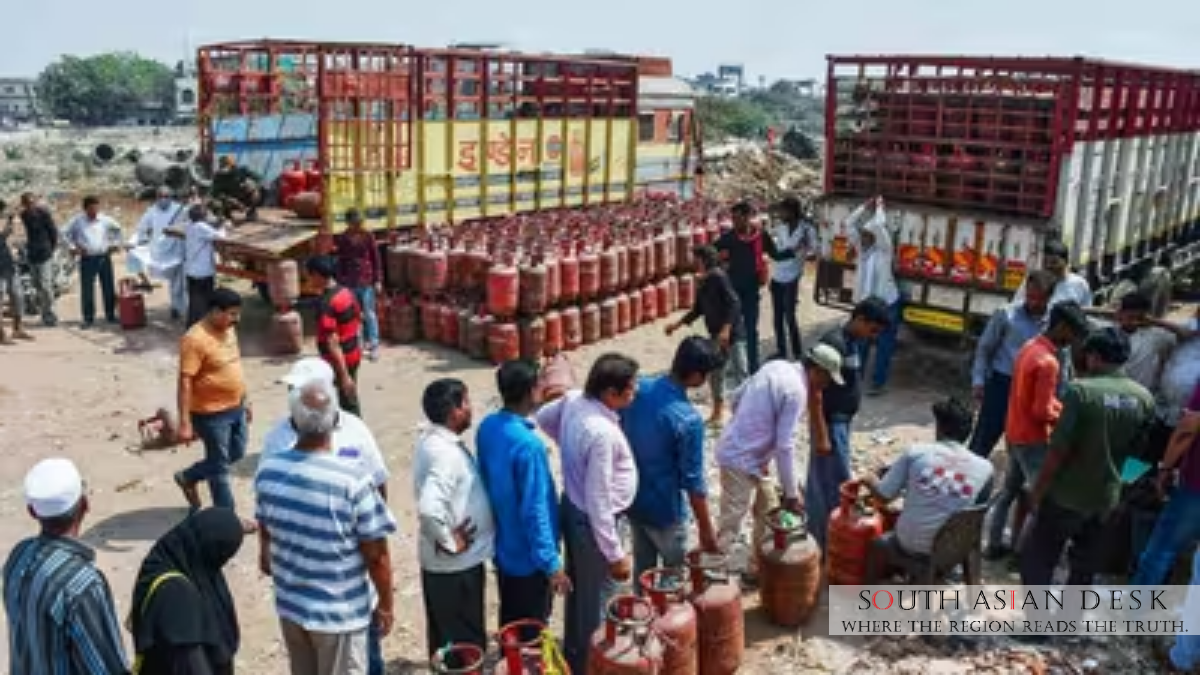
On March 24, 2026, the Indian government announced intensified efforts to ensure the equitable distribution of liquefied petroleum gas (LPG) to commercial sectors amid the ongoing conflict in West Asia. The initiative aims to support community kitchens, dhabas, and migrant workers, while maintaining domestic supplies, according to Sujata Sharma, joint secretary in the petroleum ministry.
Sharma stated that domestic natural gas supply and compressed natural gas (CNG) for transport are fully prioritized. Industrial and commercial consumers connected to the gas grid are receiving 80% of their usual consumption. India sources approximately 50% of its natural gas domestically, with imports from West Asia, America, Russia, and Australia.
The government has instructed city gas distribution (CGD) entities to prioritize commercial connections and proposed an additional 10% gas allocation to expand piped natural gas (PNG) networks. In the past three weeks, around 3.5 lakh domestic and commercial PNG connections have been installed or activated.
Despite concerns over LPG supply, there is no shortage at distributorships. Panic bookings have decreased significantly, dropping from 8.8 million on March 13 to 5 million. The government plans to allocate 50% of commercial LPG consumption to states, targeting restaurants, dhabas, hotels, and community kitchens.
Since the pilot launch of 5 kg free-trade LPG cylinders in 2013, the government continues to coordinate with states to prevent black marketing and hoarding. Enforcement actions have led to 2,400 raids and the seizure of over 800 cylinders. Approximately 550 FIRs have been registered, with 150 arrests made.
Published in SouthAsianDesk, March 24, 2026
Follow SouthAsianDesk on X, Instagram and Facebook for insights on business and current affairs from across South Asia.