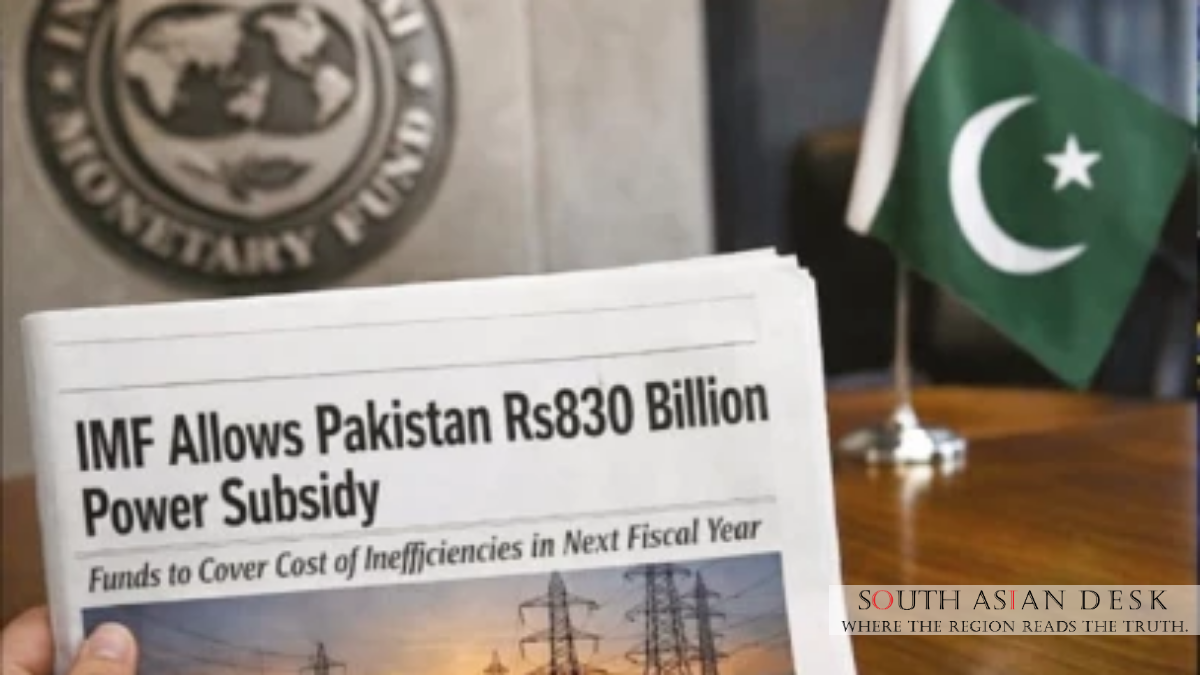
The International Monetary Fund (IMF) has approved a substantial allocation of Rs830 billion for power subsidies in Pakistan’s upcoming budget. This decision, announced on April 3, 2026, includes Rs300 billion dedicated to addressing electricity theft and poor bill recovery, according to government sources.
The approval comes with a caveat: Pakistan must increase electricity prices by January 2027 to reflect the rising generation costs linked to the Middle East conflict. This condition forms a new structural benchmark within the $7 billion bailout package, highlighting a contradiction in the IMF’s stance on subsidies, as it remains opposed to fuel subsidies.
Government sources confirmed that the subsidy approval is 16% less than Pakistan’s initial request. The funds are earmarked for various uses, including covering tariff differentials, clearing FATA arrears, supporting agriculture tube wells, and managing circular debt. Despite these efforts, the circular debt issue persists, with projections indicating an increase of Rs300 billion in the next fiscal year.
Pakistan has assured the International Monetary Funds of its commitment to maintaining the power sector’s financial viability through timely tariff adjustments. This includes NEPRA’s regular notifications of quarterly tariff adjustments and automatic monthly fuel charges adjustments. Furthermore, the government has delayed the privatisation of certain power distribution companies, while continuing to explore renewable energy initiatives.
The Role of the IMF in Pakistan’s Economic Strategy
Looking ahead, Pakistan aims to finalise arrangements with Independent Power Producers by June 2026 and resolve disputes with K-Electric by December 2026. The government is also working on a revised Integrated System Plan for 2025-35 to enhance grid sustainability and reduce excess capacity.
Published in SouthAsianDesk, April 4, 2026
Follow SouthAsianDesk on X, Instagram and Facebook for insights on business and current affairs from across South Asia.