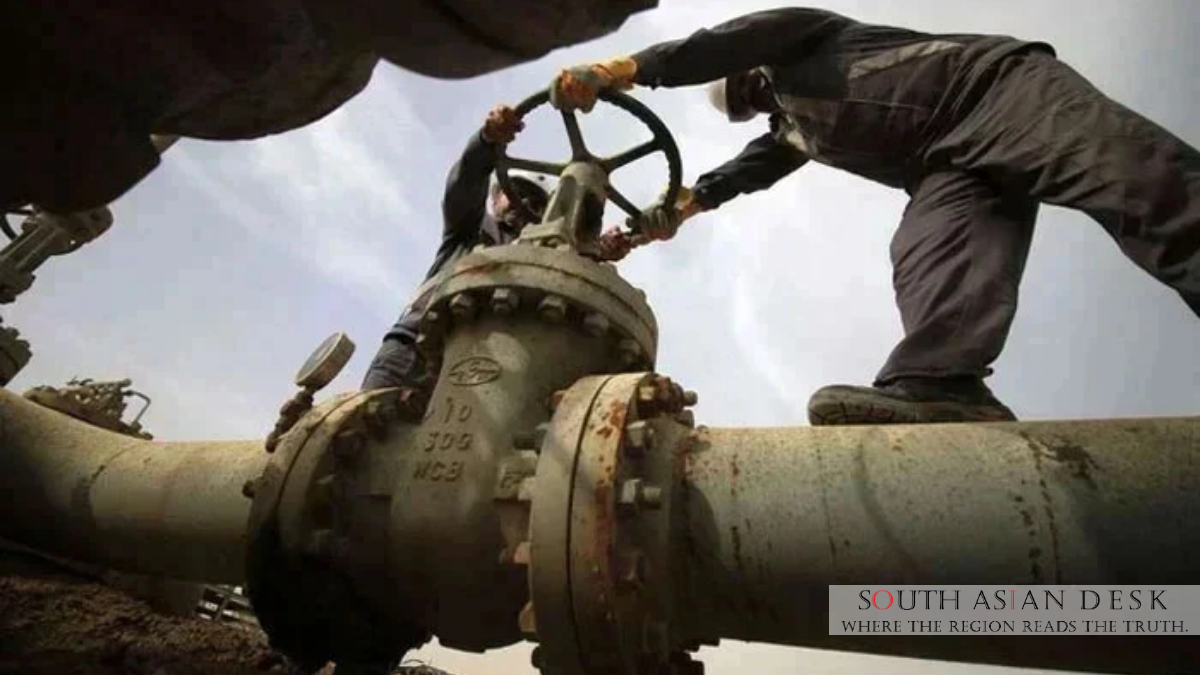
Pakistan’s energy sector is experiencing a significant transition as domestic production declines and reliance on imports grows. According to the Pakistan’s Energy Yearbook 2024–25, indigenous energy production decreased from 53 million tonnes of oil equivalent (MTOE) to 50 MTOE, while imports rose from 33 MTOE to 34 MTOE. Pakistan’s energy shift underscores the country’s increasing dependence on external energy sources.
The total primary energy supply saw a modest increase of 1.58% to 82 MTOE, driven primarily by imports of LPG, oil, coal, and electricity. Notably, LPG imports surged by 28.56%, imported electricity by 20.11%, oil by 14.51%, and coal by 6.32%. In contrast, natural gas and LNG supply decreased by 4.1%, along with declines in nuclear and renewable energy sources, indicating a tightening domestic energy availability.
Final energy consumption in Pakistan grew by 8.32%, led by the commercial sector at 23.38%, the industrial sector at 16.78%, transport at 9.44%, and government use at 14.79%. This growth reflects a recovering economy, although agricultural energy use fell by 30.97% and domestic consumption slightly decreased, raising concerns about rural energy access.
The decline in crude oil production by 11.44% and gas output by 7.52% is attributed to aging fields and limited drilling activities, with only 28 exploratory and 30 development wells completed. Despite the discovery of 21 new gas fields and a 26% increase in gas reserves to 23.31 trillion cubic feet (TCF), production did not rise, highlighting extraction limitations. Proven oil reserves also decreased by 1.39% to 240 million barrels.
To counteract energy shortages, Pakistan increased petroleum imports, with refined products up by 16.61% and crude oil by 19.44%, aiding refinery operations. Gas imports totaled 8.74 MTOE, filling domestic gaps, although overall gas consumption fell by 5.77%. Industrial gas consumption rose by 62.5%, while other sectors saw declines, indicating a focus on high-value use.
Coal imports increased by 27.86%, compensating for a 2.66% drop in domestic production, with more than half utilized for power generation. The power sector saw slow progress, with installed capacity slightly increasing to 45,380 MW, including 884 MW of new hydropower. Electricity generation rose by 3.04% to 140,420 GWh, primarily from thermal sources, and imports increased by 20.1%. Consumption grew in the domestic, commercial, and industrial sectors, while agricultural consumption fell by 31.4%, pointing to uneven distribution.
Overall, Pakistan’s energy landscape faces challenges of rising demand amidst declining domestic supply, increased reliance on imports, stagnating renewable sources, and a widening gap between growing gas reserves and extraction capabilities. These factors pose significant risks to the country’s long-term energy sustainability.
Published in SouthAsianDesk, April 9, 2026
Follow SouthAsianDesk on X, Instagram and Facebook for insights on business and current affairs from across South Asia.