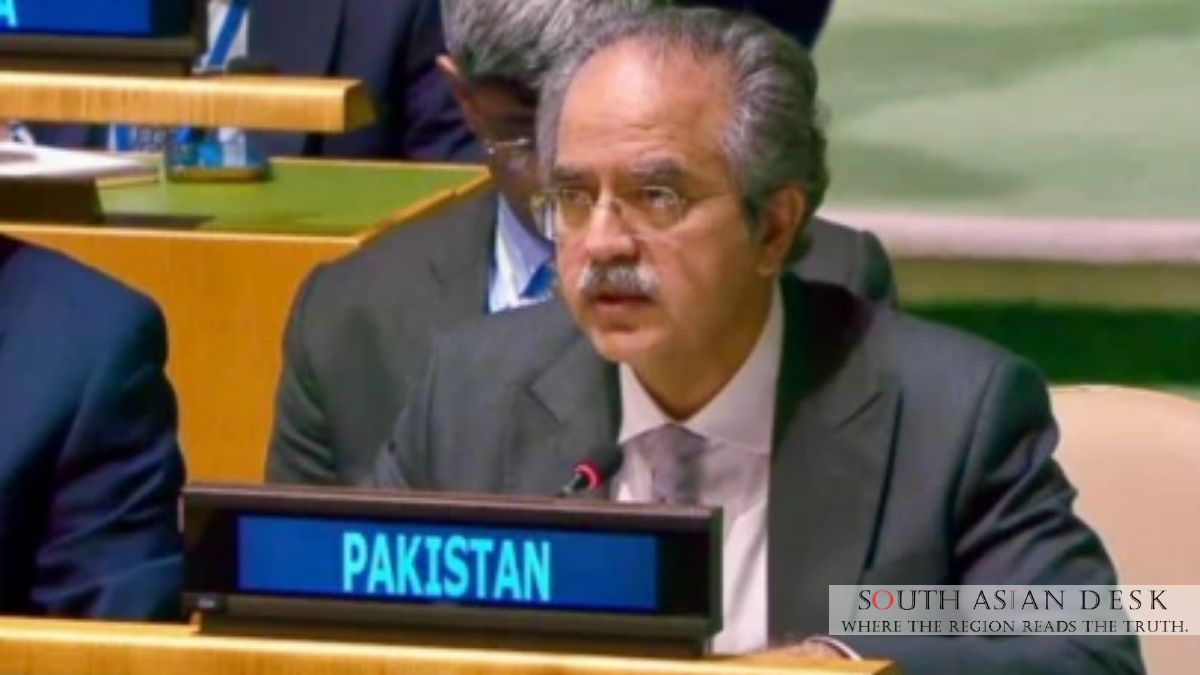
On April 14, 2026, Pakistan’s Permanent Representative to the United Nations, Ambassador Asim Iftikhar Ahmad, advocated for the abolition or severe restriction of the veto power in the United Nations Security Council (UNSC). He strongly opposed the expansion of permanent membership, including the creation of new veto-wielding states.
Ambassador Ahmad made these remarks during the Intergovernmental Negotiations on Security Council reform. He argued that the current structure often leads to paralysis in global decision-making, highlighting that the misuse of the veto power by permanent members results in inaction on crucial international peace and security matters.
The ambassador reaffirmed the position against expanding the veto or adding new permanent members, stating that more vetoes would exacerbate the problem. He described the veto system as outdated and called for its abolition or severe restriction.
He also suggested increasing the number of elected, non-permanent members to rebalance the Security Council. This change, he argued, would shift the balance away from permanent members, making vetoes harder to justify and increasing accountability.
The Security Council reform discussions have been ongoing since 2009, focusing on membership categories, the question of veto, regional representation, and working methods. However, progress remains stalled as G-4 countries—India, Brazil, Germany, and Japan—push for permanent seats, while the Italy/Pak-led Uniting for Consensus group opposes this, proposing instead a new category of members with longer terms and re-election possibilities.
Ambassador Ahmad emphasized the necessity of comprehensive reform, covering all key issues together, and warned against isolating veto reform. He concluded by urging for a structure that ensures representation and accountability, stating, ‘If we want Reform for All, there should be Privilege for None.’
Published in SouthAsianDesk, April 15, 2026
Follow SouthAsianDesk on X, Instagram and Facebook for insights on business and current affairs from across South Asia.