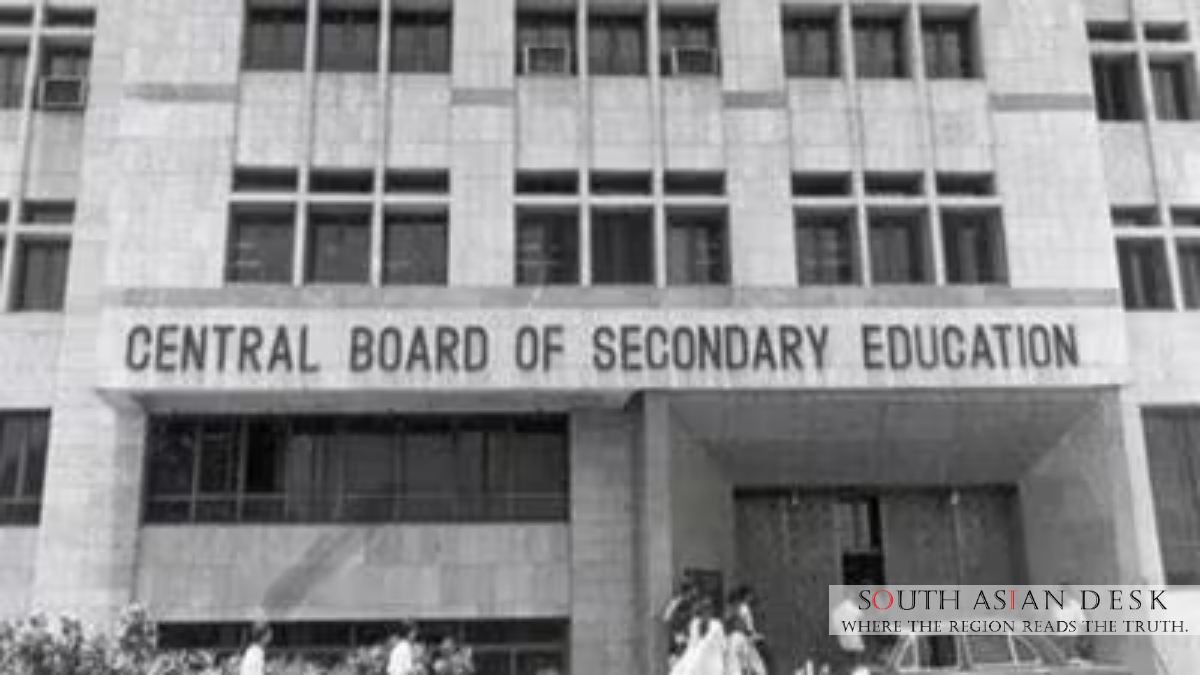
Controversies over the Central Board of Secondary Education’s (CBSE) new digital marking system have sparked widespread concern among students and parents following Class 12 results.
New Delhi, India — Saturday, May 30, 2026, 3:10 PM — Hundreds of students have raised alarms over alleged mismatches in scanned answer sheets and possible security issues with the Central Board of Secondary Education’s (CBSE) new On-Screen Marking (OSM) system, days after the Grade 12 results were declared in mid-May 2026. The complaints centre on discrepancies between physical and digital copies, blurry scans, and claims of a potential portal breach, prompting the federal Education Minister to take responsibility and order reviews.
Why it matters in South Asia
CBSE is one of India’s largest education boards, with around two million students appearing for the Class 12 examinations this year. These results serve as critical gateways for higher education admissions and career opportunities across South Asia, where intense academic pressure often influences social mobility. Similar controversies, including recent issues with the NEET-UG medical entrance exam, have heightened scrutiny of examination integrity in the region.
CBSE’s On-Screen Marking system under fire
The CBSE introduced the OSM system for the 2026 Class 12 examinations to digitise answer sheets for online evaluation by teachers, aiming to minimise human error and enhance transparency. Physical answer books were scanned and uploaded to a portal, with software assisting in total mark calculation.
Students and parents have reported multiple issues, including blurry scanned images that allegedly hindered accurate marking, missing pages, and cases where the digital version did not match the original handwritten responses.
One prominent case involved student Vedant Srivastava, who claimed the physics answer sheet provided during re-evaluation did not match his handwriting or attempted questions. CBSE acknowledged the mismatch and provided what it described as the correct copy.
H2: Security concerns and hacking allegations
Further controversy arose when Nisarga Adhikary, a student describing himself as an ethical hacker, claimed he identified vulnerabilities in a CBSE portal in February 2026. He alleged access to evaluator accounts and student data, and said he reported issues to India’s Computer Emergency Response Team (CERT-IN).
CBSE has strongly denied any security breach in the live evaluation system, stating that the flagged URL was a testing site containing only sample data and that no actual evaluation data was compromised.
Official response and corrective measures
Federal Education Minister Dharmendra Pradhan acknowledged discrepancies on 28 May 2026 and took personal responsibility. He described OSM as a student-centric system but assured that all genuine concerns would be addressed. A team of experts from premier technical institutions has been tasked with ensuring a smooth re-evaluation process.
As of late May, more than 400,000 students had applied for scanned copies of their answer sheets, with around 1.1 million requesting physical copies, according to CBSE updates. The board has committed to reviewing complaints through subject experts.
Background
The controversies follow earlier challenges with high-stakes examinations in India, including allegations of irregularities in the NEET-UG test. Critics have questioned whether adequate training and infrastructure were provided for the rapid rollout of the digital marking system.
What’s next
CBSE has indicated that corrective actions, including mark revisions where warranted, are underway. The resolution of these issues will be closely watched as students prepare for college admissions. The board has reiterated its commitment to a fair and transparent evaluation process involving the hacking claims and mismatched answer-sheets concerns.
Published in SouthAsianDesk, May 30, 2026
Follow SouthAsianDesk on X, Instagram and Facebook for insights on business and current affairs from across South Asia.