

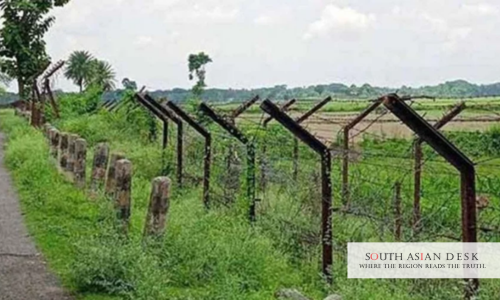
Bangladesh India border talks wrapped up this week with fresh pledges of enhanced patrol coordination and real-time intelligence sharing, but the four-day Director General-level conference in New Delhi has done little to resolve the central dispute that has driven the most serious deterioration in bilateral relations in years: India’s alleged practice of forcibly pushing undocumented migrants across the border without due process. A joint statement released on Friday characterised the discussions as constructive, but negotiators from both sides left New Delhi having staked out fundamentally irreconcilable positions on the legality and legitimacy of what Dhaka calls “push-ins.”
Bangladesh India Border Talks – The 57th DG-Level Conference: What Was Agreed
The 57th Director General-level Border Co-ordination Conference between India’s Border Security Force (BSF) and Bangladesh’s Border Guard Bangladesh (BGB) ran from 8 to 11 June at BSF headquarters in New Delhi. It was the first DG-level exchange between the two border forces since the Bangladesh Nationalist Party came to power in Dhaka in February 2026, lending the talks a significance beyond their routine institutional character.
BGB Director General Major General Mohammad Ashrafuzzaman Siddiqui led a sixteen-member Bangladeshi delegation. The Indian side was headed by BSF Director General Praveen Kumar. The conference concluded with the signing of a Joint Record of Discussions on 11 June, followed by a public joint statement on 12 June.
The two sides described the atmosphere as “cordial, positive and forward-looking” and announced agreement on a package of border management measures: strengthened coordinated patrols, improved real-time intelligence sharing, enhanced vigilance in vulnerable sectors, and renewed commitment to the Coordinated Border Management Plan. The talks also covered human trafficking, border deaths, smuggling of narcotics and cattle, and pending border infrastructure projects. Both sides reaffirmed what the statement called a shared commitment to “peace, tranquility and stability” along the approximately 4,000-kilometre shared frontier.
The next DG-level conference is expected to be hosted by Bangladesh in Dhaka in November 2026.
The Push-In Dispute: Two Irreconcilable Positions
Beneath the diplomatic language, the conference exposed a hardening gulf on the issue that brought the bilateral relationship to its lowest point in recent memory. India has been conducting an intensified campaign to identify and remove undocumented migrants, and in May asked Bangladesh to verify the nationality of more than 2,860 individuals believed to be Bangladeshi nationals residing in India without documentation.
Bangladesh does not dispute that some of its nationals may be living irregularly in India, nor has it refused to accept verified returnees through proper repatriation channels. What Dhaka has objected to strenuously is the manner of return. Bangladeshi officials, including Home Minister Salahuddin Ahmed, have accused India’s BSF of attempting to force people across the border at night, bypassing judicial oversight and formal bilateral procedures, and in some instances leaving individuals, including women and children, stranded in no-man’s land between the two frontier fences.
BGB Director General Siddiqui presented Bangladesh’s position in a written statement during the second day of the conference, describing the push-in attempts as illegal, inhumane, and a violation of international law. India’s position, articulated by BSF Director General Praveen Kumar, was that it was sending back foreigners staying unlawfully in the country in accordance with its own domestic legislation and established administrative procedures.
The two positions are structurally incompatible. Bangladesh insists on formal, bilaterally agreed repatriation mechanisms and proper identity verification before any transfer takes place. India, with a domestic political environment in which undocumented migration has become a charged electoral issue, has shown a clear preference for administrative speed over procedural formality. Neither side publicly conceded ground.
Incidents That Drove The Talks
The conference was convened against a backdrop of specific and well-documented incidents that had made the frontier increasingly volatile in the weeks before the talks. On 31 May, BGB personnel at the Sadipur border in Benapole reportedly foiled an alleged attempt by BSF officers to push thirteen people, among them women and children, across the border by opening a section of the fence. BGB placed the entire border on maximum alert following the incident; a subsequent flag meeting produced no resolution, leaving those individuals stranded in no-man’s land.
In the twenty-four hours before the conference opened on 8 June, BGB reported thwarting at least eight alleged push-in attempts involving approximately 75 people. In response to the escalating situation, Bangladesh had already intensified patrols along affected border sectors and deployed loudspeaker public awareness campaigns in frontier villages, notably through the BGB’s 60th Battalion in Brahmanbaria district, urging residents to report suspicious movements and stay vigilant near riverbanks.
Bangladesh Home Minister Salahuddin Ahmed was explicit about his government’s priorities ahead of the talks: push-ins and border killings were to be treated as the top agenda items, and any attempt at unlawful forced crossing would be “firmly resisted.”
A Relationship That Needs Rebuilding
The push-in crisis is unfolding at a particularly sensitive moment in Bangladesh-India relations. The August 2024 uprising that ousted Prime Minister Shaikh Hasina, who had cultivated close ties with New Delhi, left India diplomatically off-balance in Dhaka. The BNP-led government that came to power in February 2026 has been more assertive in pressing Bangladesh’s sovereign interests on border matters, and less inclined to manage friction quietly.
The 57th conference represents the first formal high-level engagement between the two border forces in this new political environment. The fact that both sides agreed to meet at all, and chose to characterise the outcome in positive terms, is itself a signal that neither government wants the bilateral relationship to deteriorate further. The institutional machinery for managing the border, twice-yearly DG conferences, the Coordinated Border Management Plan, flag meetings at the local level, remains intact and operational.
Whether the joint commitments made in New Delhi will translate into changed behaviour on the ground, however, is a separate question. Previous joint records from BGB-BSF conferences have not always been honoured in practice. With India’s deportation drive continuing and Bangladesh’s new government under domestic pressure to demonstrate it will not allow its citizens to be treated as a problem to be disposed of across a fence, the next six months, and the next conference in Dhaka, will provide the clearest indication yet of whether the Friday statement represents genuine progress or managed ambiguity.
Published in SouthAsianDesk, June 13, 2026
Follow SouthAsianDesk on X, Instagram and Facebook for insights on business and current affairs from across South Asia.
