Bangladesh has launched a formal legal and diplomatic process to bring former Inspector General of Police Benazir Ahmed back from the United Arab Emirates, after Dubai authorities detained him on Friday, June 12, 2026, acting on an Interpol Red Notice — setting a 30-day clock under UAE law for Dhaka to file a formal extradition request.
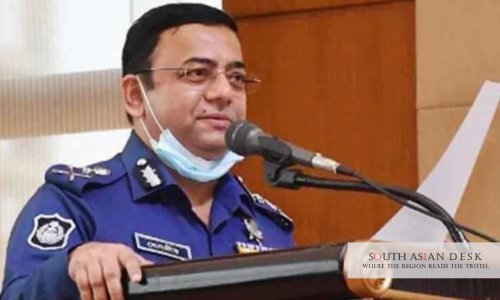
DHAKA — The Benazir Ahmed extradition process is now formally under way after UAE police arrested the former head of Bangladesh’s police force in Dubai on an Interpol Red Notice, Home Minister Salahuddin Ahmed told parliament on Sunday, June 14, 2026, calling the development a significant step towards ending a culture of impunity in the country.
Benazir, who served as Inspector General of Police (IGP) from April 2020 to September 2022 and as Director General of the Rapid Action Battalion (RAB) from January 2015 to April 2020, is facing multiple criminal proceedings in Bangladesh, including charges of corruption, money laundering, acquisition of assets beyond known income, land grabbing and misuse of official documents. He and his family have denied wrongdoing.
The Home Minister confirmed to the Jatiya Sangsad that Bangladesh received official notification of the arrest on Friday, June 12, 2026, through an email from the Directorate General of Federal Criminal Police, National Central Bureau (NCB) Abu Dhabi, under the UAE Ministry of Interior.
Benazir Ahmed Extradition: The 30-Day Window and Legal Steps Ahead
Under UAE Federal Law No. 39 of 2006, Bangladesh must submit a formal extradition request through diplomatic channels within 30 days of the date of arrest. The Home Minister said the process is already in motion.
The Anti-Corruption Commission (ACC) has prepared the required case-related documents, including arrest warrants, charge sheets and court orders. The Ministry of Home Affairs is processing the formal extradition proposal. Once approved, the Ministry of Foreign Affairs will transmit the extradition request to UAE authorities through diplomatic channels. Bangladesh Police’s own NCB, which coordinates with Interpol internationally, will work alongside NCB Abu Dhabi throughout the process.
Making a statement under Rule 300 of Parliament’s Rules of Procedure, the Home Minister described the arrest as “a historic success” for Bangladesh Police and said the development would help the country emerge from what he called a culture of impunity. He said NCB Dhaka had completed international coordination, communication with foreign authorities and all follow-up activities in connection with the Interpol notice.
Benazir is facing criminal proceedings under sections 420, 467, 468, 471 and 109 of the Bangladesh Penal Code, relevant provisions of the Prevention of Corruption Act 1947 and section 11 of the Bangladesh Passport Order 1973, according to official statements to parliament and the ACC.
Interpol Red Notice: A Year-Long Pursuit
Bangladesh’s pursuit of Benazir through international legal channels began shortly after the interim government assumed office following the ouster of Prime Minister Sheikh Hasina in August 2024.
NCB Dhaka formally requested Interpol to issue a Red Notice on Friday, April 11, 2025. The Interpol Red Notice — an international alert requesting law enforcement agencies worldwide to locate and provisionally arrest a person pending extradition — was subsequently issued and the UAE Ministry of Interior was formally requested to act on it. Dubai authorities then arrested Benazir on June 12, 2026, acting in compliance with the notice’s terms.
A separate Dhaka court had also issued an arrest warrant against Benazir, instructing its execution through Interpol, in early 2026.
Corruption and Unexplained Wealth Allegations
The ACC has filed multiple cases against Benazir, his wife and daughters on allegations of accumulating assets beyond known sources of income, concealing asset information and money laundering.
According to ACC case records, investigators allege that Benazir and his family accumulated assets worth more than BDT 74 crore that cannot be accounted for through declared income. Courts have subsequently ordered the attachment and freezing of numerous properties, bank accounts, company shares, beneficiary owner accounts and other financial assets linked to the family, including four apartments in the upscale Gulshan area of Dhaka.
The ACC has also alleged that Benazir and several associates were involved in the laundering of more than BDT 11 crore through financial transactions investigators describe as suspicious. Investigators found property linked to the family in multiple districts, with one round of court-ordered disclosures covering 119 documents and subsequent seizure orders covering several hundred bighas of land across different regions.
The ACC’s investigations have expanded in successive rounds, with courts ordering the seizure of shares in 19 companies, eight flats and shares in private companies, including a television channel, at various stages of the probe. A court later appointed receivers to manage the seized properties under the Money Laundering Prevention Act.
Land Acquisitions and Savanna Eco Resort
One of the most widely reported dimensions of the case involves large-scale land acquisitions, primarily in Gopalganj and Madaripur.
The ACC has alleged that Benazir and members of his family acquired at least 613.41 bighas of land across several districts, including approximately 605.77 bighas in Gopalganj and Madaripur, much of it previously owned by members of the Hindu community. Investigators allege that land was acquired using both direct intimidation and indirect pressure through associates, including a police officer identified as a trusted subordinate. Courts have ordered the attachment of assets linked to these holdings.
A central element of the controversy is the Savanna Eco Resort and Natural Park in Gopalganj, a leisure facility that media investigations in 2024 alleged was built on land obtained in this manner during Benazir’s tenure as RAB Director General and later as IGP. Following ACC investigations and court orders, local authorities took control of the resort. The property had previously been listed under a company linked to Benazir.
Benazir and his family have denied wrongdoing in relation to the land acquisition allegations.
Human Rights Proceedings and US Sanctions
Separately from the corruption cases, Benazir faces proceedings before the International Crimes Tribunal (ICT) in connection with two matters.
He is among those named in a case being investigated in connection with the May 2013 Hefazat-e-Islam security operation at Shapla Chattar in Dhaka’s Motijheel area, where prosecutors are examining deaths that occurred during the clearance. He has also been named in proceedings concerning allegations of enforced disappearances linked to a detention facility allegedly operated by RAB during the period of the previous government. Both matters remain under judicial process.
In December 2021, the United States imposed sanctions on RAB and several of its current and former senior officials, including Benazir, under the Global Magnitsky Act. The US Treasury cited alleged serious human rights abuses including extrajudicial killings and enforced disappearances during his tenure as RAB Director General. Benazir disputed the sanctions at the time.
Dhaka University additionally suspended his Doctor of Business Administration degree following scrutiny of the admission process and academic requirements, a matter that became part of wider public attention surrounding his post-retirement conduct.
Career, Rise and Exit from Bangladesh
Benazir Ahmed joined the Bangladesh Police Service in 1988 and rose steadily through one of South Asia’s largest police forces, eventually holding three of its most powerful positions: Commissioner of Dhaka Metropolitan Police, Director General of RAB and, finally, Inspector General of Police — the nation’s highest uniformed police rank, which he held until September 2022.
His tenure coincided with the peak years of the Awami League government of Prime Minister Sheikh Hasina, and he was widely regarded as one of the most influential law enforcement figures of that era.
Corruption allegations entered the public domain in early 2024 following investigative reports in Bangladeshi newspapers. The ACC launched investigations shortly thereafter. Benazir left Bangladesh in 2024 — multiple reports suggest he departed on a commercial flight with family members — after courts began ordering the freezing of his assets. He has been living abroad since, with assets investigations also reported to be under way in the United States, United Kingdom and Canada.
Background
The case against Benazir forms part of a broader anti-corruption drive undertaken by Bangladesh’s interim government following the political transition of August 2024. A number of senior officials, business figures and political associates of the previous administration have faced ACC investigation and legal proceedings since the change of government. The use of Interpol’s Red Notice system and the successful arrest in the UAE represent a notable step in Bangladesh’s effort to pursue accountability for alleged crimes committed by former senior officials who have left the country. Bangladesh and the UAE do not have a standalone bilateral extradition treaty but operate under frameworks including UAE Federal Law No. 39 of 2006 and international mutual legal assistance procedures. The 30-day deadline for the formal extradition request makes the timeline for the next steps relatively compressed, placing the process on an accelerated track through the ministries of Home Affairs and Foreign Affairs simultaneously.
What’s Next
Bangladesh’s ACC, Ministry of Home Affairs and Ministry of Foreign Affairs must move swiftly to compile, authenticate and transmit the formal extradition request to UAE authorities before the 30-day window closes. Once a formal request is submitted, the UAE judicial and executive system will review its admissibility under UAE law. Legal experts note the process can involve hearings before UAE courts if Benazir contests the request. If the extradition is approved, Benazir Ahmed will face numerous pending cases in Bangladesh, including the ACC corruption trials and the ICT proceedings. The success or otherwise of the Benazir Ahmed extradition will be closely watched as a test of Bangladesh’s ability to secure international legal cooperation in high-profile accountability cases involving fugitives abroad.
Published in SouthAsianDesk, June 15, 2026
Follow SouthAsianDesk on X, Instagram and Facebook for insights on business and current affairs from across South Asia.