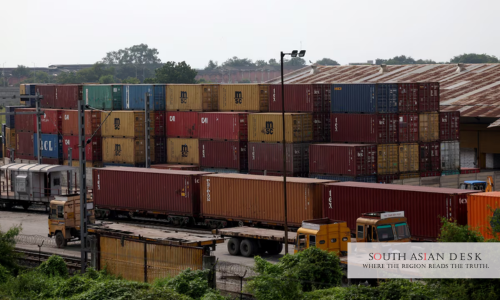
India’s trade deficit in May 2026 narrowed marginally to $28.21 billion, slightly below economists’ forecast of $28.72 billion and down from $28.38 billion in April, as merchandise exports grew 18 percent year-on-year to $45.2 billion, even as a surging crude oil import bill pushed total merchandise imports to $73.41 billion, up 20.62 percent on the year, according to Commerce Ministry data released on Monday.
India’s May 2026 trade deficit reflects a month in which global energy markets were severely disrupted by the closure of the Strait of Hormuz and the US naval blockade of Iranian ports. Those conditions pushed crude oil prices above $100 per barrel at points during the month, touching $120 per barrel at the peak, feeding directly into India’s import costs, domestic fuel prices, and consumer inflation.
India’s crude oil imports in May 2026 rose nearly 54 percent year-on-year to $22.68 billion, the single largest driver of the elevated import total. India’s gold imports in 2026 have also remained elevated, rising 34 percent in May to $3.42 billion, the second significant upward pressure on the headline figure. Key export contributors included petroleum products, engineering goods, organic and inorganic chemicals, and electronics.
The Strait of Hormuz Impact on India’s Trade and Inflation
The Strait of Hormuz’s closure has had a direct and sustained impact on India’s trade position since the West Asia conflict began in late February. India sources a substantial share of its crude oil from Gulf producers whose export routes pass through or are immediately adjacent to the strait, through which approximately one-fifth of global oil and liquefied natural gas trade normally passes, making the Strait of Hormuz’s impact on India’s trade one of the most consequential dimensions of the conflict for the domestic economy.
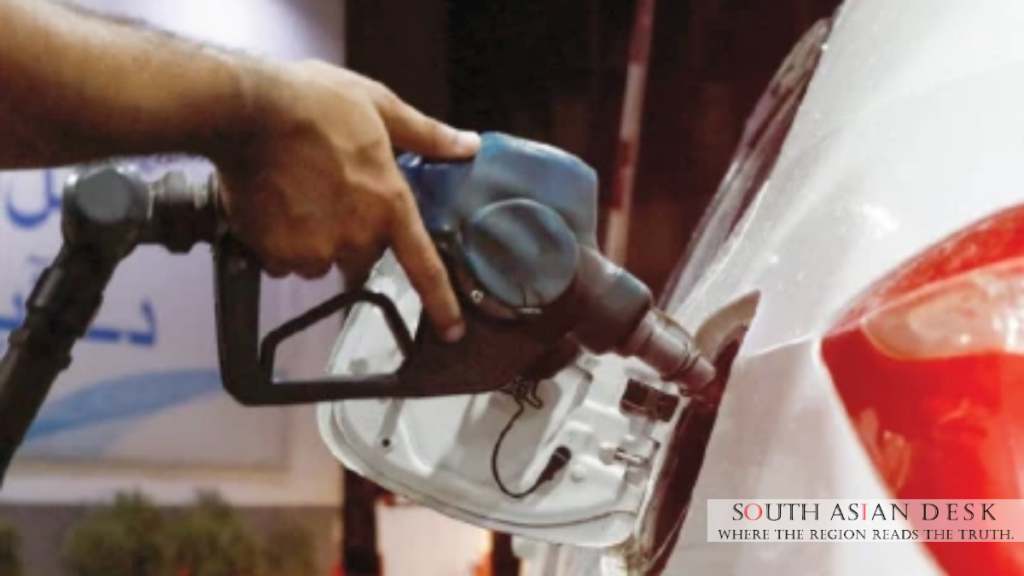
India’s retail inflation rose to 3.93 percent in May 2026 from 3.48 percent in April, driven significantly by higher food and fuel costs. Wholesale price inflation accelerated more sharply to 9.68 percent in May from 8.3 percent in April. Oil marketing companies raised petrol prices by Rs2.61 per litre and diesel by Rs2.71 per litre on 26 May alone, the fourth increase in under a fortnight, pushing non-branded petrol in Delhi above Rs100 per litre to Rs102.12, with diesel at Rs95.20.
The IEA estimated that global oil supply had declined by 1.8 million barrels per day in April to 95.1 million barrels per day, with cumulative supply losses from Gulf producers exceeding one billion barrels and more than 14 million barrels per day shut in, representing an unprecedented supply shock that made itself felt in India’s import bill across successive months.
US Iran Peace Deal Shifts the Outlook
The announcement on Sunday of a US Iran peace deal, with a formal signing ceremony scheduled for 19 June in Geneva, has already begun to alter market conditions relevant to India’s future trade position. Brent crude prices fell nearly 5 percent on Monday to approximately $83-84 per barrel, their lowest level in roughly three months. The Indian rupee appreciated against the dollar as easing oil prices reduced pressure on the country’s external accounts.
Commerce Secretary Rajesh Agarwal said that many of the trade-related challenges facing Indian exporters and importers could ease significantly if the peace deal holds and proves sustainable. The reopening of the Strait of Hormuz would reduce shipping costs, improve supply chain predictability, and lower energy input costs across India’s manufacturing sector.
For India’s trade deficit in the months ahead, the decisive variable will be how quickly oil prices normalise following the Hormuz reopening and whether the removal of the blockade translates into a sustained reduction in the freight and insurance premiums that have inflated the cost of every shipment since February.
India’s Services Trade Surplus Provides a Structural Cushion
While merchandise trade remained under pressure, India’s services sector provided a meaningful structural offset. India’s services trade surplus in May 2026 stood at an estimated $17.7 billion, with services exports of $36.76 billion against services imports of $19.06 billion, substantially reducing India’s effective current account exposure beyond what the merchandise deficit figure alone implies.
On a cumulative April-May 2026-27 basis, total exports combining merchandise and services reached $162.69 billion, a gain of 14.66 percent against $141.89 billion in the corresponding period of the prior year. Merchandise exports for April-May stood at $88.91 billion, up 16.09 percent year-on-year, while non-petroleum merchandise exports for the period reached $70.74 billion against $64.03 billion a year earlier, an increase of 10.49 percent.
India-US Trade Talks Shape the Medium-Term Picture
India’s May 2026 trade deficit data was released against the backdrop of continuing India-US trade talks. April-May goods exports to the United States came in nearly flat at $17.29 billion against $17.21 billion in the same period of the prior year, a performance reflecting both the difficult global environment and the continued sensitivity of bilateral trade flows to the tariff regime.
US tariffs on Indian goods had reached as high as 50 percent under the Trump administration’s reciprocal tariff measures before being reduced to 18 percent in February 2026 under a bilateral trade framework that included Indian commitments to diversify its energy imports towards American suppliers. India has followed through on that commitment: crude oil imports from the United States rose approximately 50 percent in FY2025-26 to $9.9 billion, and Indian state refiners signed the country’s first structured long-term LPG import agreement with US suppliers, covering approximately 2.2 million tonnes in 2026, roughly 10 percent of India’s annual LPG requirements.
A comprehensive India-US trade agreement and a parallel India-EU free trade agreement remain in active negotiation. Both are expected to shape the medium-term trajectory of India’s merchandise exports growth and its overall trade deficit position if concluded on terms favourable to Indian exporters.
Published in SouthAsianDesk, June 16, 2026
Follow SouthAsianDesk on X, Instagram and Facebook for insights on business and current affairs from across South Asia.