Pakistan’s US Iran mediation produced one of the most consequential diplomatic achievements in the country’s history on Sunday when Prime Minister Shehbaz Sharif announced that a peace deal had been reached between Washington and Tehran, ending more than 100 days of war, but accounts of how that outcome was reached reveal a process that nearly collapsed multiple times and was held together in its most critical moments by Field Marshal Asim Munir, Pakistan’s army chief.
Addressing the National Assembly in Islamabad on Monday, Sharif offered the most detailed public account yet of the mediation effort, crediting Munir above all others with keeping the negotiations from falling apart. “Throughout this period, he was awake all day and night,” Sharif told lawmakers, adding that Munir had “sacrificed day and night to extinguish the flames of war.” There were many moments, he said, when it felt as though the negotiations would come to a halt, but the army chief refused to give up. “If this journey had not continued,” Sharif said, “the dream of peace would have been shattered.”
The acknowledgement was unusually direct for a process conducted almost entirely out of public view, and it placed Munir at the centre of Pakistan’s US Iran mediation in terms that Pakistani officials had previously declined to confirm in explicit detail.
The Opening Phase: Ceasefire, Collapse and Recovery
Pakistan’s US Iran mediation did not begin with a single decisive intervention but accumulated across successive crises, each of which threatened to end the diplomatic process entirely.
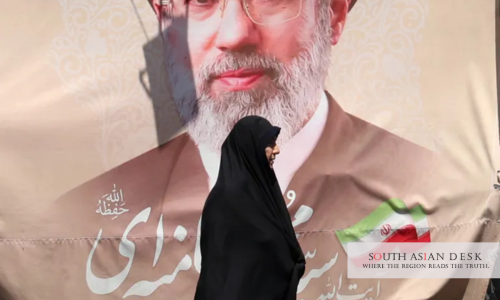
The war itself began on 28 February when the United States and Israel launched joint strikes on Iran. Among the immediate casualties was Iran’s supreme leader, Ayatollah Ali Khamenei, who was killed on the first day of the conflict. His son, Mojtaba Khamenei, assumed the position of supreme leader under conditions of national emergency, and the negotiations that eventually produced the Geneva deal were conducted entirely under his authority. Sharif on Monday specifically named the new supreme leader among those who had demonstrated “immense wisdom, prudence and patience under extremely difficult circumstances.”
The first breakthrough in Pakistan’s US Iran mediation came on 8 April, when Munir made a flurry of calls to US officials in the hours before a Trump administration deadline to resume strikes on Iran expired. That intervention produced a Pakistan-brokered ceasefire that held, but only narrowly. Trump subsequently extended it indefinitely upon what Pakistani officials described as the “personal request” of Munir and Sharif.
The Islamabad Talks and the Long Stalemate
The Pakistan US Iran mediation reached its highest public profile between 11 and 12 April, when Pakistan hosted direct talks in Islamabad between American and Iranian delegations, the highest-level engagement between Washington and Tehran since 1979. US Vice President JD Vance attended on behalf of the United States. The talks ended without an agreement.
For weeks after the Islamabad talks, face-to-face negotiations did not resume. At one point, Trump suggested publicly that the two sides could speak by phone if needed, a formulation that conveyed little confidence in the immediate prospects for a deal. Pakistani officials continued shuttling between Washington and Tehran, but there was little public indication of progress.
Jauhar Saleem, a former Pakistani diplomat, said the arc of the Pakistan US Iran mediation in this period reflected something more fundamental than tactical adjustment. “It’s not a question of what changed between April and June. It’s rather an example of a never-give-up approach in diplomacy where an honest broker respected by both sides can eventually help overcome an overwhelming trust deficit,” Saleem told Al Jazeera.
Pakistan’s task, he said, extended beyond bridging the gap between the stated positions of Washington and Tehran. It also required navigating the divide between pragmatists and hardliners within each country, particularly within Iran’s political and security establishment. “Pakistan’s leverage was and remains its credibility as a trusted friend and well-wisher and a fair intermediary,” Saleem said.
China, Qatar and the Multilateral Framework
Pakistan did not pursue its US Iran mediation in isolation. On 31 March, Pakistan and China jointly signed a five-point peace plan aimed at ending the war. Beijing’s involvement reflected its own acute concerns about the blockade of the Strait of Hormuz, through which a significant portion of China’s oil and gas imports passes. The joint plan gave the mediation effort a multilateral dimension and signalled to both Washington and Tehran that the diplomatic pressure for a resolution extended beyond Islamabad.
Qatar served as a co-mediator throughout the process. Iran’s Deputy Foreign Minister Kazem Gharibabadi said Tehran’s agreement to the final deal came after 14 hours of negotiations with Qatari mediators. Saudi Arabia, Turkey, and Egypt also played supporting roles, and Sharif on Monday praised the leaders of all four countries for their contributions alongside Pakistan’s.
The Munir Factor: A Second Visit to Tehran
In May, Munir travelled to Tehran for a second time, accompanied by Interior Minister Mohsin Naqvi, whom Sharif on Monday credited for engaging with Iranian counterparts throughout the crisis. Iranian Foreign Minister Abbas Araghchi made multiple reciprocal visits to Islamabad during the same period, meeting separately with both Munir and Sharif. During one such visit, Araghchi said Tehran intended to engage with Pakistan’s mediators “until a result is achieved,” a formulation that Pakistani officials regarded as a significant signal of Iranian commitment to the process.
Saudi Foreign Minister Prince Faisal bin Farhan Al Saud specifically acknowledged Pakistan’s “consistent and sustained efforts in support of mediation and dialogue throughout the process,” a statement released by Pakistan’s Foreign Ministry that underlined the degree to which Islamabad’s role was recognised across the regional diplomatic community.
The Final Hours: Near-Collapse and Announcement
By Saturday 14 June, Foreign Minister and Deputy Prime Minister Ishaq Dar was in direct contact with his counterparts in Saudi Arabia, Turkey and Egypt as what Pakistani officials described as the final phase of negotiations unfolded. Sharif declared on Saturday that the US and Iran had reached a “final, agreed-upon text” of a deal. “Peace has never been this close as it is now,” he said.
Hours later, Iran’s Ministry of Foreign Affairs issued a statement saying there were no plans for its negotiating team to travel to sign an agreement in the coming days, a public intervention that suggested the final hours remained genuinely uncertain. Then, on Sunday morning, an Israeli strike on the southern suburbs of Beirut threatened to destabilise the process entirely. Iranian parliament Speaker Mohammad Bagher Ghalibaf questioned whether Washington had either the “will or the ability” to enforce its commitments. Iranian President Masoud Pezeshkian nonetheless signalled that diplomacy remained alive.
The precise mechanics of how the Pakistan US Iran mediation survived that moment have not been publicly disclosed. What is known is that Sharif posted on X shortly after the Lebanese strike, announcing the tentative deal. Trump confirmed it on Truth Social minutes later.
The 14-Point Deal and What It Contains
The agreement, described by Iran’s Mehr News Agency as a 14-point memorandum of understanding, calls for an immediate and permanent end to military operations on all fronts, explicitly including Lebanon. The United States has committed to lifting its naval blockade of Iran within 30 days and withdrawing forces deployed near Iranian territory. The Strait of Hormuz is to reopen for normal commercial transit under the terms of the agreement.
Iran’s frozen assets, estimated at $24 billion, are to be released in phases over a subsequent 60-day negotiating period, during which both sides are expected to address Iran’s nuclear program. Iran has been reported to have agreed to maintain the nuclear status quo, including no further uranium enrichment and no expansion of nuclear facilities, until a final arrangement on that issue is reached. Discussions on Iran’s missile program and its support for armed groups in the region have been removed from the immediate agenda and deferred to later negotiations.
The formal signing ceremony, hosted by Pakistan, is scheduled for Friday 19 June in Geneva, Switzerland.
Sharif closed his address to the National Assembly with an assessment of what the Pakistan US Iran mediation represented for the country’s international standing. “Nations have sought for decades the respect and honour which has been awarded to Pakistan for its efforts in the peace process,” he told lawmakers.
Published in SouthAsianDesk, June 16, 2026
Follow SouthAsianDesk on X, Instagram and Facebook for insights on business and current affairs from across South Asia.