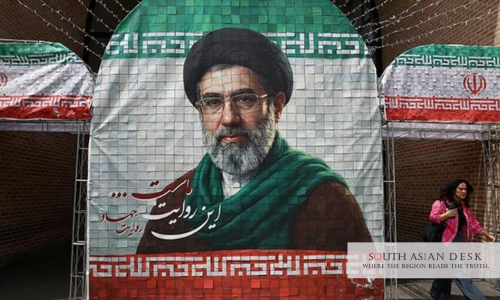
Iran-US MoU approval by Iran’s Supreme Leader Ayatollah Mojtaba Khamenei came after senior Iranian officials assured him that Tehran’s rights and the interests of the “Resistance Front” would be protected, according to a written message attributed to him on Thursday, June 18, 2026.
Khamenei said he had held a different view on the memorandum of understanding signed by Iranian President Masoud Pezeshkian and US President Donald Trump, but authorised the agreement after receiving commitments from Pezeshkian and other officials.
Iran-US MoU Backed After Assurances On Iran’s Rights
In the written message, Khamenei said Pezeshkian, in his role as head of the Supreme National Security Council, had accepted responsibility for ensuring that the agreement safeguarded Iran’s interests.
He also said Iranian officials had pledged not to yield if Washington made excessive demands during the next phase of talks.
Khamenei added that any future direct US-Iran negotiations would not mean accepting what he described as the enemy’s position.
The public version of the written message was carried by Iranian and international media.
Deal Opens 60-Day Window For Iran Nuclear Talks
The memorandum sets in motion a 60-day period for further negotiations between Tehran and Washington, including talks on Iran’s nuclear programme and wider issues linked to the recent conflict.
The agreement has also been linked to the reopening of the Strait of Hormuz and steps connected to US sanctions relief. Public details of the final text remain limited, and some implementation terms have not been independently verified.
Iran’s presidency has separately confirmed that regional leaders welcomed the recent memorandum of understanding on ending the war between Iran and the United States. In a phone call with Tajik President Emomali Rahmon, Pezeshkian referred to recent regional developments and expressed hope that greater unity among Islamic countries would support sustainable peace and security.
Pakistan Welcomes Islamabad Peace Deal
Pakistan has described the agreement as the Islamabad Peace Deal and said it followed diplomatic efforts aimed at ending the conflict.
According to Pakistan’s Press Information Department, Prime Minister Shehbaz Sharif congratulated President Pezeshkian and the Iranian leadership during a phone call on Thursday, June 18, 2026.
The statement said Pezeshkian thanked the prime minister and Field Marshal Syed Asim Munir for their roles in the mediation process. Both leaders agreed to remain in contact and to visit each other’s capitals at an early opportunity.
President Asif Ali Zardari also welcomed the signing of the Islamabad Memorandum of Understanding, calling it an important moment for the region and urging all parties to implement it fully within the stipulated timeframe.
Background
Iran and the United States have had no formal diplomatic relations since the 1979 Islamic Revolution. Their relations have remained strained over Iran’s nuclear programme, sanctions, regional militias, maritime security and military activity in the Gulf.
The latest agreement follows a period of conflict that disrupted regional stability and global energy markets. The Strait of Hormuz, a critical waterway for energy shipments, has been central to diplomatic and security concerns.
The new framework appears intended to move the parties from conflict management toward negotiations, though its durability will depend on implementation and whether both sides can agree on nuclear, security and sanctions-related issues.
What’s Next
The next stage is expected to involve direct or technical negotiations between Iran and the United States within the 60-day framework.
However, the process remains uncertain. Future talks may be affected by disputes over sanctions, Iran’s nuclear programme, maritime transit through the Strait of Hormuz and regional security commitments.
For now, the Iran-US MoU represents a tentative diplomatic opening, but Khamenei’s reservations and his warning against accepting Washington’s position show that major disagreements remain unresolved.
Published in SouthAsianDesk, June 20, 2026
Follow SouthAsianDesk on X, Instagram and Facebook for insights on business and current affairs from across South Asia.