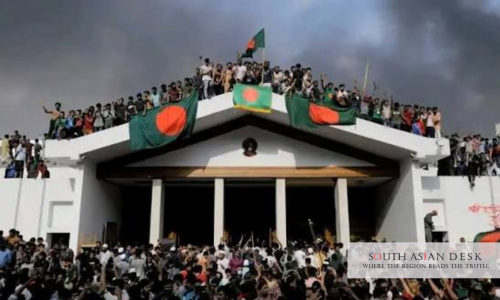
Bangladesh Army deployment was ordered in Dhaka ahead of the founding anniversary of former prime minister Sheikh Hasina’s Awami League, as authorities moved to prevent rallies by the banned party on Tuesday, June 23, 2026.
The security measures came before the Awami League’s 77th founding anniversary, a politically sensitive date after Hasina was ousted in August 2024 following mass protests. The party has been barred from political activities under Bangladesh’s anti-terrorism law, while its leaders and supporters have accused the interim authorities of using state power to suppress political opposition.
Bangladesh Army Deployment Ordered In Dhaka
Bangladesh’s Home Ministry directed the deployment of army personnel in Dhaka from Monday, June 22, 2026, to help police and other law-enforcement agencies maintain order around the Awami League anniversary.
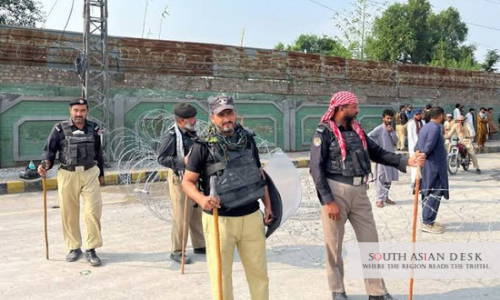
Reuters reported that hundreds of soldiers were deployed alongside thousands of police, with authorities citing concerns that Awami League supporters could attempt processions or gatherings despite the ban. Local reports said around 18,000 police personnel were also placed on duty across the capital.
Security was tightened around key points in Dhaka, including politically sensitive neighbourhoods, government offices, major intersections and areas historically linked to Awami League activity. Police warned that any unauthorised procession, public gathering or attempt to create disorder would be stopped.
Awami League Anniversary Comes Under Restrictions
The Awami League, founded on June 23, 1949, is one of Bangladesh’s oldest political parties. It led the country’s independence movement and dominated national politics for much of Hasina’s long rule.
This year’s anniversary is being marked under sharply different circumstances. Hasina remains outside Bangladesh after her ouster, senior party leaders face legal cases, and the interim authorities have restricted the party’s public activities.
The government has justified the restrictions on law-and-order grounds, saying the party’s activities could threaten public security. Awami League supporters reject that argument and say the measures are politically motivated.
The anniversary therefore carries both symbolic and security significance. For the interim administration, it is a test of control in the capital. For the Awami League, it is a moment to show whether the party can still mobilise supporters despite the ban.
Police Warn Against Processions And Gatherings
Dhaka Metropolitan Police said it would not allow unauthorised processions or gatherings linked to the anniversary. Security officials also said surveillance had been increased in areas where flash processions could take place.
Local media reported arrests in Dhaka before the anniversary, including people accused of planning or joining pro-Awami League activities. However, the full number of arrests has not been confirmed in a single official national update.
Police have also been monitoring online calls for mobilisation. Authorities have previously warned that digital platforms could be used to coordinate banned political activity or spread rumours during periods of tension.
The Awami League has used online messaging and overseas-based leadership networks to keep its supporters engaged since the party was pushed out of power.
Political Tensions Remain High After Hasina’s Ouster
Bangladesh remains politically unsettled nearly two years after the uprising that ended Hasina’s rule. The interim government has promised reforms and accountability, while opposition groups and rights advocates have called for political space, due process and credible elections.
Hasina’s supporters argue that the ban on Awami League activities weakens democratic competition and excludes a major political force from public life. Critics of the Awami League say the party must first face accountability for alleged abuses during its time in power.
The anniversary security deployment reflects that unresolved divide. The authorities are treating the date as a potential flashpoint, while the party’s supporters see it as a test of whether they can publicly assert their political identity.
Background
The Awami League governed Bangladesh for more than 15 consecutive years under Sheikh Hasina before her administration collapsed in August 2024. The fall followed widespread protests over governance, political rights and state violence.
After Hasina’s departure, the interim administration moved against several Awami League leaders and restricted the party’s political activities. The authorities later invoked anti-terrorism provisions to suspend or ban party activities, a move that remains politically contested.
Bangladesh’s political environment has since been shaped by uncertainty over elections, accountability, institutional reform and the role of parties linked to the previous government.
What’s Next
The immediate test is whether the anniversary passes without major unrest, arrests or clashes. Authorities are expected to maintain heightened security in Dhaka through Tuesday, June 23, 2026, and possibly longer if tensions continue.
The broader issue is political inclusion. Bangladesh’s interim authorities face pressure to maintain order while also defining how and when major political parties can return to open competition.
For now, Bangladesh Army deployment around the Awami League anniversary shows that the country’s post-Hasina transition remains fragile, with law-and-order concerns closely tied to unresolved questions about political rights and future elections.
Published in SouthAsianDesk, June 23, 2026
Follow SouthAsianDesk on X, Instagram and Facebook for insights on business and current affairs from across South Asia.