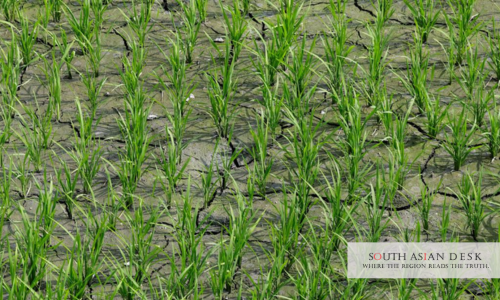
Nepal rice season has begun under growing concern, as weak monsoon rains, dry fields and limited irrigation leave farmers worried about the country’s most important crop.
Across Nepal, the start of paddy planting is usually marked with celebration. National Paddy Day, known locally as Asar Pandra, is a cultural and agricultural milestone that symbolically marks the beginning of the rice planting season. Farmers step into muddy fields, plant young rice saplings and celebrate a crop that sits at the centre of Nepal’s food system.
This year, however, the mood is more anxious. The monsoon has been weak and delayed, leaving many farmers waiting for rain before they can transplant paddy seedlings. In some areas, fields have remained dry even as the planting calendar moves forward. For households that depend on rice both for income and food, the delay has raised real fears about the coming harvest.
Rice is not just another crop in Nepal. It is the country’s staple food, a major source of rural employment and a key part of national food security. When paddy planting is delayed, the effects can move far beyond individual farms. A poor season can affect rural incomes, food prices, imports and the wider economy.
Nepal Rice Season Faces a Weak Monsoon
The main concern facing Nepal rice season this year is the weak start to the monsoon. Nepal’s paddy crop depends heavily on seasonal rainfall, particularly in areas where irrigation coverage is limited. When rains arrive late or remain below normal, farmers cannot prepare fields properly or transplant seedlings on time.
Government-linked data cited in Nepali reporting show that irrigation infrastructure covers only about 1.59 million hectares, or 62.68 percent, of the country’s 2.53 million hectares of land requiring regular irrigation. That means nearly four out of every 10 hectares of irrigable farmland remain dependent on rainfall or less reliable water sources.
This irrigation gap has become more serious because paddy transplantation is time-sensitive. Seedlings must be moved from nurseries into flooded fields within a suitable planting window. If fields remain dry, seedlings may become weak, overgrown or damaged before transplantation. If planting is delayed too long, yields can suffer even if rain improves later.
The Department of Agriculture has reportedly said that only about 11.3 percent of Nepal’s paddy fields had been transplanted by June 26, compared with 15.6 percent during the same period last year. This suggests that farmers are already behind schedule.
National Paddy Day Nepal Brings Celebration and Concern
National Paddy Day Nepal usually brings images of farmers covered in mud, singing, dancing and eating dahi chiura, a traditional combination of yoghurt and beaten rice. It is both a farming ritual and a reminder of how closely Nepal’s culture is tied to paddy cultivation.
But this year’s celebrations came with visible concern. Reuters photographs from the outskirts of Kathmandu showed dry paddy fields awaiting rainfall as a weak monsoon delayed farmers from planting rice saplings. The same reporting linked the delay to possible El Niño conditions, which can reduce rainfall in parts of South Asia.
The contrast is striking. National Paddy Day is meant to celebrate the beginning of a productive agricultural season. Instead, many farmers are watching the sky and waiting for enough water to begin work.
For small farmers, the uncertainty is especially difficult. Delayed planting can mean higher costs, more labour pressure and greater risk of crop failure. Farmers may have to replant seedlings, hire workers at short notice or spend more on pumps and irrigation where water is available.
Why Paddy Transplantation Nepal Matters
Paddy transplantation Nepal is a critical moment in the country’s agricultural calendar. Rice cultivation supports millions of rural households and remains central to diets across the country. A strong paddy season helps stabilise food supply and rural income. A weak season can quickly deepen economic stress.
Nepal recently recorded a strong paddy harvest, with production estimated at around 5.955 million tonnes in the 2024-25 fiscal year. That was reported as a 4.04 percent increase from the previous year and one of the country’s strongest paddy outputs. Even so, Nepal continues to face pressure from rising food demand and periodic reliance on rice imports.
That is why harvest fears matter. A poor monsoon does not only affect the current crop. It can also weaken progress towards rice self-sufficiency, increase import needs and create pressure on household food budgets.
The problem is structural. Nepal’s rice system remains vulnerable because it depends heavily on rainfall, smallholder farming and fragmented landholdings. Many farmers lack assured irrigation, modern machinery, affordable fertiliser, improved seeds and reliable market support. Climate shocks expose these weaknesses more sharply.
Nepal Farmers Face Rising Costs and Water Stress
Nepal farmers are not only facing a rainfall problem. They are also dealing with rising production costs. Paddy cultivation requires labour, seed, fertiliser, water, land preparation and transport. When planting is delayed, each of these costs can become harder to manage.
A delayed monsoon can force farmers to spend more on irrigation pumps or wait until rain arrives. Waiting may save money in the short term, but it can reduce yields later. Pumping water may allow planting to begin, but it adds fuel or electricity costs that many small farmers struggle to absorb.
Fertiliser and seed availability also affect the season. Previous paddy seasons in Nepal have been disrupted by shortages or delays in agricultural inputs. When weak rainfall combines with input problems, farmers face a double burden: they cannot plant on time, and even when they do plant, they may not have what they need to achieve strong yields.
This is why the current rice harvest fears are not exaggerated. For a farmer, a delayed planting season is not an abstract weather story. It can mean less grain in storage, lower market income and more debt.
Nepal Irrigation Shortage Exposes Climate Risk
Nepal irrigation shortage is one of the clearest reasons the country remains vulnerable to erratic rainfall. The Himalayan nation has major rivers and water resources, but irrigation infrastructure does not reach all farmland that needs dependable water.
The Himalayan Times reported that Nepal has 3.56 million hectares of cultivable land, while irrigation coverage continues to lag behind demand. It also reported that a target to expand irrigation by 6,750 hectares in the current fiscal year had reached only 4,048 hectares by mid-March, with officials pointing to project cuts and protest-related disruptions.
For farmers, this means the difference between confidence and uncertainty. With reliable irrigation, delayed rain is still a concern but not necessarily a disaster. Without irrigation, farmers must wait for the monsoon, and every dry day can reduce the planting window.
Climate change makes this dependence more dangerous. Farmers are facing more erratic weather, including delayed rainfall, intense rain events, floods, heat stress and changing seasonal patterns. For paddy, which needs controlled water at key stages, this volatility can damage both planting and yield.
Rice Production Nepal Depends on Timely Rain
Rice production Nepal depends heavily on the timing and distribution of rainfall. A strong total monsoon is not enough if rain comes too late or falls unevenly. Paddy needs water at field preparation, transplantation, vegetative growth and grain development stages.
If rainfall is delayed early in the season, farmers may miss the ideal planting window. If heavy rain comes later, it can damage fields, trigger floods or affect grain quality. This makes climate variability especially dangerous for rice.
Experts have repeatedly warned that Nepal’s food security depends on improving agricultural resilience. That means expanding irrigation, improving weather advisories, promoting climate-resilient seed varieties, strengthening fertiliser supply and helping farmers manage risk through insurance and local support systems.
The current weak monsoon should therefore be seen as a warning. Nepal cannot rely only on traditional rainfall patterns in an era of climate uncertainty. Paddy farming needs stronger public investment and better planning.
Weak Monsoon Nepal Could Affect Food Security
Weak monsoon Nepal conditions could have wider consequences if the rainfall deficit continues. A poor paddy season may reduce domestic supply, increase import pressure and affect food prices. This would matter particularly for low-income households, which spend a significant share of their income on food.
Nepal’s food security is closely tied to rice because it is the country’s staple grain. Even when total production is strong, domestic demand remains high. Any disruption to the harvest can therefore create concern for both consumers and policymakers.
The impact would not be uniform. Farmers with irrigation, better land and access to inputs may still produce a reasonable crop. Farmers in rain-fed areas are more exposed. Regions where transplantation is already delayed could face greater yield risks if rain does not improve soon.
This uneven impact makes the policy response important. Authorities may need to prioritise water management, input supply, local crop advisories and support for farmers in the most vulnerable districts.
Climate Change Agriculture Nepal Needs Long-Term Planning
Climate change agriculture Nepal is no longer a future concern. Farmers are already experiencing irregular rainfall, heat stress and greater uncertainty. The current rice season shows how quickly climate pressures can translate into agricultural anxiety.
Long-term planning should focus on practical solutions. Expanding irrigation is essential, but it must be matched with efficient water use, maintenance of canals, groundwater management and climate-resilient cropping systems. Farmers also need reliable forecasts that are specific enough to guide planting decisions.
Crop diversification can help, but rice will remain central to Nepal’s food system. The answer is not simply to move away from paddy. It is to make rice cultivation more resilient through better seed varieties, water management, mechanisation, soil health and post-harvest systems.
Nepal also needs stronger support for small farmers who carry the greatest risk. Without affordable credit, insurance and extension services, they are left to absorb climate shocks alone.
Nepal Rice Season Shows a Deeper Food Security Challenge
Nepal rice season has started with celebration, but also with unease. Farmers are still planting, and a recovery in rainfall could improve the outlook. The final harvest will depend on how the monsoon behaves in the coming weeks, especially during the main transplantation period.
Still, the early signs are worrying. Paddy planting is behind last year’s pace, irrigation remains insufficient and weak rainfall has already affected farmers in several areas. For a crop as important as rice, even a delayed start deserves close attention.
The deeper lesson is clear. Nepal’s food security cannot depend on hope for a normal monsoon every year. The country needs stronger irrigation, better agricultural planning and more climate-resilient farming systems.
For now, farmers are doing what they have always done at the start of the rice season: preparing fields, raising seedlings and waiting for rain. But this year, the wait carries heavier stakes. If the monsoon does not improve in time, Nepal’s harvest fears could become a serious food security concern.
Published in SouthAsianDesk, July 3, 2026
Follow SouthAsianDesk on X, Instagram and Facebook for insights on business and current affairs from across South Asia.