FBR reforms Pakistan has become a central part of the government’s economic agenda after the Federal Board of Revenue surpassed its revenue target for the 2025-26 fiscal year, collecting more than Rs13 trillion and prompting fresh calls for faster digital transformation of the tax authority.
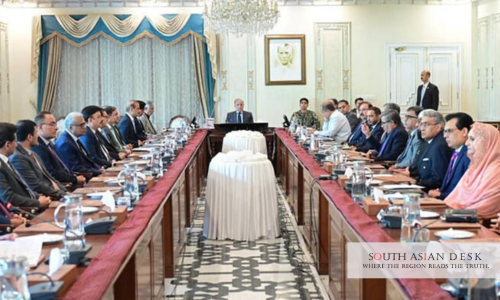
Prime Minister Shehbaz Sharif praised the tax body after it crossed its Rs12.957 trillion revenue target for FY26, saying the pace of ongoing reforms would be accelerated further. Finance Minister Muhammad Aurangzeb had earlier announced that FBR revenue collection had exceeded Rs13 trillion, compared with the official target of Rs12.957 trillion.
The achievement gives the government a stronger fiscal argument at a time when Pakistan is trying to improve tax compliance, expand the tax base and reduce dependence on repeated external financing. However, the larger test is not simply whether the FBR can collect more revenue in one year. The real challenge is whether Pakistan can build a more transparent, efficient and less discretionary tax system.
FBR Reforms Pakistan Focus on Digital Tax Administration
FBR reforms Pakistan are now being framed around a new operating model that relies on digital systems, automation and a faceless tax administration structure. The government says the model will reduce human interaction between taxpayers and officials, limit discretion and improve transparency.
Sharif said expanding the tax base, increasing transparency and improving taxpayer services remained the main priorities of the reform process. The prime minister also warned officials against excesses and said there was no place for corrupt elements in the FBR.
The push for a faceless tax system is significant because Pakistan’s tax administration has long faced criticism for complexity, discretionary practices and uneven enforcement. A system with minimal human intervention could help reduce harassment, improve documentation and make compliance easier for businesses and individuals.
Still, implementation will be difficult. Digital systems are only as strong as the data, institutions and safeguards behind them. If automation is introduced without clarity, accountability and taxpayer support, it could create new compliance problems. If done properly, however, it could become one of the most important changes in Pakistan’s tax machinery.
FBR Revenue Target Crossed in FY26
The government has described the FY26 collection performance as a record achievement. According to Arab News, citing official statements, the FBR collected more than Rs13 trillion during FY26, surpassing the Rs12.957 trillion target. The prime minister also said the tax authority paid around Rs600 billion in refunds during the year, which he linked to support for businesses and exporters.
The FBR’s own press release on the finance minister’s visit to its headquarters said the board had achieved its annual revenue target for FY2025-26 and that revenue collection had nearly doubled over the past two and a half years. It also said the FBR disbursed Rs599 billion in tax refunds during the year, including Rs13.5 billion on the final day of the fiscal year.
Refunds are an important part of the story. For exporters and businesses, delayed refunds can create cash-flow pressure, raise working capital costs and weaken competitiveness. If refund payments become more timely, the reform process could improve business confidence rather than being seen only as a revenue drive.
The prime minister also pointed to strong performance from major field formations. The Karachi Large Taxpayer Unit collected Rs528 billion, while the Lahore Large Taxpayer Unit collected Rs261 billion during FY26.
Why Pakistan Tax Collection Matters
Pakistan tax collection matters because the country has one of the weakest tax-to-GDP ratios among comparable economies. Arab News reported that Pakistan’s tax-to-GDP ratio remains around 10 percent, which limits the state’s ability to finance development, social protection, infrastructure and debt servicing from domestic revenue.
A low tax-to-GDP ratio also increases fiscal pressure. When the government cannot collect enough revenue, it must either borrow more, reduce spending or rely on temporary measures. That pattern has contributed to repeated fiscal stress and external financing needs.
For Pakistan, stronger revenue collection is therefore not just a technical achievement. It is tied to macroeconomic stability, investor confidence and the country’s ability to meet fiscal commitments. The government has also been pursuing tax reforms in line with International Monetary Fund recommendations, making the FBR’s performance a key indicator for both domestic and external stakeholders.
However, collection growth alone is not enough. If higher revenue comes mainly from existing taxpayers through heavier withholding, indirect taxation or enforcement pressure, it may deepen frustration among compliant businesses. The more sustainable path is to bring more people and sectors into the tax net while simplifying compliance for those already paying.
Faceless Tax System Could Reduce Discretion
The faceless tax system is one of the most closely watched parts of the reform agenda. In principle, it would allow tax processes to be handled through automated and digital channels, reducing direct interaction between taxpayers and tax officials.
This matters because discretion has historically been one of the biggest sources of mistrust in tax administration. Businesses often complain about notices, audits, delays and unpredictable treatment. A more digital structure could reduce opportunities for corruption and improve consistency in decision-making.
The government has also linked the new operating model to artificial intelligence and broader technology upgrades. The FBR’s press release said the approved operating model would focus on people, processes and technology, including expanded use of AI and digital systems.
The success of this model will depend on how it treats taxpayers in practice. A faceless system should not become an inaccessible system. It must provide clear notices, workable appeal options, transparent risk-based audits and responsive support for taxpayers who need help complying.
Pakistan Tax Base Remains the Central Challenge
Pakistan tax base expansion remains the central challenge. For decades, the burden of taxation has fallen heavily on a limited number of compliant taxpayers, salaried individuals, documented businesses and formal-sector companies. Large parts of the economy remain under-taxed, undocumented or outside effective enforcement.
The government’s stated goal is to broaden the tax base rather than simply increase pressure on existing taxpayers. That is easier said than done. Bringing more people into the tax system requires reliable data sharing, integration of government databases, better enforcement at the retail and wholesale levels, and political willingness to tax powerful or historically protected sectors.
It also requires public trust. Many citizens are reluctant to enter the tax net because they believe the system is unfair, complex or poorly linked to service delivery. If taxpayers do not see better public services, improved governance or fair treatment, compliance will remain difficult to improve.
This is why FBR reforms Pakistan must focus on both enforcement and facilitation. Taxpayers need simpler filing processes, clearer rules, faster refunds and protection from arbitrary action. The state, in return, needs stronger documentation and broader compliance.
IMF Tax Reforms Add Pressure on Islamabad
IMF tax reforms have added pressure on Islamabad to improve revenue collection and reduce fiscal vulnerabilities. Pakistan has repeatedly entered external financing arrangements in which revenue mobilisation has been a key condition or policy priority.
This places the FBR at the centre of economic policymaking. Meeting revenue targets can help the government maintain fiscal discipline, support budget planning and reassure lenders. Missing targets can create pressure for supplementary measures, spending cuts or additional taxation.
The FY26 target achievement is therefore politically and economically important. It allows the government to argue that reforms and digitalisation are beginning to show results. But the next target will be even more demanding. Sharif expressed hope that FBR officers would meet the new fiscal year’s tax target of more than Rs15 trillion.
That target will test whether the revenue gains are sustainable. Higher targets are easier to announce than to achieve, especially if economic activity slows, imports fluctuate, inflation eases or taxpayer resistance grows.
Businesses Need Facilitation Alongside Enforcement
The government has tried to present the FBR’s performance as both a revenue success and a facilitation story. The payment of large tax refunds is being used to show that the tax body is not only collecting revenue but also easing pressure on businesses.
This is an important message for exporters, manufacturers and documented companies. Businesses often accept the need for taxation but object to unpredictable procedures, delayed refunds and uneven treatment. If reforms reduce these problems, they could improve the relationship between the tax authority and the private sector.
However, businesses will judge reform by practical experience. They will look at how notices are issued, how audits are selected, how refunds are processed and how disputes are resolved. A stronger FBR cannot mean only a more aggressive FBR. It must also mean a more professional and predictable institution.
For Pakistan’s economy, this balance is crucial. The country needs more revenue, but it also needs investment, exports and formal business growth. Tax policy that discourages documentation or investment would weaken the very base the government wants to expand.
FBR Revenue Success Is Only the First Step
The FBR’s FY26 performance gives the government a strong headline, but the deeper reform agenda is still unfinished. Pakistan’s tax system needs wider documentation, better technology, fewer loopholes, stronger enforcement and more taxpayer-friendly processes.
The move toward faceless tax administration could be a major step if it reduces discretion and improves transparency. The record collection and refund payments also suggest that administrative performance is improving. Yet the long-term challenge remains structural: Pakistan must collect more revenue in a way that is fair, efficient and supportive of economic growth.
For now, the government is using the FBR’s success to build momentum behind tax reform. The next fiscal year will show whether that momentum can survive a higher target, business concerns and the political difficulty of broadening the tax base.
FBR reforms Pakistan will ultimately be judged not by one year’s revenue number, but by whether the tax system becomes more transparent, less discretionary and more capable of bringing Pakistan’s large undocumented economy into the formal net.
Published in SouthAsianDesk, July 3, 2026
Follow SouthAsianDesk on X, Instagram and Facebook for insights on business and current affairs from across South Asia.