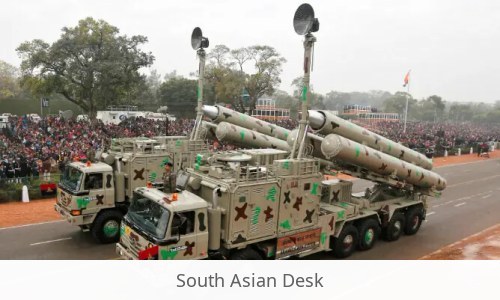
India military equipment acquisition has seen a significant boost as the Defence Acquisition Council (DAC), headed by the defence minister, approved a $5.46 billion procurement of military equipment on July 3, 2026. The acceptance of necessity (AoN) covers both indigenous and advanced defence equipment for the armed forces, including missiles, electronic warfare systems, and Kamikaze drones.
This decision marks a continuation of India’s strategic push to modernize its military infrastructure, aligning with broader national security objectives amid evolving regional dynamics.
India military equipment acquisition: Implications for India’s Defence Strategy
The procurement reflects India’s ongoing efforts to bolster its defence capabilities in response to persistent security challenges. Regional tensions, particularly along the Line of Actual Control (LAC) with China and the unresolved border disputes with Pakistan, have underscored the need for advanced military technology.
The inclusion of Kamikaze drones—a relatively novel addition to India’s arsenal—signals a shift toward asymmetric warfare capabilities, which are increasingly relevant in modern conflict scenarios. These drones, designed for targeted strikes and high-risk missions, are expected to enhance India’s tactical flexibility in both conventional and non-conventional warfare contexts.
The procurement also underscores India’s dual focus on indigenous development and the acquisition of cutting-edge foreign technology. The AoN includes systems like the Akash Tarang and MRSAM (Medium Range Surface-to-Air Missiles), which are critical for air defence. Electronic warfare systems, meanwhile, will bolster India’s ability to disrupt enemy communications and radar networks, a capability that has become increasingly vital in the age of信息化 warfare.
This acquisition aligns with the government’s emphasis on self-reliance in defence production, as outlined in the Atmanirbhar Bharat initiative, which seeks to reduce dependence on foreign suppliers while fostering domestic manufacturing capabilities.
Role of the Defence Acquisition Council
The DAC, a high-level body under the Ministry of Defence, plays a pivotal role in shaping India’s defence procurement policies. Its approval process involves rigorous evaluation of technical specifications, cost-benefit analyses, and alignment with strategic priorities. The current $5.46 billion deal is part of a series of strategic decisions aimed at modernizing the Indian Air Force, Navy, and Army. This includes the procurement of advanced fighter jets, naval vessels, and cyber defence systems, all of which are critical for maintaining India’s position as a regional power.
India military equipment acquisition is part of a broader strategy to ensure operational readiness in a rapidly changing security environment. The DAC’s decision to prioritize both indigenous and imported systems reflects a nuanced approach to defence modernization. While indigenous production is encouraged to support the domestic defence industry, the acquisition of advanced foreign technology ensures that India’s armed forces remain equipped with the latest capabilities.
This balance is particularly important given the complexities of global defence supply chains and the need to maintain operational readiness in a rapidly changing security environment.
The procurement also highlights the DAC’s role in addressing emerging threats, such as cyber warfare and electronic attacks. The inclusion of electronic warfare systems in the AoN underscores India’s recognition of the growing importance of information dominance in modern conflicts. By integrating these systems into its military framework, India aims to enhance its ability to conduct both offensive and defensive operations in the electromagnetic spectrum.
Regional and Strategic Context
India military equipment acquisition is deeply intertwined with its geopolitical positioning. The country’s strategic partnerships with nations like the United States, Japan, and Australia have facilitated access to advanced military technology, while its growing economic ties with Russia and Israel have provided alternative sources for critical defence equipment. The current procurement is likely to strengthen these partnerships, as India seeks to diversify its defence suppliers and mitigate risks associated with geopolitical shifts.
The procurement also comes at a time when India is actively pursuing regional leadership in South Asia. By enhancing its military capabilities, India aims to assert its influence in the region, particularly in the context of the Quad (Quadrilateral Security Dialogue) and other multilateral frameworks. This strategic move is expected to have implications for regional security dynamics, potentially influencing the behavior of neighboring states and non-state actors.
Published in SouthAsianDesk, July 4, 2026
Follow SouthAsianDesk on X, Instagram and Facebook for insights on business and current affairs from across South Asia.
Image: i.dawn.com