Pakistan’s Right to Defend Itself Backed by US State Department
Pakistan’s right to defend itself against terrorist attacks has been backed by the United States, as tensions between Pakistan and Afghanistan remain high after a series of deadly incidents along and beyond the border.
The US State Department said Washington “supports Pakistan’s right to defend itself against terrorist attacks.” The department also said the Pakistani people had suffered greatly at the hands of terrorists.
The statement comes at a sensitive moment for the region. Pakistan has faced a rise in militant violence, while Islamabad and Kabul remain locked in accusations over cross-border militancy. Pakistan says militant groups use Afghan soil to plan or launch attacks, a charge the Taliban administration in Afghanistan has repeatedly denied.
The latest US remarks do not amount to a detailed endorsement of any specific Pakistani military action. However, they do signal that Washington recognises Pakistan’s security concerns at a time when the country is dealing with renewed attacks on its forces and growing instability near the Afghan border.
US Supports Pakistan Amid Fresh Security Concerns
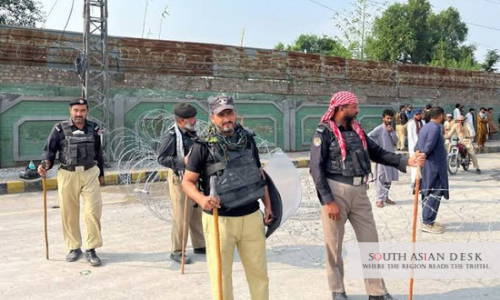
The US supports Pakistan’s position on self-defence after several recent incidents placed renewed attention on militancy in the country. One major trigger was a deadly attack in Karachi, where three Pakistani paramilitary Rangers were killed and four others injured in an assault on a Sindh Rangers facility in Gulistan-i-Jauhar.
Pakistan’s military said the attack was carried out by Jamaat-ul-Ahrar, a faction linked to the Pakistani Taliban. Security forces killed three militants and captured another attacker, according to Reuters. The attack raised alarm because Karachi, Pakistan’s largest city and commercial hub, has seen periods of relative calm after years of violence.
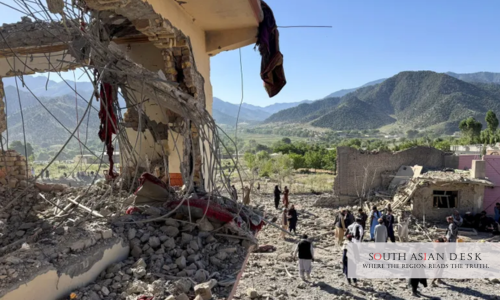
Following the Karachi Rangers attack, Pakistan carried out air operations in Afghanistan’s Paktia, Paktika and Kunar provinces. Pakistan said it targeted militant hideouts. However, the United Nations Assistance Mission in Afghanistan said at least 28 civilians were killed and 49 injured in the strikes, with women and children among the victims. UNAMA said the figures were preliminary and called for respect for the principles of precaution, distinction and proportionality under international humanitarian law.
This is the difficult balance at the centre of the issue. Pakistan argues that it must act against militants who threaten its civilians and security forces. At the same time, cross-border operations carry serious risks, especially where civilian casualties are reported and Afghanistan disputes Pakistan’s version of events.
Pakistan Afghanistan Tensions Remain Unresolved
Pakistan Afghanistan tensions have worsened since the Taliban returned to power in Kabul in 2021. Islamabad initially hoped the Taliban administration would help restrain the Tehreek-e-Taliban Pakistan and affiliated groups. Instead, Pakistan has seen a resurgence in militant attacks, particularly in Khyber Pakhtunkhwa, Balochistan and, more recently, urban centres such as Karachi.
The Taliban administration denies sheltering militants who target Pakistan. Pakistan rejects that denial and says hostile groups continue to operate from Afghan territory. This disagreement has repeatedly led to border closures, exchanges of fire and diplomatic strain.
The US statement is therefore important because it places Washington’s public position closer to Pakistan’s security narrative, at least on the principle of self-defence against terrorism. Still, the wording leaves room for caution. Supporting Pakistan’s right to defend itself does not automatically settle legal, factual or humanitarian questions about individual operations.
For Pakistan, the statement may be diplomatically useful. It reinforces Islamabad’s claim that its fight against terrorism deserves international recognition. For Afghanistan’s Taliban rulers, it may be viewed as pressure to address Pakistan’s concerns about militant sanctuaries.
Why the US Statement Matters
The statement matters for three reasons.
First, it shows that counterterrorism remains a live issue in US Pakistan relations, even after Washington’s withdrawal from Afghanistan. The relationship between the two countries has often shifted between cooperation and mistrust, but security concerns in the region continue to keep both sides engaged.
Second, the statement comes while Pakistan is trying to frame recent operations as part of a legitimate response to terrorism. US recognition of Pakistan’s right to defend itself gives Islamabad diplomatic support, although it does not remove scrutiny over civilian harm.
Third, it adds pressure to the broader regional conversation around Afghanistan. Since 2021, many governments have urged the Taliban administration to prevent Afghan territory from being used by militant groups. The latest violence shows that this issue remains unresolved and dangerous.
Civilian Casualties Keep the Issue Sensitive
The civilian casualty reports from Afghanistan make the situation especially sensitive. UNAMA’s statement said at least 28 civilians were killed in the June 28 airstrikes, including 22 civilians in one strike in Paktia province’s Chamkani district. Six civilians were reported killed in Paktika’s Gyan district, while two children were injured in Kunar.
Pakistan has not accepted Afghanistan’s broader claims about civilian deaths in the same terms, and both sides present sharply different accounts of what happened. This is why any responsible reporting must distinguish between Pakistan’s stated military objective, Afghanistan’s allegations and UNAMA’s verified preliminary figures.
International humanitarian law does not prevent a state from defending itself against armed attacks. However, it does require parties to distinguish between combatants and civilians, take precautions to avoid civilian harm and ensure that force is proportionate. These principles are likely to remain central to international reaction if Pakistan continues cross-border operations.
A Careful Diplomatic Signal
The US statement is best understood as a careful diplomatic signal. Washington is not saying every action by Pakistan is automatically justified. It is saying Pakistan has a right to defend itself against terrorist attacks, while the wider context still includes civilian protection, regional stability and the risk of escalation.
For Pakistan, that distinction matters. The country has a strong case that it faces a serious terrorism threat. Its security forces and civilians have repeatedly been targeted. But the way Pakistan responds will shape how much international support it receives, especially when operations cross into Afghan territory.
For Afghanistan, the message is also clear. The Taliban administration faces continuing international pressure to prevent militant groups from using Afghan soil. If attacks inside Pakistan continue, Kabul will face more diplomatic isolation and possibly further military pressure from Pakistan.
The coming weeks will show whether the US position helps de-escalate the situation or strengthens Pakistan’s hand in taking further action. For now, the statement gives Islamabad public support on the principle of self-defence, but it also leaves the region facing the same unresolved problem: militant violence, disputed sanctuaries and a fragile Pakistan Afghanistan border.
Published in SouthAsianDesk, July 4, 2026
Follow SouthAsianDesk on X, Instagram and Facebook for insights on business and current affairs from across South Asia.